AI tool
Exa 3.0
Exa 3.0 is a search API for AI agents that returns web results using a larger embedding model and an expanded index of billions of documents. It introduces Dynamic Highlights that summarize pages using 95% fewer tokens than full text.
About Exa 3.0
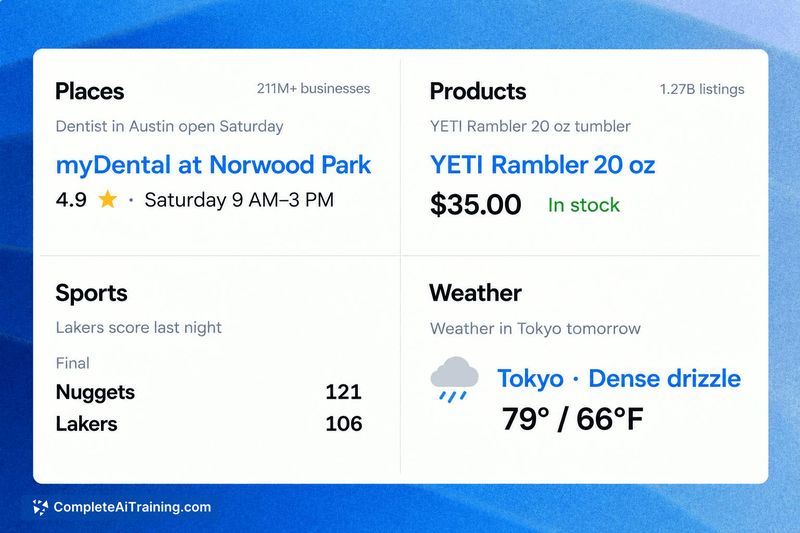
Exa 3.0 is a search API built for AI applications that need to retrieve structured web data. It indexes over 2 trillion URLs and serves results from more than 100 billion pages, including ecommerce listings, local businesses, news, sports, weather, flights, events, transit, and podcasts. The API returns enriched results with features like Dynamic Highlights, which condenses page content to reduce token usage by roughly 95% compared to full-page text.
Review
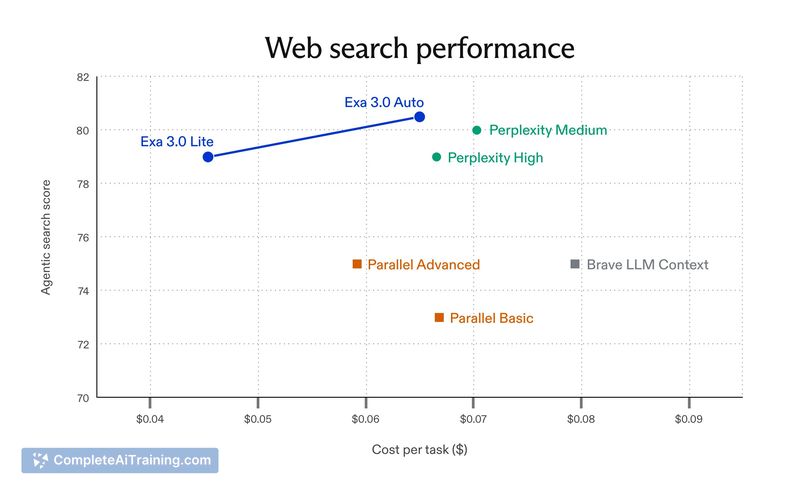
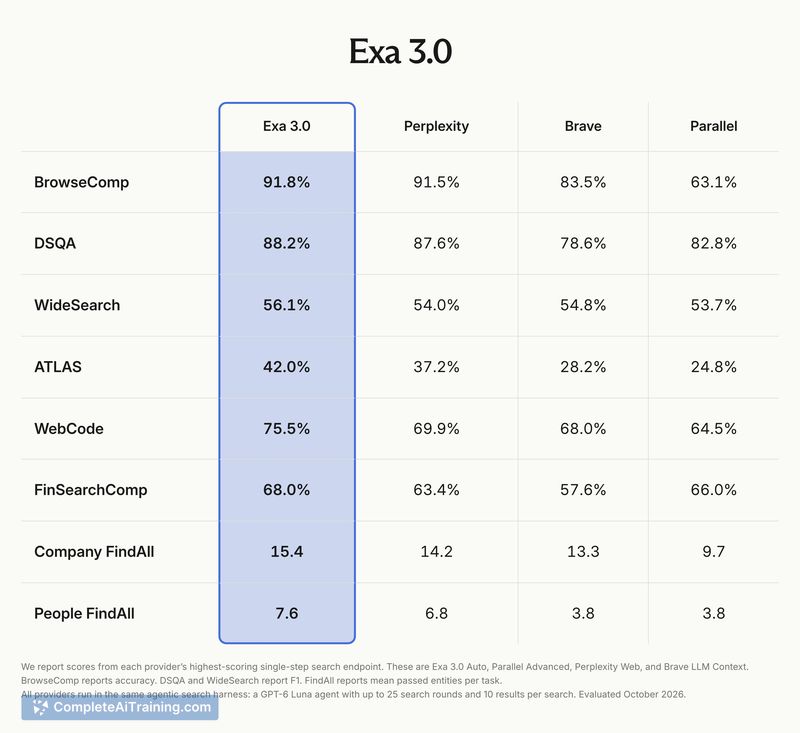
Exa 3.0 arrives as an update focused on retrieval quality and index breadth, targeting developers who embed search into AI assistants, research tools, and company-intelligence products. The launch expands the underlying embedding model and adds billions of new documents to the index. This review looks at what ships today, what the API actually returns, and where it fits - and doesn't fit - in a production stack.
Key Features
- Dynamic Highlights - Returns condensed, relevant excerpts from pages instead of full text. Exa states this cuts token consumption by about 95% while preserving answer quality, and it's included at no extra charge.
- Expanded index - The crawl now spans 2T+ tracked URLs across new verticals: 1.27 billion ecommerce listings, 211 million local businesses, plus sports scores, flight data, event listings, transit schedules, weather, and podcasts.
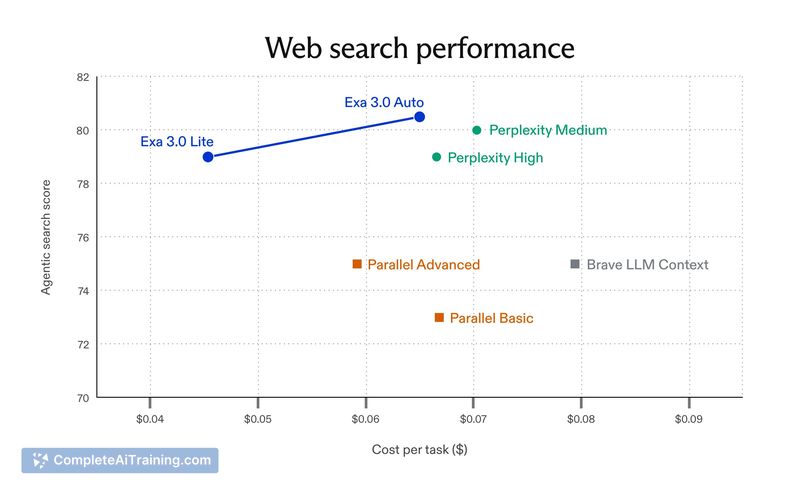
- Larger embedding model - A new retrieval model underpins ranking across coding, finance, deep research, and company intelligence benchmarks. Exa reports top-ranked performance on public benchmarks in these domains.
- Exa Lite tier - A lower-cost request path priced at $4 per 1,000 requests. It runs alongside the standard Exa Auto tier at $7 per 1,000 requests, giving teams a knob to trade depth for cost.
- Semantic search with enrichment - Queries accept plain English descriptions, and the API agentically sources and enriches results with requested fields like emails, tags, and structured metadata.
Pricing and Value
Exa 3.0 introduces two named request tiers: Exa Lite at $4 per 1,000 requests and Exa Auto at $7 per 1,000 requests. The Dynamic Highlights feature does not carry an additional charge. The company hasn't published volume discounts or enterprise pricing details publicly, so the per-request costs are the only confirmed figures. For teams whose current search pipeline burns tokens on full-page text, the 95% token reduction from Dynamic Highlights could lower downstream model costs meaningfully, but the actual savings depend on usage patterns and which tier a team selects.
Pros
- Semantic retrieval works across a broad set of verticals - code, finance, company data, news, and local businesses - from a single API.
- Dynamic Highlights condenses page content without a separate summarization call, which simplifies the pipeline.
- Two pricing tiers let teams choose between lower cost and fuller retrieval depth.
- Index freshness covers time-sensitive domains like sports scores, flight status, and weather.
- Integration is API-only, so teams can drop it into existing agent workflows without a new UI layer.
Cons
- Pricing at scale is undefined - no public volume discounts or enterprise tiers, which makes cost projection difficult for high-throughput products.
- The tool is not well suited for teams that need offline or on-premise search infrastructure; it's a hosted API with no self-hosting option described.
- All public reviews come from founders using Exa inside their own products; independent end-user feedback and third-party benchmark reproductions are absent from the launch materials.
Exa 3.0 fits teams building AI copilots, research agents, or go-to-market tools that need structured web results with minimal token overhead. The Lite tier makes it accessible for cost-sensitive prototyping, while the expanded vertical index covers use cases that previously required stitching together multiple data sources. Teams running fully local inference or those needing guaranteed enterprise pricing should test carefully before committing to production workloads.