AI tool
Facts
Facts turns project requirements into tiny, verifiable assertions your agents can autonomously check. Readable, fast-to-validate facts act like a linter for project state, reducing spec bloat and rework by ensuring consistency.
About Facts
Facts is a command-line tool and skills package that converts project specifications into small, verifiable assertions called facts. It lets you track which facts are implemented, which are in progress, and which remain drafts, while providing commands to check, discover, and implement those facts from code.
Review

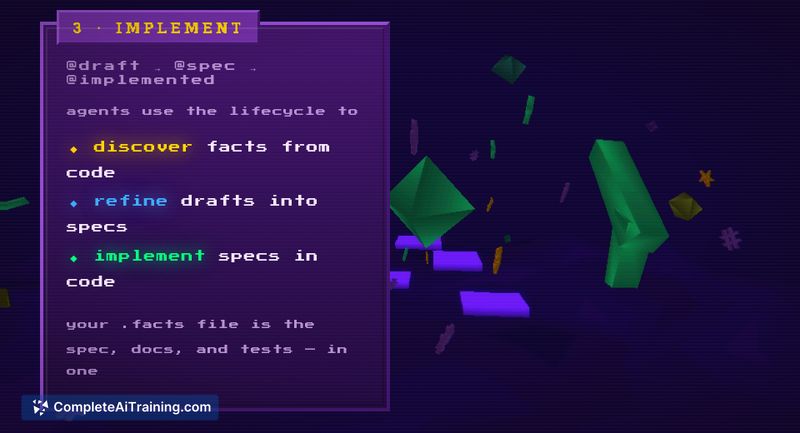
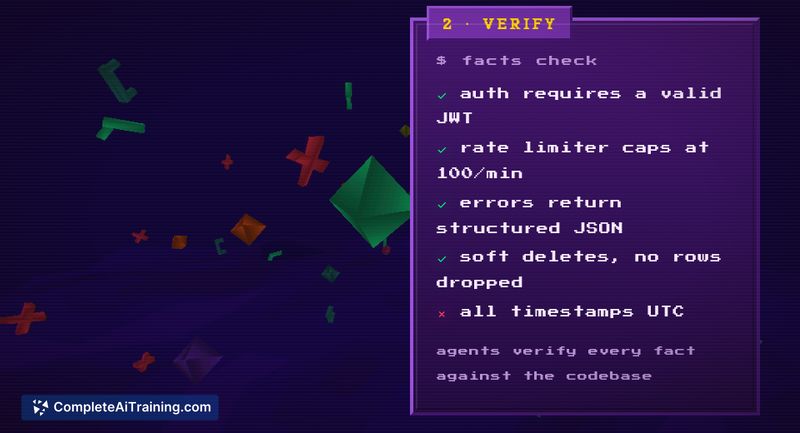
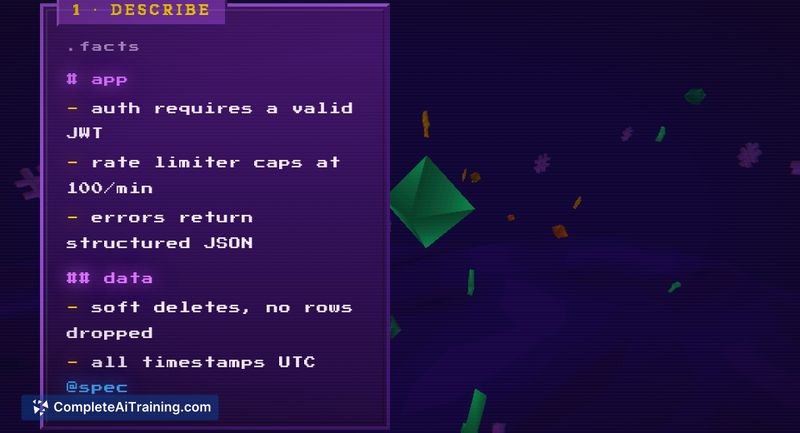
Facts aims to reduce spec bloat by encouraging terse, testable assertions about desired project state instead of long prose specifications. It integrates with agents via a CLI and a set of skills so an agent can discover project state, maintain a facts sheet, and attempt implementations that are verifiable from code.
Key Features
- Atomic facts: simple assertions that describe expected project state and can be verified programmatically.
- CLI and skills interface: commands to initialize, discover, check, and implement facts from a repository.
- Code-backed verification: facts are intended to be checked against code, enabling linter-like quality checks and diffs.
- Discovery workflow: map an existing codebase into a facts sheet to identify implemented items, in-progress work, and drafts.
- Agent integration: agents can create, refine, and act on fact sheets to automate development and QA tasks.
Pricing and Value
The tool is listed as free at launch. Its primary value comes from reducing time spent reading and updating long specifications, lowering the friction of verification, and making parts of project QA and development automatable via CLI workflows. For teams that already use command-line workflows and agent-assisted development, Facts can offer straightforward gains in traceability and repeatable verification.
Pros
- Makes specifications concise and testable by focusing on small, verifiable assertions.
- Combines discovery and verification so you can quickly see which items are implemented versus planned.
- Works well with agent workflows and can drive automated checks or implementations from the CLI.
- Lightweight approach that is faster to read and validate than long-form specs.
- Encourages a single, consistent format for facts which helps cross-team consistency.
Cons
- Early-stage: the experience is centered on the command line and may lack polished UI or enterprise features.
- Learning curve: teams must adopt the fact-writing discipline and ensure facts are defined accurately for reliable automation.
- Dependence on agent quality: automated implementations and verifications rely on the agent and skill behavior, which can vary.
Facts is best suited for developer-focused teams, QA engineers, and small engineering groups that prefer CLI workflows and want concise, testable specifications. If you need a way to turn assumptions into verifiable items and to automate checks or implementations via an agent, Facts provides a clear, practical approach. For larger organizations or non-CLI users, plan for an initial period of process setup and validation before relying on it for critical workflows.
Jobs Facts suits
We checked Facts against 500+ jobs; these get the most out of it.