AI tool
Frevana Multiplayer
Frevana Multiplayer is a collaborative workspace where teams and AI agents build and run business apps together. It lets multiple people share skills, reuse workflows, and work on the same output side by side with their agents.

About Frevana Multiplayer
Frevana is a platform where users build and run AI agent apps for marketing, sales, research, and operations. The newly launched Multiplayer feature shifts the product from solo use to team-based work, letting groups share agents, skills, and workflows in a common workspace. Backed by a16z, Craft Ventures, and OpenAI, the tool supports no-code agent creation and connects to external tools and data sources.
Review

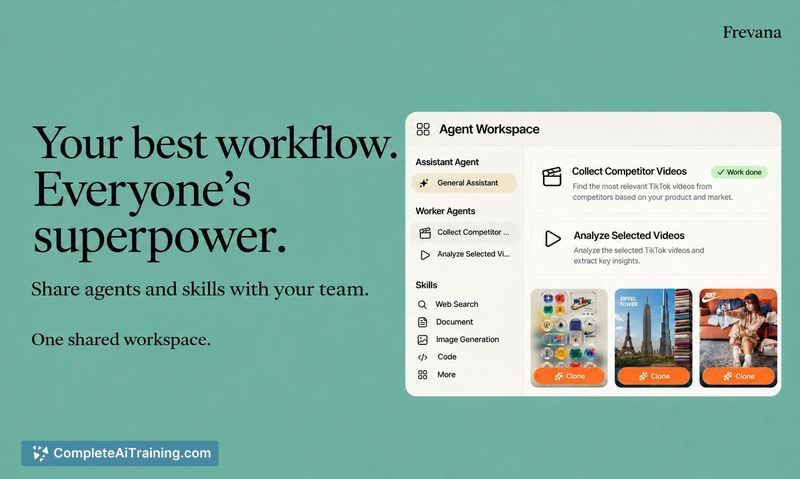
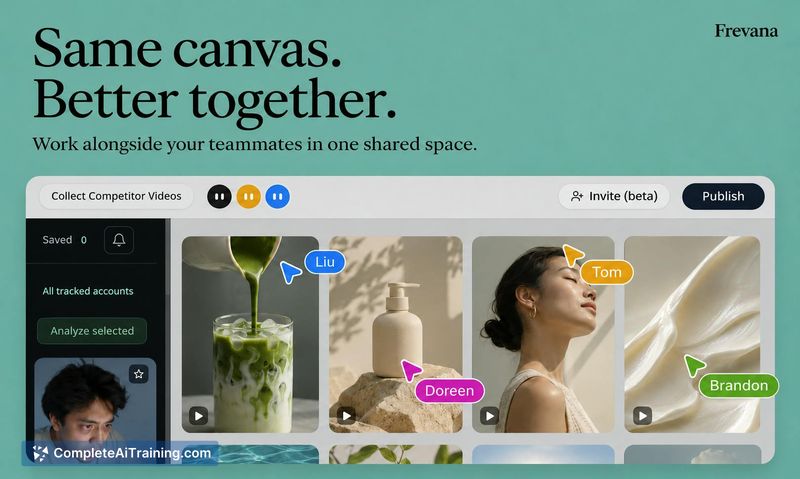
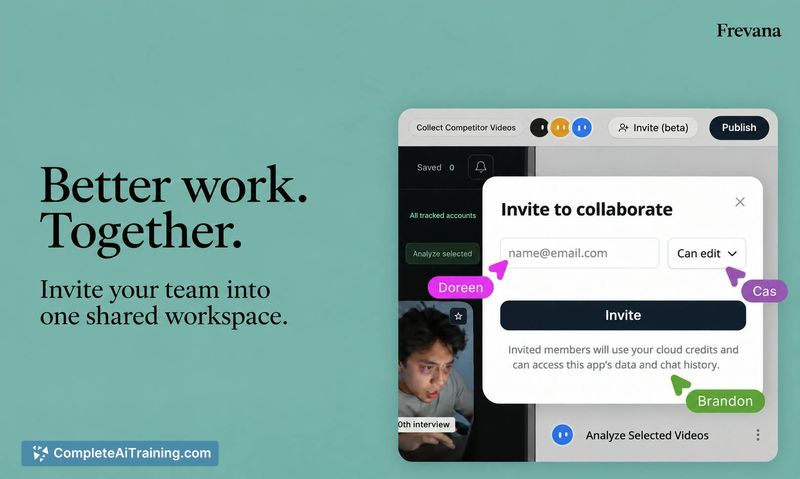
Frevana Multiplayer addresses a specific friction point in AI-assisted teamwork: the back-and-forth of prompts, screenshots, and scattered feedback across Slack or email. Instead of one person mediating between an agent and the rest of the team, the workspace places humans and agents side by side. The launch focuses on three mechanics - shared workspace access, reusable skills, and collaborative artifact editing - that aim to reduce duplication when a marketing workflow, for instance, needs to be adopted by sales or ops.
Key Features
- Shared workspace with invite links. Team members join via a link and see agents and human teammates in a single environment. Each agent displays its own status, so the team can track what agents are working on and step in manually when needed.
- Reusable skills and agent apps. A workflow or skill set up by one person becomes available to the whole team in one click. Updates to a shared skill propagate automatically to everyone who uses it.
- Collaborative artifact editing. Multiple people and agents can work on the same output, picking up where a teammate or agent left off. The platform keeps a record of every agent run.
- Credential sharing controls. When sharing an agent, the owner decides whether to share connected tool credentials with the team.
- Multi-channel access. Agents work inside Slack, Lark, and Telegram in addition to the web workspace.
Pricing and Value
Frevana Multiplayer is included for all current users at no additional cost, according to the launch announcement. The product listing indicates free options exist, but specific plan tiers, feature limits, or future pricing for team-level access are not yet defined publicly. The makers have not disclosed whether Multiplayer will remain free or become part of a paid tier later.
Pros
- Eliminates the solo-agent bottleneck by giving the whole team direct access to agents and their outputs.
- Skill updates sync team-wide, so no one runs an outdated version of a workflow.
- Credential sharing is optional, which lets teams control access to connected tools on a per-agent basis.
- Works across Slack, Lark, and Telegram, fitting into messaging tools many teams already use.
- No-code agent builder means non-developers can create and modify workflows without engineering support.
Cons
- Version tracking for skills is not yet implemented. The platform records agent runs but does not currently show which skill version produced a given output, making debugging harder when an agent behaves unexpectedly.
- Integration depth with external SaaS apps is partially documented. While BYOK (bring your own keys) is supported through importing local skills and the footer lists some integrations, the full scope and native integration status remain unclear from the launch materials.
- Solo users who don't collaborate with a team won't benefit from the Multiplayer feature set. The shared workspace and team-wide skill propagation add little value for an individual builder managing their own projects.
Frevana Multiplayer suits small to mid-sized teams that already use AI agents for repeatable marketing, sales, or ops workflows and want to stop passing prompts and outputs through a single person. It's less relevant for solo builders or teams that need granular version histories for compliance or debugging. The credential-sharing toggle and instant skill propagation address real coordination problems, though teams should verify integration coverage for their specific SaaS stack before committing.