AI tool
HAR
HAR provides a single in-repo contract that centralizes configuration and documentation for AI agents. It targets development teams managing multi-agent setups, replacing scattered CLAUDE.md files, README instructions, editor rules, and CI config ...
About HAR
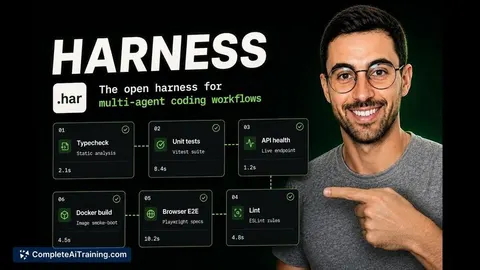
HAR is an open-source, agent-agnostic framework for building multi-agent coding workflows. It runs a fleet of coding agents in parallel on any repository, with deterministic validation gates, verifiable proof, and full observability across every agent. The project launched this week and is free to use.
Review
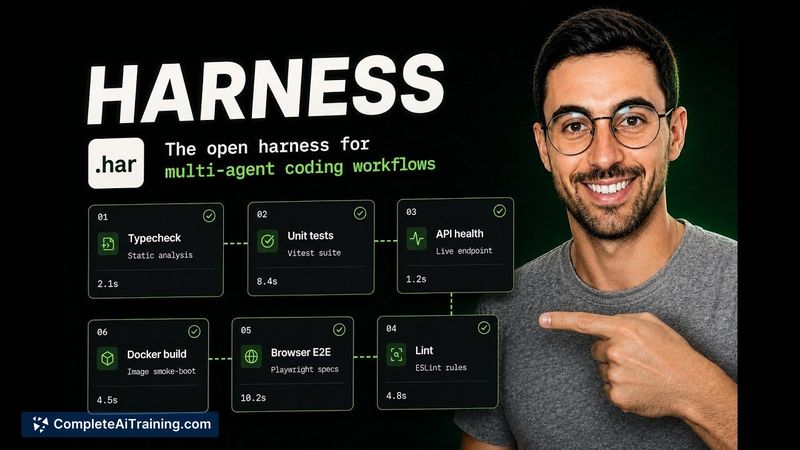
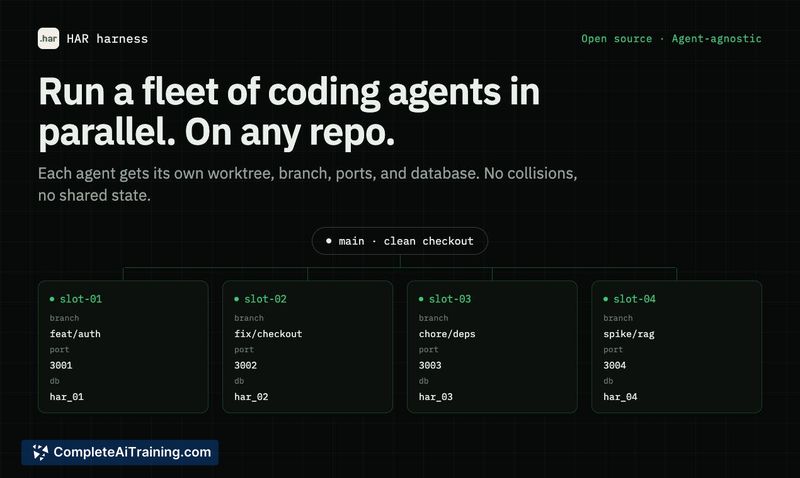
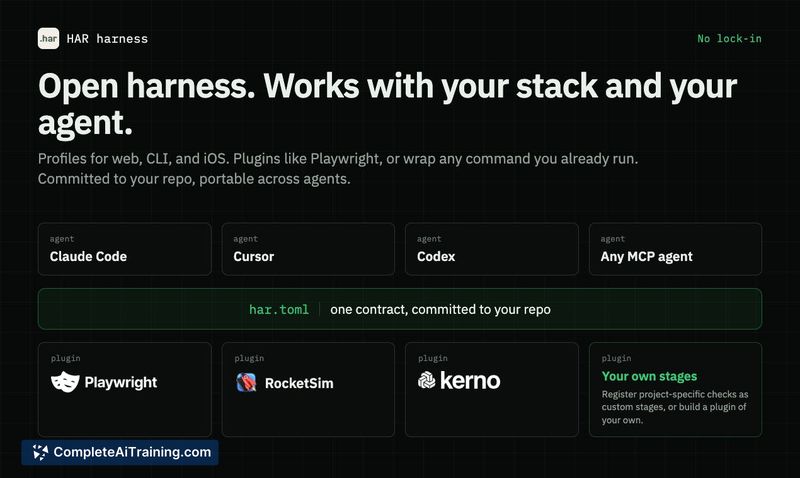
HAR addresses a specific operational problem: coordinating multiple coding agents on the same repository without collisions or trust issues. The tool is built around a single in-repo contract that replaces the usual scatter of README files, CLAUDE.md, editor rules, and CI config. It works with Claude Code, Cursor, Codex, or any MCP agent.
Key Features
- Isolation: Each agent gets its own git worktree, branch, ports, and database. Nothing is shared with the main checkout or another agent's slot, so fleets can run in parallel without colliding on a dev server, DB, or ports.
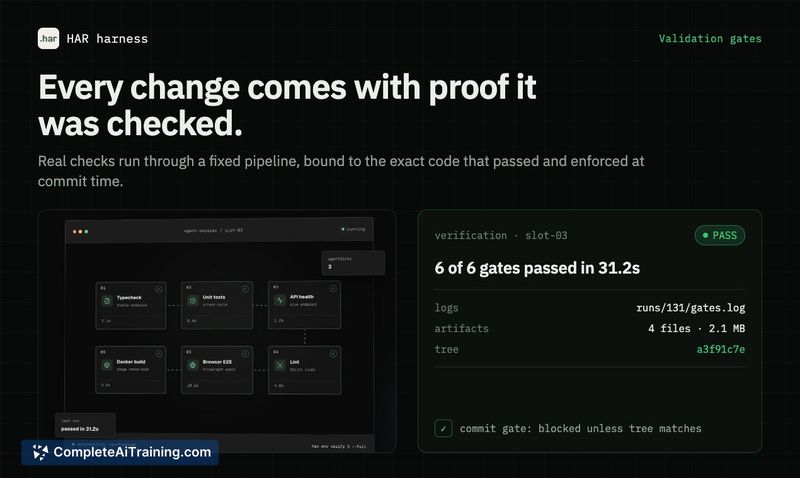
- Deterministic validation gates: HAR runs your project's real checks through a fixed pipeline with the same result every time. The result is bound to the exact code that passed and enforced at commit time, so an unverified tree cannot land.
- Verifiable proof: Every run leaves logs, artifacts, and a validated tree hash tied to the exact code checked. A reviewer inspects the evidence instead of trusting the agent's self-report.
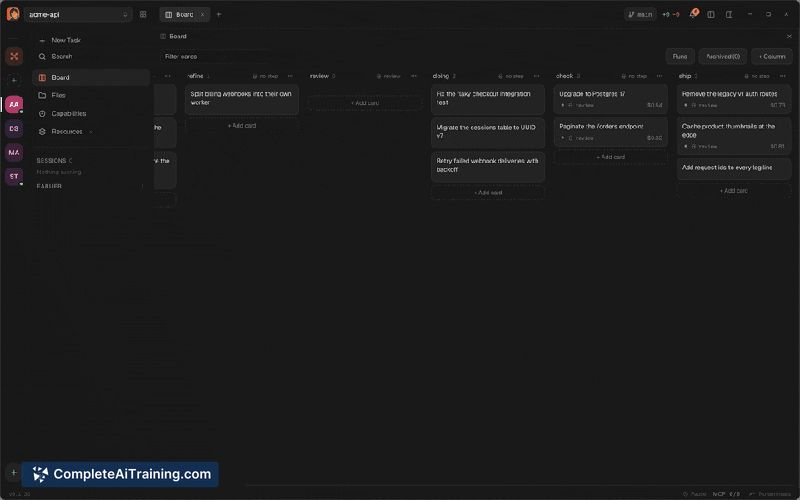
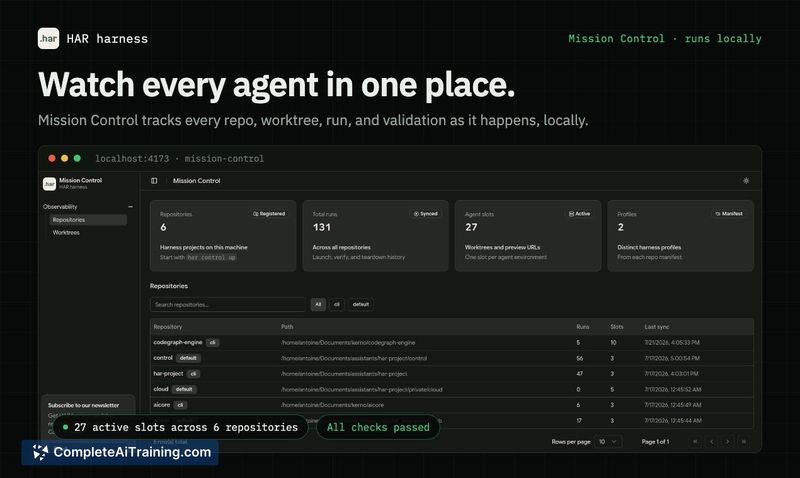
- Mission Control: A local dashboard showing every repo, worktree, run, and validation in one place, so you can watch a whole fleet as it works.
- Repository contract: A single contract committed to your repo that every agent reads the same way. The
har initcommand scaffolds a template per type of repository (web, cli, mobile, etc.), and you own the file so you can customize it.
Pricing and Value
HAR is free and open source. There is no hosted dashboard or vendor lock-in; the setup lives in your repository, so switching agents later doesn't require rebuilding anything. The tool is a CLI and an MCP server, and validation can be extended with plugins (like Playwright) or any command you already run.
Pros
- Parallel execution without shared-state collisions is handled structurally through isolated worktrees, ports, and databases.
- Validation gates are deterministic and bound to the exact code that passed, enforced at commit time.
- The repository contract replaces scattered config files that tend to drift out of sync with each other and the actual code.
- Full observability through Mission Control for watching a fleet as agents work, with logs, artifacts, and tree hashes.
Cons
- HAR launched this week and has only one review so far, so production hardening is unproven.
- The contract template requires teams to define their own startup flow and customization; there is no automated way to detect architectural drift yet beyond
har env maintain. - Teams that rely on hosted vendor sandboxes for agent orchestration won't find a replacement here, since HAR deliberately keeps everything local and self-managed.
HAR is best suited for teams already running multiple coding agents in parallel and struggling with collisions or verification trust. It's also a fit for teams that want to avoid vendor lock-in and keep their workflow definition in their own repository. If you're running a single agent or a small operation, the overhead of a full contract and fleet isolation might not yet pay for itself.
Jobs HAR suits
We checked HAR against 500+ jobs; these get the most out of it.