AI tool
JevGPT
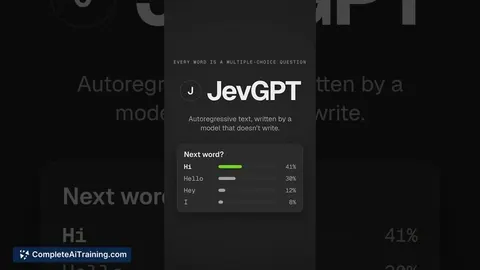
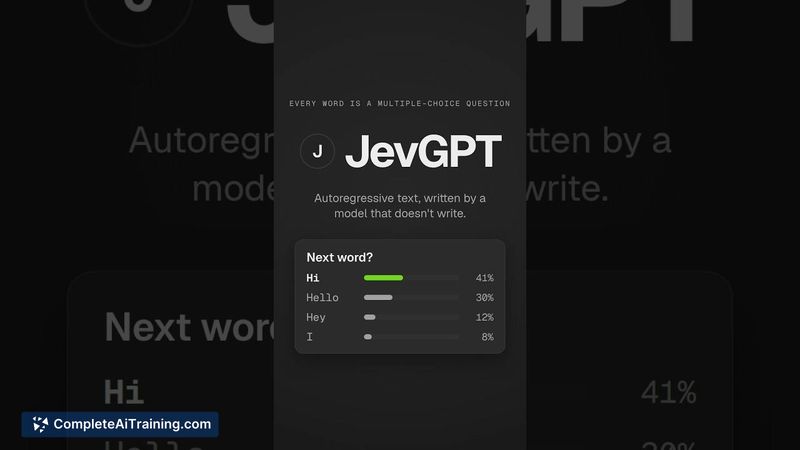
JevGPT is a text generator that uses Jev, a choice-only AI model, to select each next word from a fixed vocabulary. It is for developers and researchers experimenting with non-traditional language generation methods.
About JevGPT
JevGPT is an experimental chat application that forces a choice-based model to generate text. It uses TypeSafe's Jev, a "System One" model designed to return probability scores for a given set of options, and makes it pick every reply one word at a time from a fixed 1,772-word vocabulary. The project is open source and was launched as a deliberate mismatch of tool and task.
Review
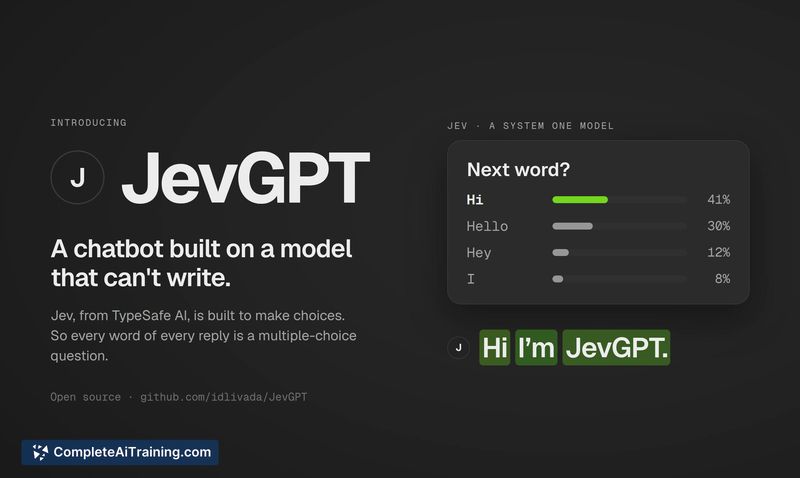
JevGPT inverts the typical relationship between language models and decision-making. Instead of using a text generator to make choices, it takes a model that only makes choices and coerces it into writing. The result is a chatbot that produces replies through repeated multiple-choice selections, which leads to output that is unpredictable and often nonsensical.
Key Features
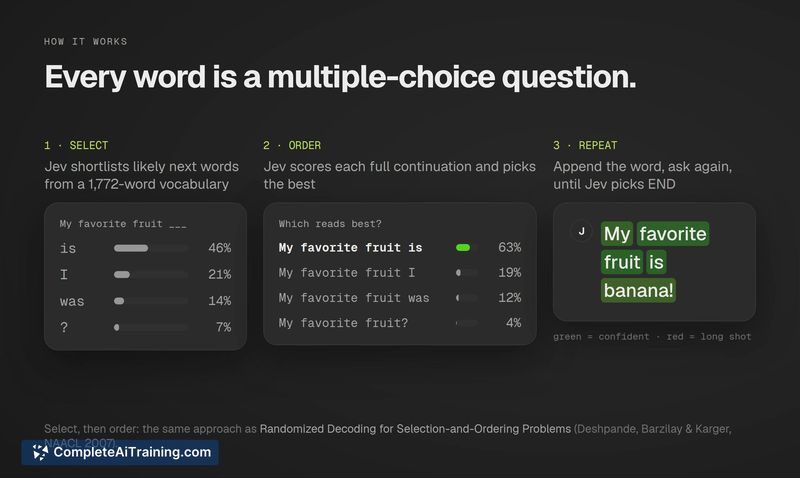
- Generates replies by having Jev select the next word from a 1,772-word vocabulary, appending it, and repeating the process
- Uses a two-stage approach: Jev shortlists candidate next words, then scores full continuations to pick the best ordering
- Runs via a web interface at curata.com/jevgpt with a TypeSafe API key, or locally from the open-source repository
- Each API-based reply costs approximately one cent
Pricing and Value
The tool itself is free and open source. Using it through the hosted web interface requires a TypeSafe API key, with the maker estimating a cost of about a cent per reply. Running it locally from the GitHub repository incurs no per-use charges beyond your own infrastructure.
Pros
- Demonstrates a counterintuitive use of a choice-based model that the maker openly describes as "the wrong tool for the job"
- Open-source codebase lets anyone inspect, modify, or run the generation pipeline locally
- Low per-reply cost when using the API makes casual experimentation inexpensive
- Produces unpredictable and occasionally strange output that can surface edge cases in constrained text generation
Cons
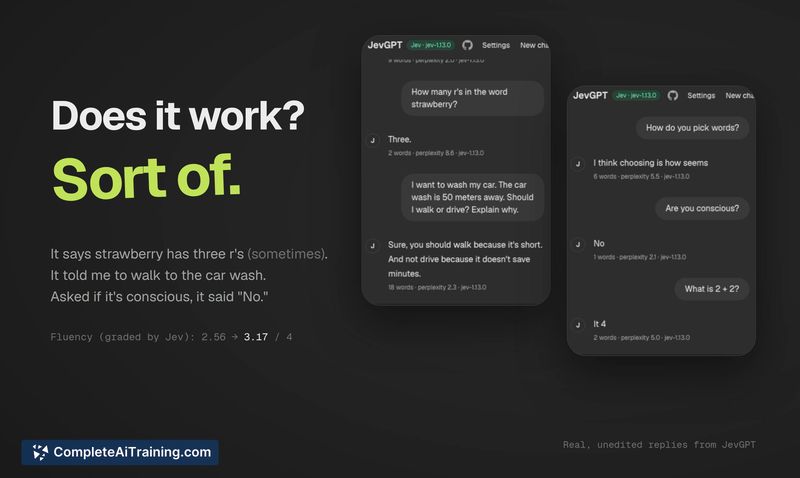
- Output quality is inconsistent; the tool can produce factually wrong statements, such as claiming "strawberry has three r's" only some of the time
- Word-by-word selection from a limited vocabulary tends toward repetitive or safe phrasing over longer replies, since there is no mechanism for planning a full response
- Not well suited for anyone who needs reliable, coherent, or factually accurate text from a chatbot
JevGPT fits best as a technical curiosity for developers and researchers interested in the boundaries between classification and generation. It's worth trying if you want to see how far a choice-only model can be pushed into producing text, or if you're looking for a concrete example of what breaks when you remove a language model's native ability to construct sentences. Anyone seeking a dependable conversational agent should look elsewhere.
Jobs JevGPT suits
We checked JevGPT against 500+ jobs; these get the most out of it.