AI tool
kōdlo
kōdlo is a sales workspace that finds prospects, researches accounts, and generates messages, proposals, and pitch decks from a shared memory. It is built for sales teams who sell complex products and want to keep all their context in one place.
About kōdlo
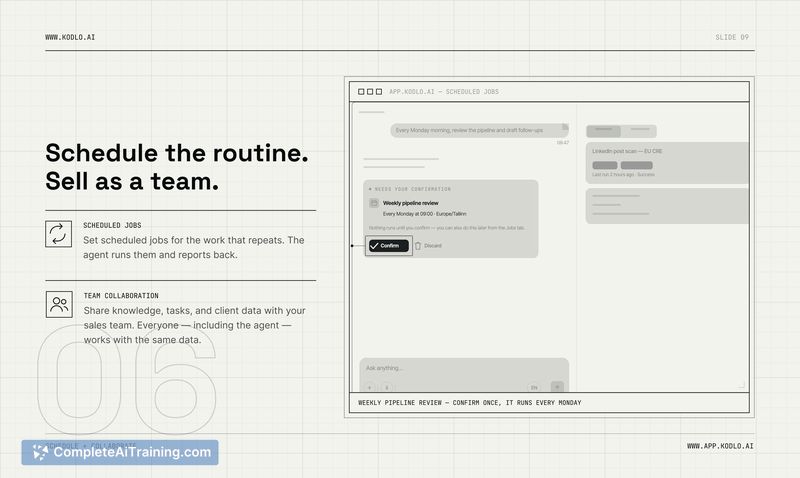
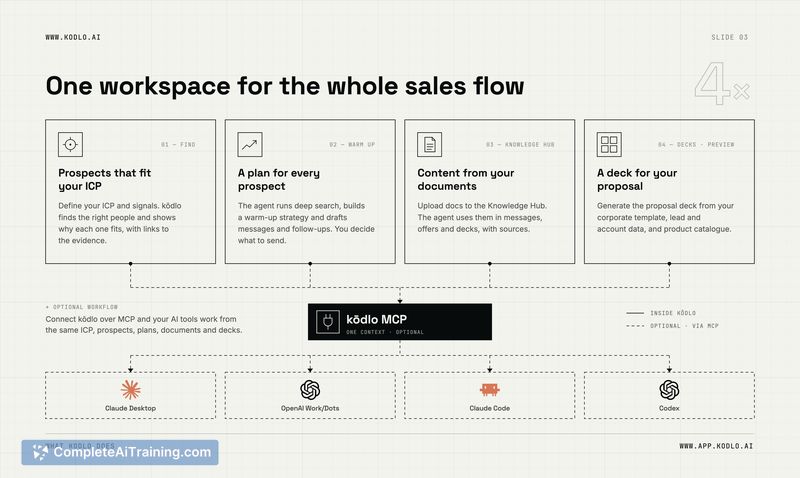
kōdlo is an end-to-end sales workspace that combines prospecting, research, outreach, and deck creation in a single environment. The tool uses a shared memory architecture so that its AI agents can reference past work, uploaded documents, and team collaboration when generating personalized messages or reports. It also connects to external AI tools like Claude Desktop and ChatGPT Work through MCP, letting users pull the same sales context into their existing workflows.
Review
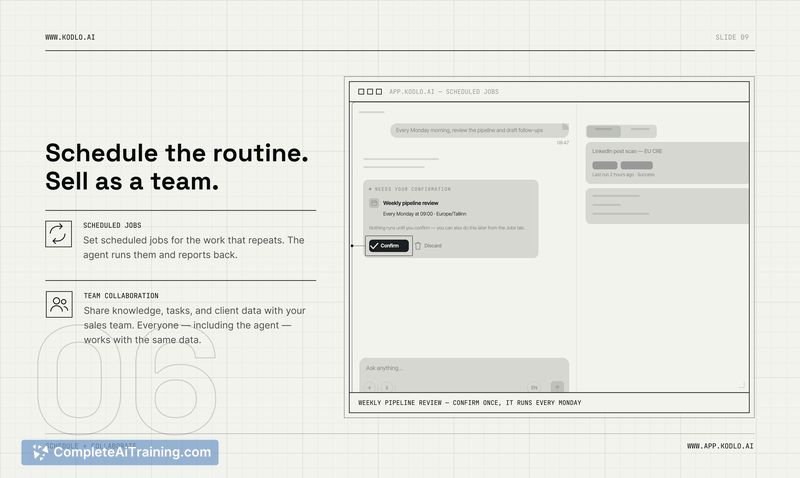
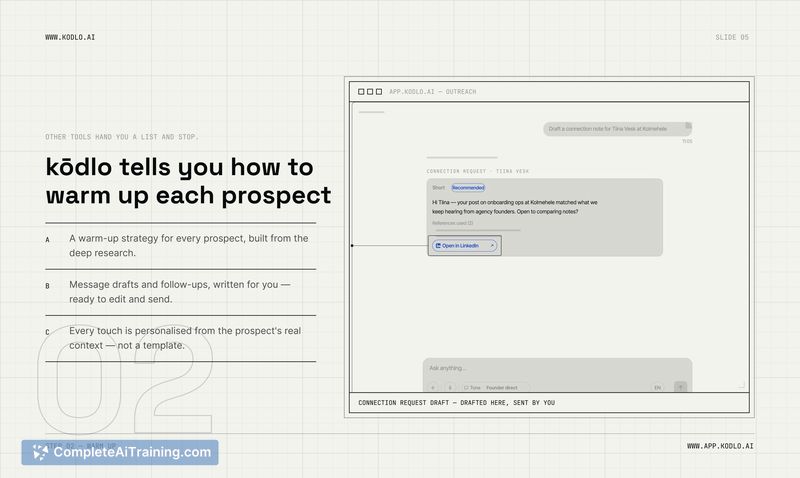
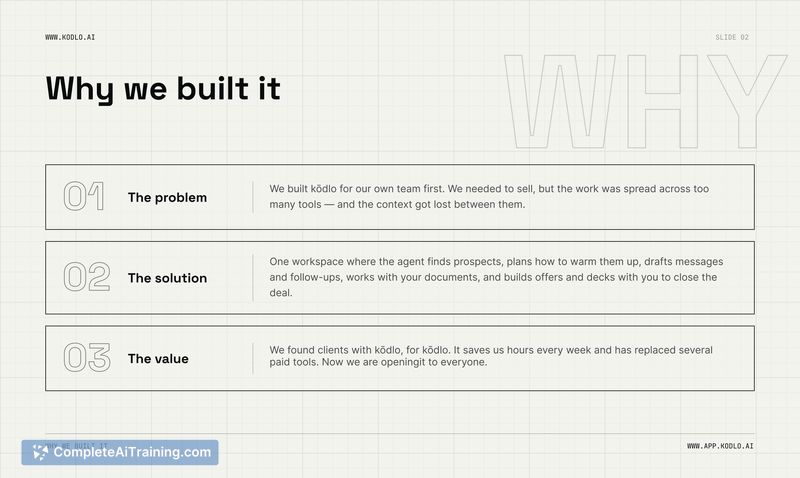
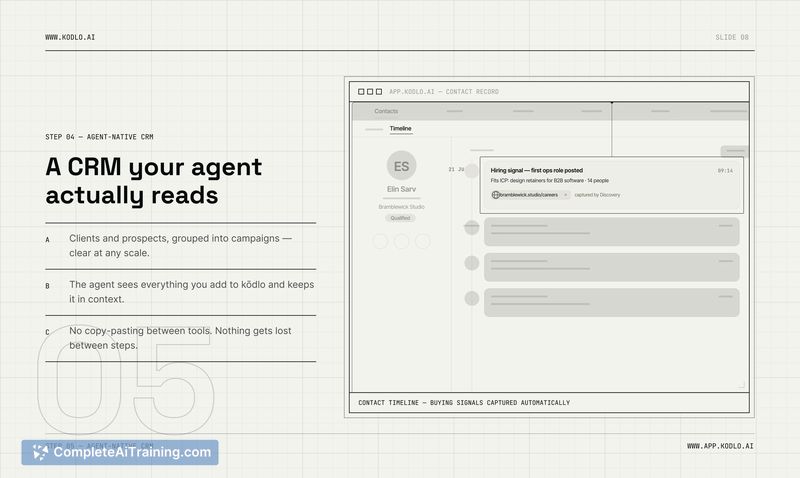
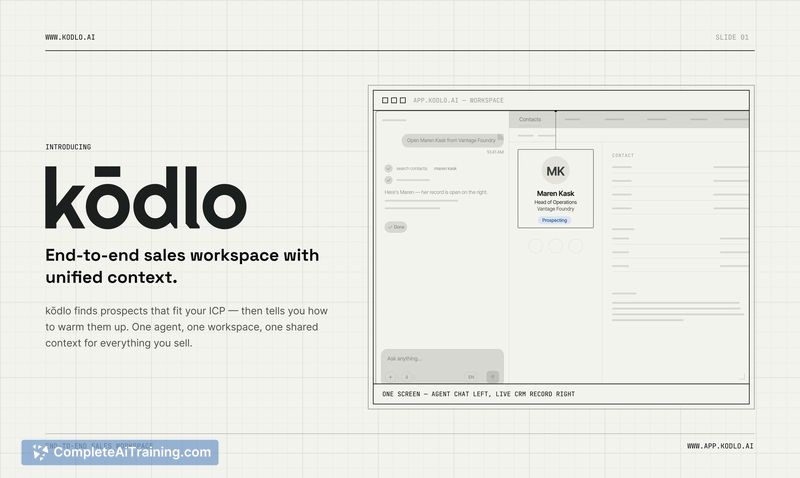
kōdlo launched this week as a focused attempt to reduce the tool-switching that bogs down complex B2B sales. Rather than stitching together separate products for lead research, messaging, and pitch decks, teams get one workspace where the AI agent maintains context across all those tasks. The product targets founders and small teams selling technical products, as well as salespeople in IT services-people whose prep work typically eats up more time than actual buyer conversations.
Key Features
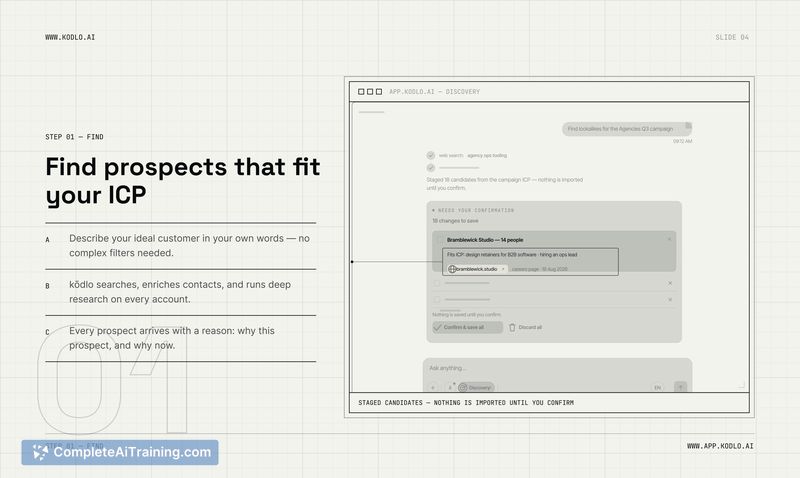
- Prospecting with evidence. Users describe their ideal customer profile and kōdlo returns matching companies and decision makers, each accompanied by a reason for the match-such as a recent funding round, a job posting, or a relevant line from the company's website.
- Deep search reports. Research on a company, market, or person is compiled into a structured report where every claim links to its source, powered by Exa's search API.
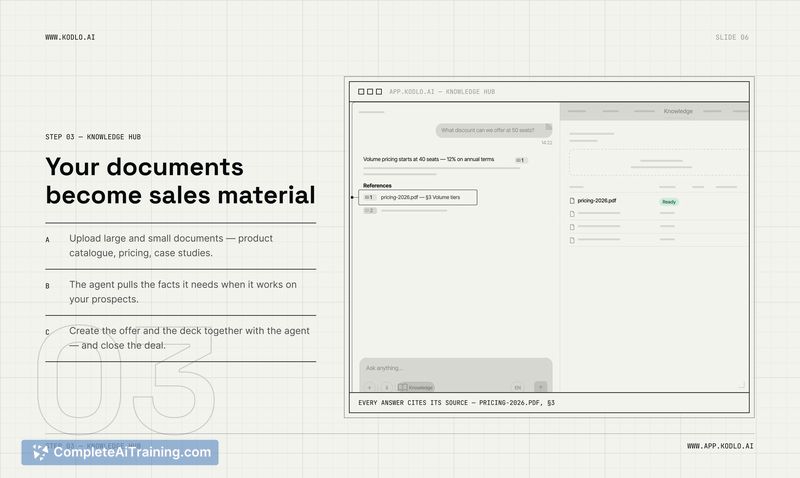
- Knowledge Hub. Teams upload price lists, case studies, technical documentation, and scanned PDFs. The agent answers questions from these documents and cites the specific file and page it pulled information from.
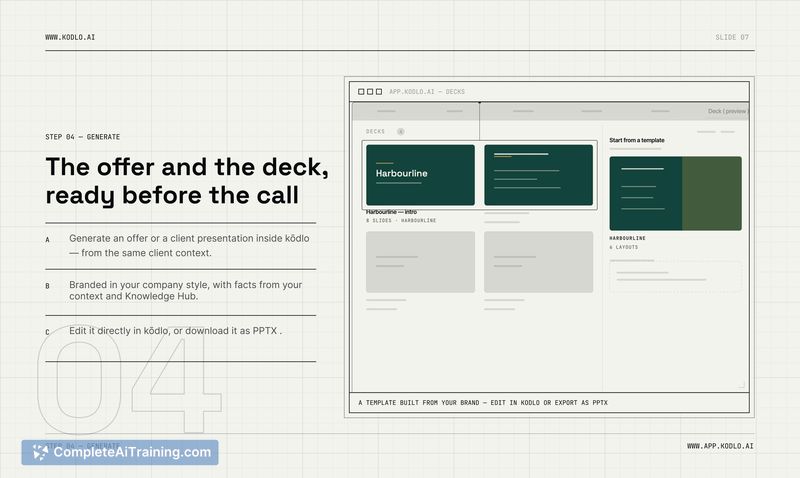
- Branded deck generation. The tool extracts a template from an uploaded company PowerPoint file and produces new decks in PPTX or PDF format that follow the same design. The team describes this template extraction as a preview feature.
- MCP connectivity. kōdlo exposes its prospects, plans, documents, and decks via MCP, so users can work with the same context inside Claude Desktop, Claude Code, Codex, OpenAI Work, and other MCP-compatible tools.
Pricing and Value
kōdlo offers a free trial that includes the same feature set as paid plans, with plan tiers differing mainly by capacity rather than feature gates. Specific pricing figures are not yet publicly defined on the product page. The launch promotion gives the first 100 sign-ups a 10% discount on the Starter plan. For organizations with stricter data requirements, the team states they can sign a Data Processing Agreement, host data exclusively within the EU, and deploy kōdlo on-premises under an enterprise license.
Pros
- Combines prospecting, research, writing, and deck creation in one interface, cutting down on context-switching between separate tools.
- Every generated claim links to a source, so salespeople can verify research before sending it to a prospect.
- Knowledge Hub answers draw from uploaded company documents with file and page citations, which helps teams keep messaging consistent with internal material.
- MCP support lets teams use the same sales context inside their existing AI coding and chat tools without duplicating work.
- The deck generator builds from a user's own PowerPoint template rather than preset designs, so output matches company branding.
Cons
- Template extraction for decks is labeled as a preview feature, so its reliability and edge-case handling are still unproven.
- The Knowledge Hub lacks built-in version control-the agent uses an internal virtual file system to track artifacts, but teams with many document revisions may encounter ambiguity.
- This tool won't suit large sales organizations that need advanced CRM integrations, pipeline analytics, or deeply customizable permission structures right out of the box.
kōdlo makes the most sense for small B2B SaaS teams and technical founders who spend hours each week researching accounts and assembling personalized outreach. The shared memory and MCP connectivity give it a distinct shape compared to standalone prospecting or writing tools, though teams should test the template extraction and document handling against their real workflows. Larger enterprises with rigid compliance or CRM requirements will likely find the current feature set too lean.