AI tool
Linchpin
Linchpin is an open-source runtime for hosting managed agents on a single VM: per-session Docker sandboxes, persistent event logs, HTTP/SSE API, built-in tools and encrypted credential vaults for quick self-hosting.
About Linchpin
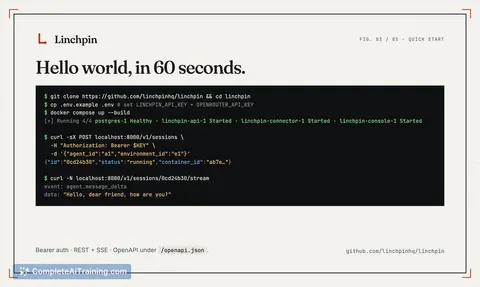
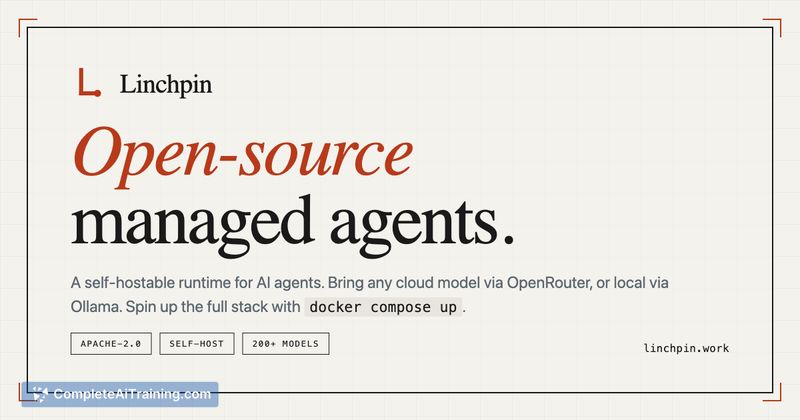
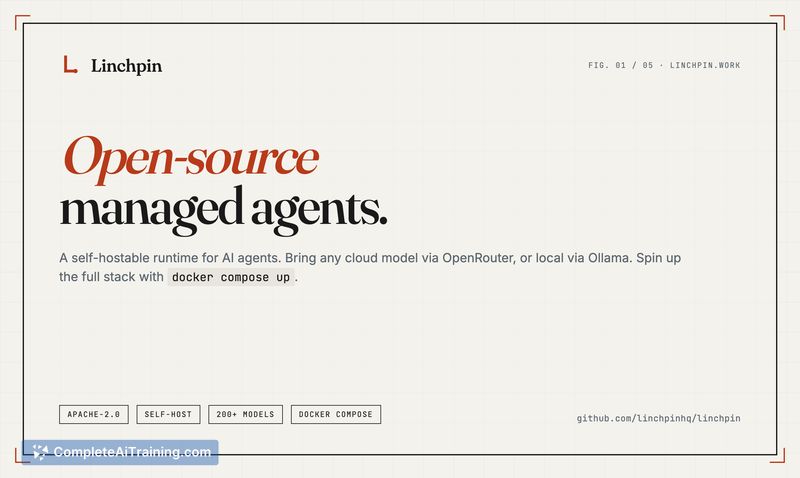
Linchpin is an open-source, self-hostable runtime for managed AI agents that runs under an Apache-2.0 license. With a single docker-compose command you get a running agent platform that exposes REST + SSE APIs, per-session Docker sandboxes, MCP tools, and encrypted credential vaults.
Review
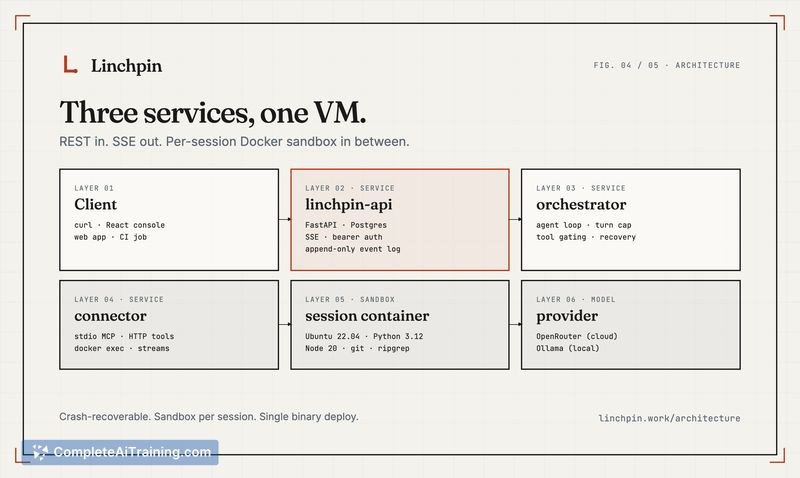
Linchpin aims to fill the gap between libraries and a runnable control plane by providing a pre-wired runtime layer you can deploy on a VM. The project is early (v0.1) but includes a practical set of features for developers who want local control over agent execution and integrations with cloud or local model providers.
Key Features
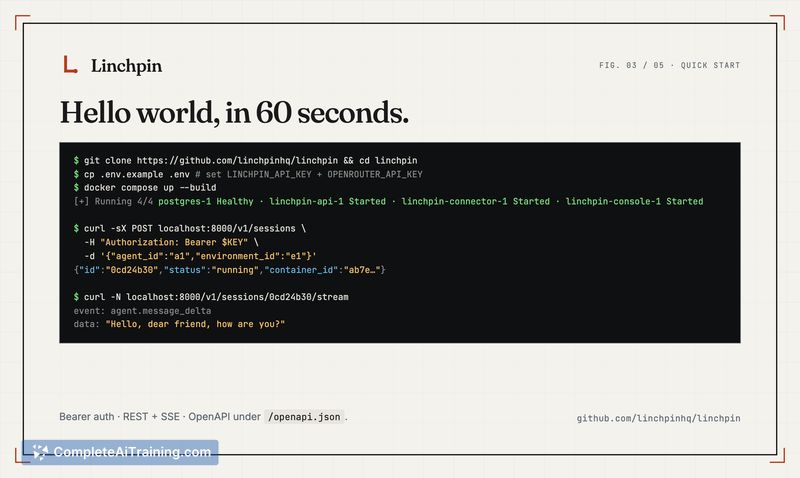
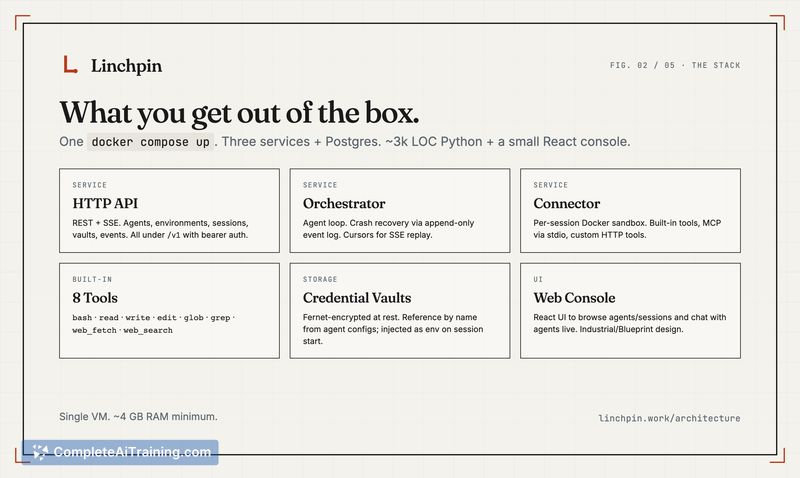
- Quick deployment: one command docker compose up to get REST + SSE APIs, session/event persistence, and a small console.
- Per-session Docker sandboxes and environment templates to isolate agent runs.
- Built-in tools (bash, read, write, edit, glob, grep, web_fetch, web_search) and MCP support via stdio or HTTP.
- Fernet-encrypted credential vaults for storing secrets locally.
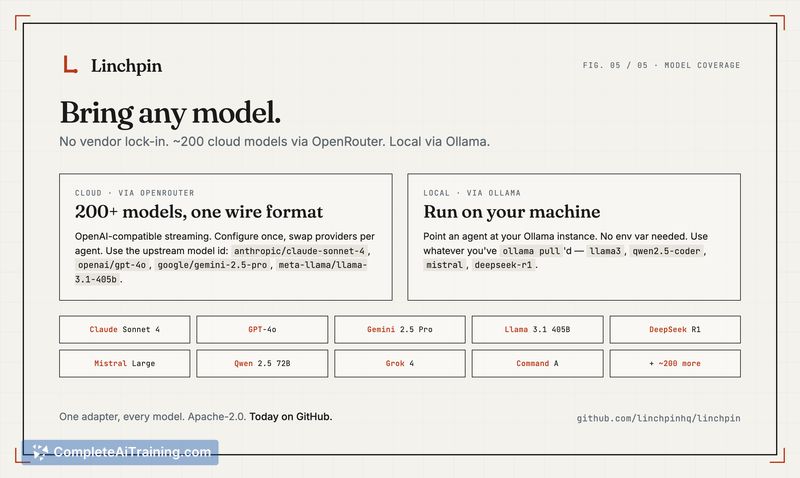
- Flexible model routing: use cloud providers via OpenRouter or local models via Ollama.
Pricing and Value
Linchpin is free and open-source under the Apache-2.0 license. For teams that prioritize privacy, control, and the ability to host their own agent runtime, it delivers strong value: a ready-made runtime that reduces the engineering effort needed to go from libraries to a running platform. Because model calls are proxied to external providers or local runtimes, infrastructure costs depend on the chosen model provider rather than on Linchpin itself.
Pros
- Open-source Apache-2.0 codebase that can be self-hosted and inspected.
- Fast setup that provides a full agent runtime (APIs, sandboxes, event log) with minimal wiring.
- Includes several useful built-in tools and an encrypted vault for credentials out of the box.
- Low base resource footprint: ~500 MB idle for the runtime and roughly ~300 MB per active sandbox task.
- Supports mixing cloud and local model providers (OpenRouter, Ollama), giving deployment flexibility.
Cons
- Early release limitations: single-tenant, single-user operation today, which limits multi-user or multi-team setups.
- Sandbox hardening is incomplete: no CPU/memory/cgroup caps, no exec timeouts, and no disk quotas yet.
- Missing enterprise features currently: no SSO/RBAC and no built-in observability dashboards.
For teams or developers who want an inspectable, self-hostable agent runtime and who can accept an early-release tradeoff set, Linchpin is a practical option that shortens the path from prototype to a running control plane. It suits privacy-conscious projects, solo developers, and small teams that prioritize local control and are comfortable adding additional hardening or multi-user controls as they scale.
Jobs Linchpin suits
We checked Linchpin against 500+ jobs; these get the most out of it.
Alternatives to Linchpin
Other tools that do the same main job. Our AI compared Linchpin with similar tools and kept the ones you could use instead.