AI tool
Looper
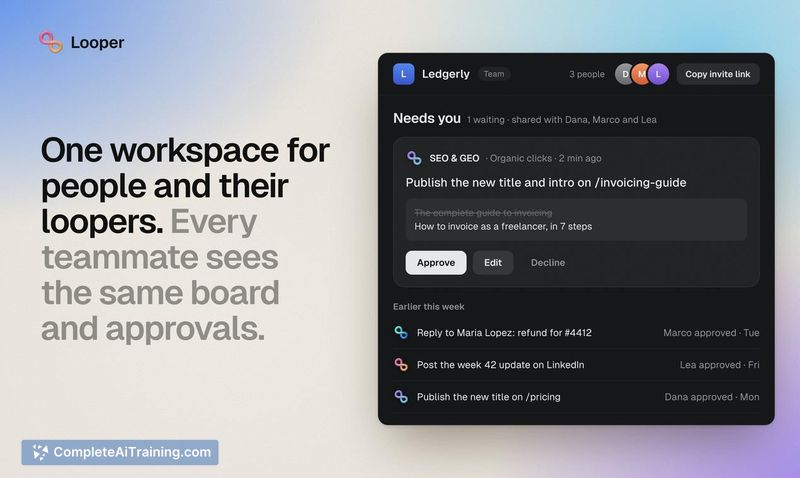
Looper is an open-source app for running AI teammates called loopers. Each looper owns one business metric and moves its units of work, such as articles or support tickets, through stages for approval.
About Looper
Looper is an open-source app for running AI teammates called loopers. Each looper owns a single business metric, and that metric defines its unit of work: organic clicks map to an article, first response time to a support ticket, unreconciled transactions to a bank transaction. The looper creates these units, moves them through stages, and asks your team before anything goes out.
Review
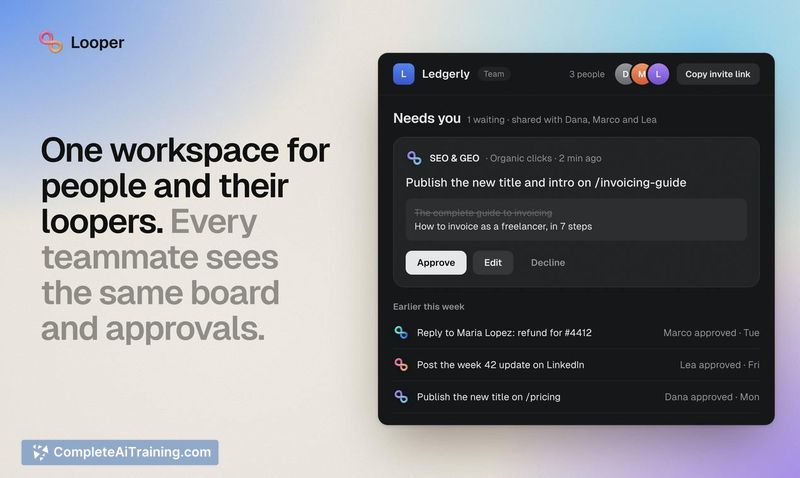
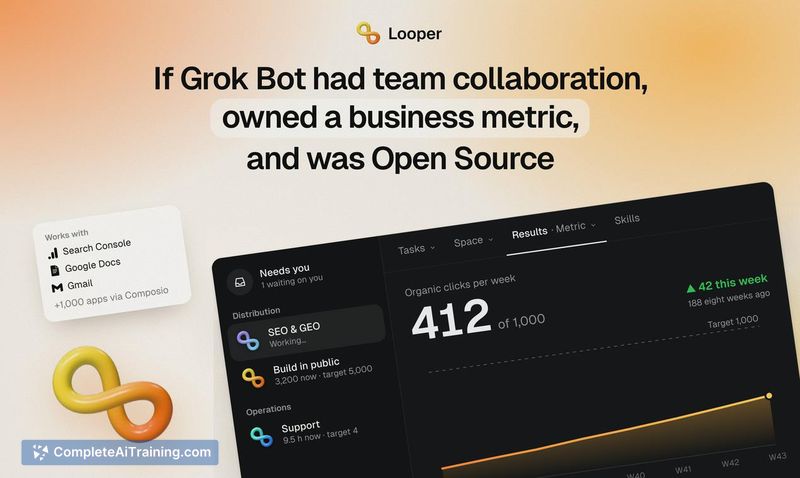
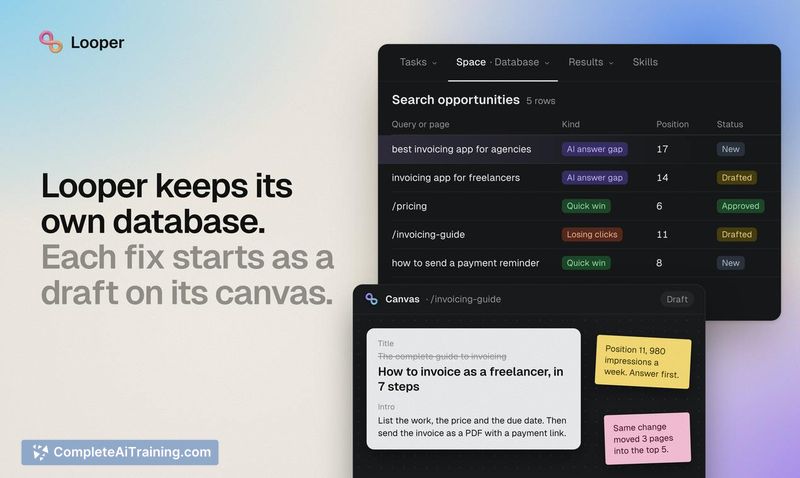
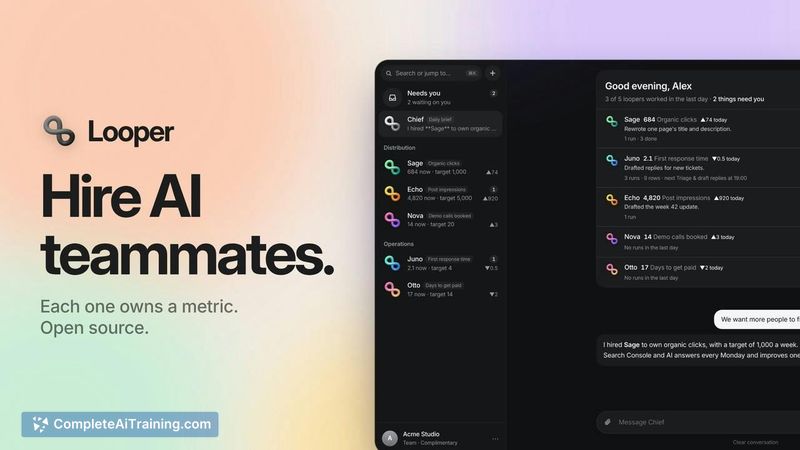
Looper takes a different organizing principle than most AI tools on the market. Where Grok and ChatGPT are built around a conversation and Zapier or n8n around a workflow, Looper is built around units of work that the looper creates and pushes through stages. The launch is recent, so the picture below reflects what the team has described at release.
Key Features
- Metric-owned loopers: each looper is tied to one number you care about, and that number determines its unit of work and the stages that unit passes through.
- Staged work with approval: an article moves New → Drafted → Approved → Done. The looper writes it, opens a pull request, and waits for you to approve the merge before it goes out.
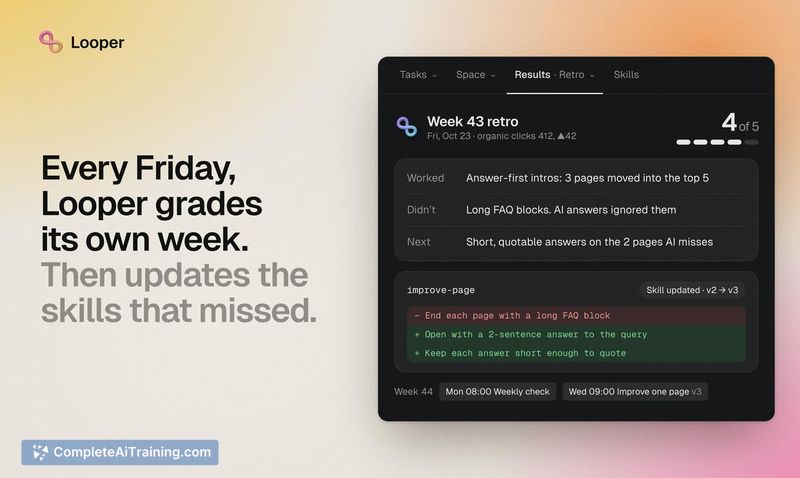
- Friday retro: the looper compares the week's work with the change in its metric, scores the week from 1 to 5, and adds next week's experiments to its kanban.
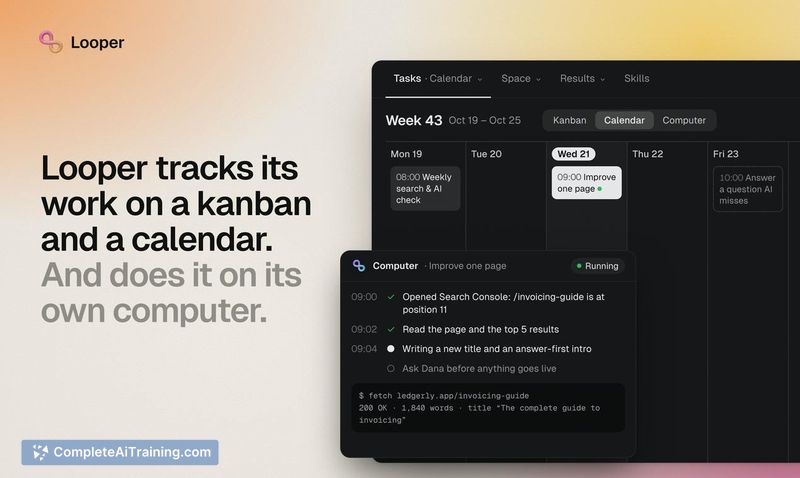
- Four synchronized views: a Notion-style database with one row per unit of work, a Trello-style kanban for tasks waiting on you, an Apple-style calendar for run times, and a Miro-style canvas for plans, references and notes on what worked.
- Tool access: loopers work in Gmail, GitHub, Search Console and other connected tools, and each looper gets a 1:1 every two weeks to improve.
Pricing and Value
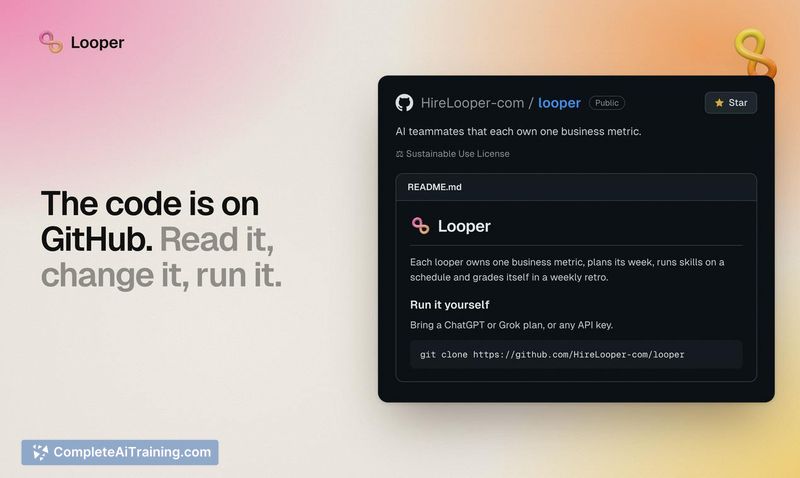
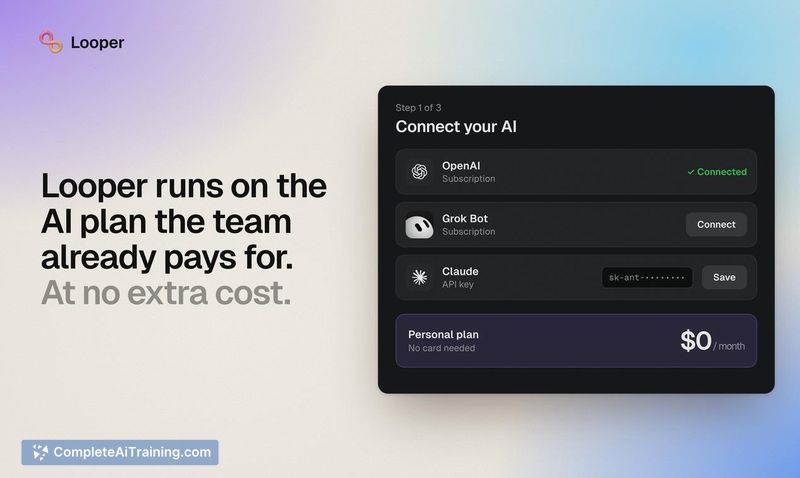
Three ways to run Looper are listed. Self-hosting is free under an MIT license with one-click deploy to Vercel and Neon. Hosted access is free if you connect your own ChatGPT or Grok subscription, though web search and computer use are billed pay as you go. A hosted tier at $49 per month includes Claude credits. The value depends on whether you already pay for a ChatGPT or Grok plan, since the free hosted route reuses that subscription rather than adding a new one.
Pros
- Open source under the MIT license, with self-hosting supported through one-click deploy to Vercel and Neon.
- Work units map to a single business metric, which keeps the scope of each looper narrow and checkable.
- Approval steps sit between drafting and publishing, so a pull request needs your merge before an article goes out.
- The weekly retro scores results against the metric and feeds experiments back into the kanban.
- Free hosted option for anyone already on a ChatGPT or Grok plan.
Cons
- Launched this week, so there's little track record of how loopers perform over months of real use.
- Each looper handles one metric and one unit of work, which means covering several business areas requires running several loopers.
- Not well suited for teams that want a conversational assistant or a trigger-and-step automation builder; Looper is organized around units of work, not chats or workflows.
Looper fits teams that already run on ChatGPT or Grok subscriptions and want an AI teammate tied to a specific number, such as organic clicks or first response time, with human approval before output ships. The self-hosted MIT route suits developers comfortable with Vercel and Neon. Teams looking for a general chat assistant or a visual workflow builder should look elsewhere.