AI tool
MakersClaw
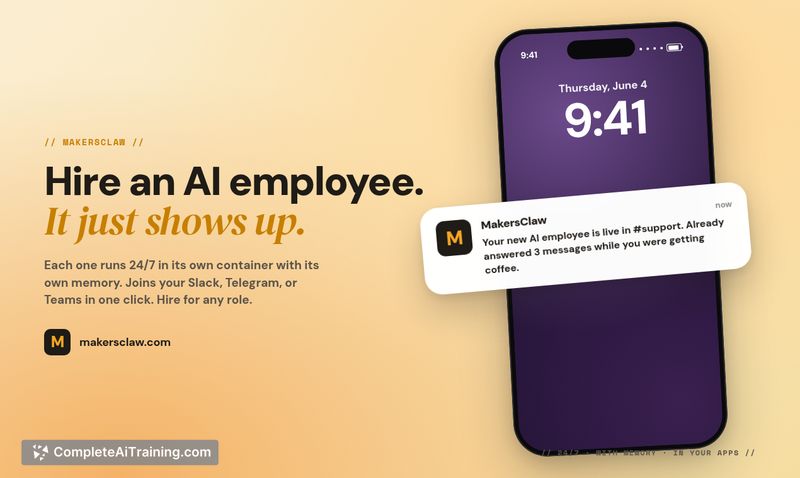
MakersClaw lets users hire AI employees for roles like support, sales, or research. Each runs continuously with its own memory and connects directly to Slack, Telegram, or Teams.
About MakersClaw
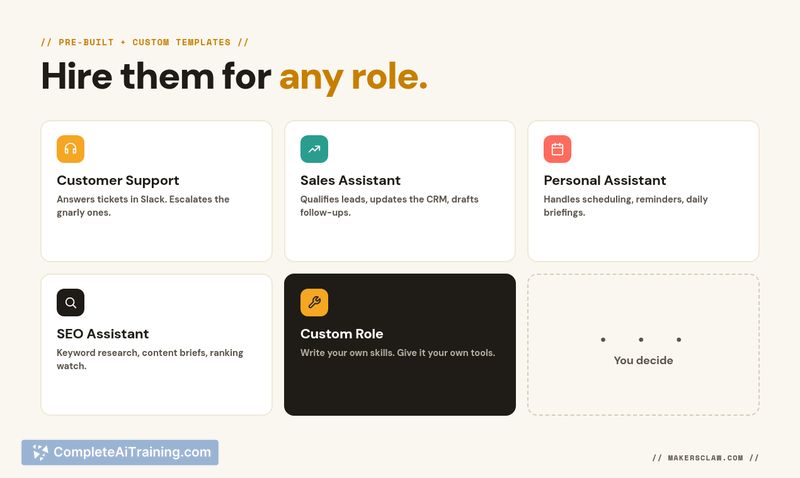
MakersClaw deploys AI employees that live inside Slack, Teams, or Telegram. Each employee runs in a dedicated container with its own persistent memory, available around the clock. The platform ships with pre-built templates for support, sales, research, and SEO, and also supports custom roles written by the user.
Review
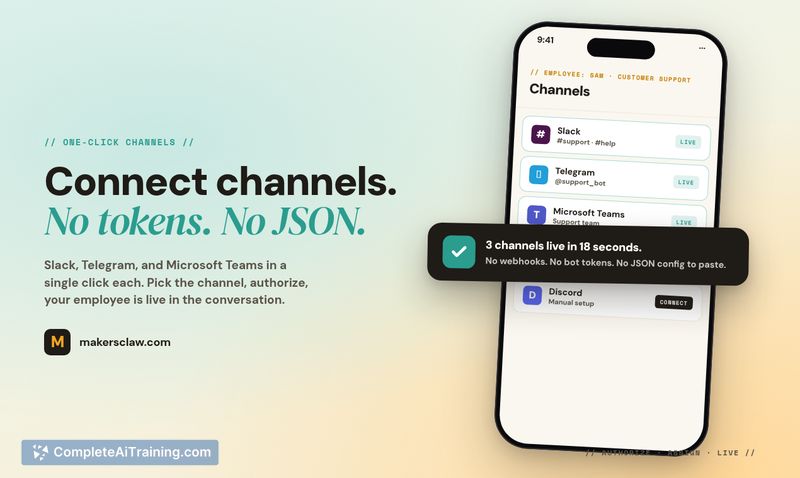
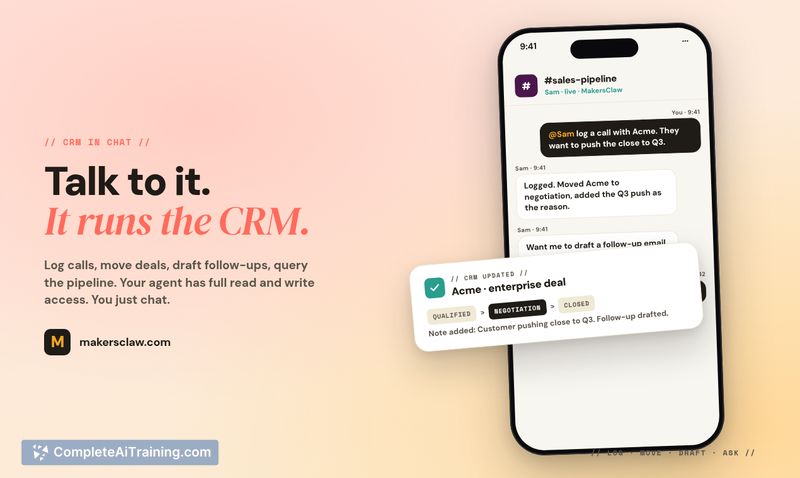
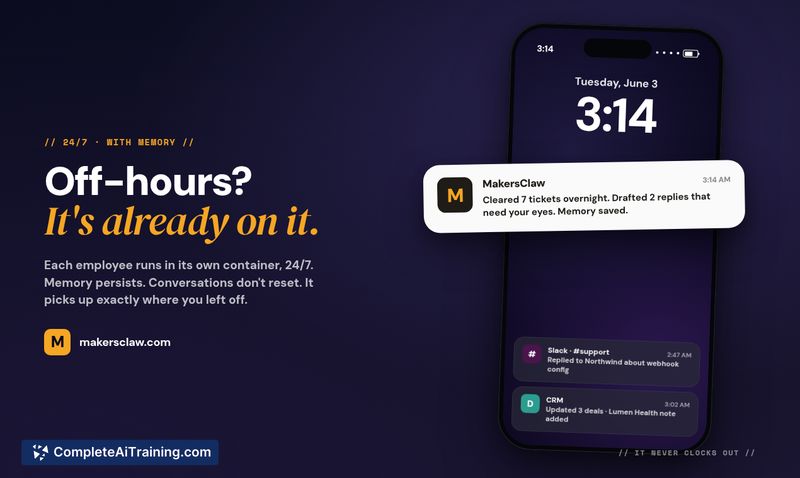
MakersClaw frames automation around independent AI workers, not chat widgets. The one-click connection to messaging platforms skips bot token and webhook configuration entirely. Its cost model ties spending directly to the tools the agent uses, rather than a flat subscription.
Key Features
- AI employees each get a Kubernetes pod with postgres-backed memory that survives restarts, disconnects, and redeploys.
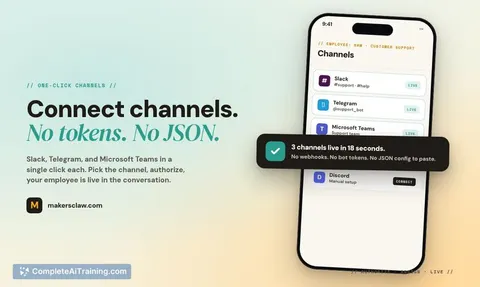
- One-click integration with Slack, Teams, and Telegram - no JSON config, bot tokens, or webhook URLs needed.
- A hosted MCP layer handles OAuth once per app (GitHub, HubSpot, Zendesk, Jira, and others); every employee in the workspace can then use those integrations.
- Chat-driven onboarding where the agent asks questions and writes its own configuration record, mimicking a remote hire interview.
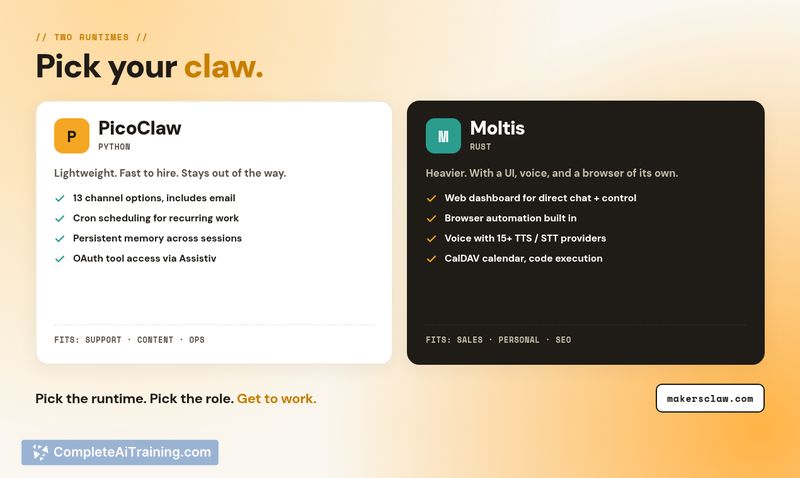
- Two runtimes: PicoClaw (Python, supports email channel and cron scheduling) and Moltis (Rust, adds a web dashboard, browser automation, voice via 15+ TTS/STT providers, and CalDAV).
Pricing and Value
MakersClaw charges a monthly subscription per AI employee for its pod and storage. Inference is metered separately against a shared workspace wallet, billed at provider cost with no markup. The per-call tool model means you pay only for successful actions. Exact subscription prices are not yet listed publicly; the team has described the model but not final figures.
Pros
- Persistent memory keeps conversations intact across restarts - an agent remembers yesterday's chat at 3 AM.
- One-click connections remove the typical bot setup overhead for Slack, Teams, and Telegram.
- Chat-driven configuration avoids manual form-filling and feels closer to briefing a new hire.
- Workspace-level OAuth means one authentication per app covers all employees, no re-auth per agent.
Cons
- Per-call costs can add up if an agent enters a retry loop, though only successful calls are charged and the team mentions fail-safe measures.
- The product launched this week, so long-term uptime and support responsiveness remain unproven.
- Not well suited for teams that need per-employee spending caps; the current model uses a shared wallet, and per-employee limits are a roadmap consideration, not yet shipped.
MakersClaw fits small to medium teams already working in Slack, Teams, or Telegram who want to automate support triage, sales drafts, or research tasks. It's less practical for enterprises requiring granular budget controls or deep audit logs out of the box. Early adopters who are comfortable with a pay-per-call model and a newly launched tool may find it a direct way to delegate recurring work to AI agents.
Jobs MakersClaw suits
We checked MakersClaw against 500+ jobs; these get the most out of it.
Alternatives to MakersClaw
Other tools that do the same main job. Our AI compared MakersClaw with similar tools and kept the ones you could use instead.