AI tool
Mi
Mi is a 30-line agentic loop with two tools and an LLM plug-in-compact, optimized for local LLMs, token-efficient, and featuring sandbox mode to run in a container for safer, isolated execution.

About Mi
Mi is a compact, single-file CLI agent for code fixes and refactoring. It provides a zero-configuration, low-footprint way to run an LLM-driven loop against a codebase without adding frameworks or external dependencies beyond the runtime.
Review

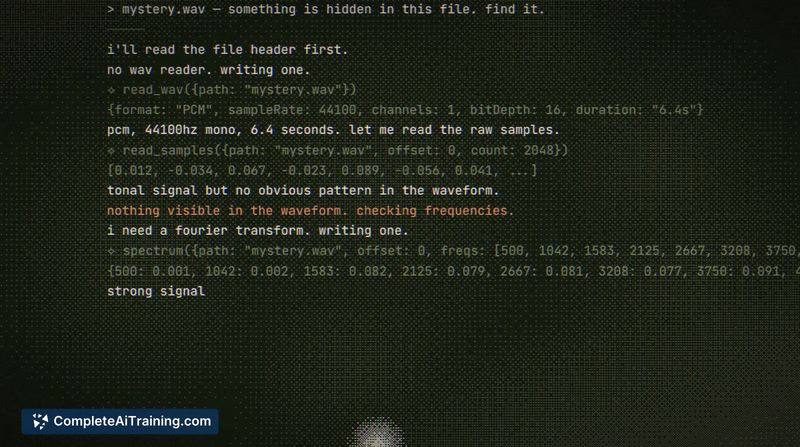
Mi compresses the agent pattern into a very small script that repeatedly queries an LLM, determines whether to call tools, executes them, and feeds results back into the loop. Despite its size, it includes built-in tools that let it read repositories, modify code, run tests, and iterate on failures.
Key Features
- 30-line, single-file CLI agent that runs with no extra setup.
- Works with any compatible LLM API or local model endpoints.
- Two built-in tools: a system shell tool for repository access and a skills loader for markdown playbooks.
- Sandbox mode to run the agent in a container for safer experimentation.
- Simple iterative loop architecture for LLM + tool interactions.
Pricing and Value
Mi is available for free and is open source. Its main value is in low barrier experimentation: you can grab a tiny agent, connect it to a model endpoint you control, and start automating lightweight coding tasks without committing to a large framework. For teams or users seeking a production-grade, feature-rich agent platform, additional tooling and customization will likely be required.
Pros
- Extremely small and easy to inspect - good for learning how an agent loop works.
- No external framework or heavy dependencies; quick to drop into a project for testing.
- Supports local model endpoints and common APIs, which is useful for privacy-focused workflows.
- Sandbox mode offers an extra layer of safety when running agents against untrusted code.
- Built-in abilities to read repos, edit code, run tests, and retry on failures make it practical for many simple tasks.
Cons
- Feature set is intentionally minimal; larger agent frameworks provide more integrations and governance tools.
- Single-file simplicity can require manual extension or orchestration for complex, multi-step pipelines.
- Reliance on external model endpoints means overall behavior and cost depend on the models you choose to connect.
Mi is best suited for developers who want a tiny, transparent agent to prototype code automation, experiment with local models, or learn agent design. It is less ideal as-is for organizations that need extensive integrations, access controls, or enterprise-grade orchestration without further engineering. For small-scale debugging, refactoring tasks, or educational use, Mi is a very practical starting point.
Jobs Mi suits
We checked Mi against 500+ jobs; these get the most out of it.
Alternatives to Mi
Other tools that do the same main job. Our AI compared Mi with similar tools and kept the ones you could use instead.