About MindReader v1
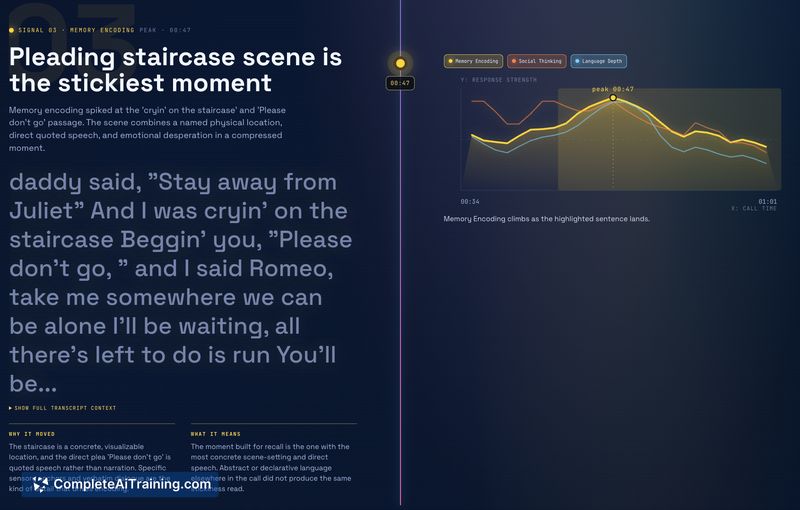
MindReader v1 is an open-source tool that simulates brain responses to content using predicted fMRI data. It processes text, audio, or video and generates a second-by-second neural response report based on Meta FAIR's TRIBEv2 model, trained on roughly 1,000 hours of real brain scans across 720 subjects. The output includes seven neuro-metrics-such as attention-mapped from published region-to-function research.
Review
MindReader v1 launched this week as a free project from Cassini Research. The tool applies a predictive model to content and produces a neuro-metric breakdown, with all code and methodology openly available for inspection and modification. This review looks at what the current version actually does and where it fits for working teams.
Key Features
- Simulates brain activity using TRIBEv2, a model that predicts average fMRI voxel responses for content inputs.
- Maps those predictions to seven neuro-metric dimensions, including attention, based on Dr. Falks' research and other published work.
- The codebase is open source, and users can self-host the tool on their own infrastructure.
- A methodology page at mindreaderai.vercel.app/methodology details the science, assumptions, and limitations behind the predictions.
- Relative signal comparisons show where attention holds or drops within a single piece of content, rather than providing absolute neural readouts.
Pricing and Value
MindReader v1 is free. The makers describe it as completely open source and encourage self-hosting. No paid tiers or licensing fees are mentioned at launch. The value for users depends on whether simulated neuro-metrics provide useful signals for their content evaluation workflows.
Pros
- Code is available for audit, modification, and community contributions.
- Makers clearly communicate that outputs are predictions, not measurements, and disclose accuracy limits like a zero-shot correlation of ~0.4.
- Built on TRIBEv2, which Meta reports as 2-3x more accurate than prior encoding models for fMRI prediction.
- Relative attention signals can help identify engagement shifts inside a piece of content.
- No cost to run the web version or to self-host the tool.
Cons
- Predictions are simulations, not direct brain measurements; the reported zero-shot correlation means results can diverge from real fMRI data.
- The seven-metric interpretive layer carries assumptions from region-to-function mappings that may not generalize across all content types or audiences.
- Not well suited for teams that need clinically validated neural data or high-accuracy absolute measurements for regulatory or high-stakes decisions.
MindReader v1 is a research tool for teams experimenting with simulated neural responses in content evaluation. It fits early-stage testing in marketing, sales coaching, or dataset labeling where relative attention signals might add a new dimension. Organizations that require validated, high-accuracy neural data should look to other methods.
Open 'MindReader v1' Website
Your membership also unlocks: