AI tool
Mudroom
Mudroom runs AI coding agents inside an isolated sandbox with a copy-on-write clone of your project so they cannot touch your real files. It is for developers who want to review and selectively apply or undo agent changes through a diff interface.
About Mudroom
Mudroom is an open-source tool that runs AI coding agents inside a sandboxed Linux environment, keeping them isolated from your actual project directory. It makes a copy of your project, lets an agent work on that copy behind a network allowlist, then presents the changes as a diff you can review and selectively apply - with undo available for any applied change. The tool ships as a native Swift app for macOS on Apple silicon and a CLI for Linux, Windows, and Intel Macs, under an MIT license.
Review
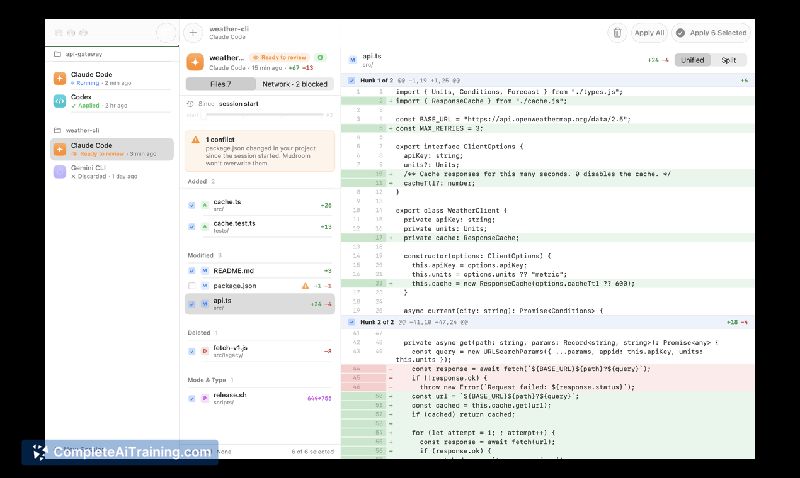
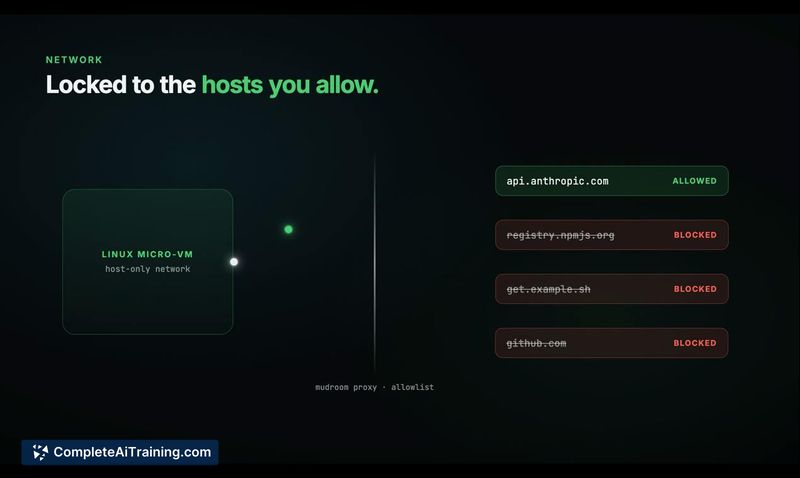
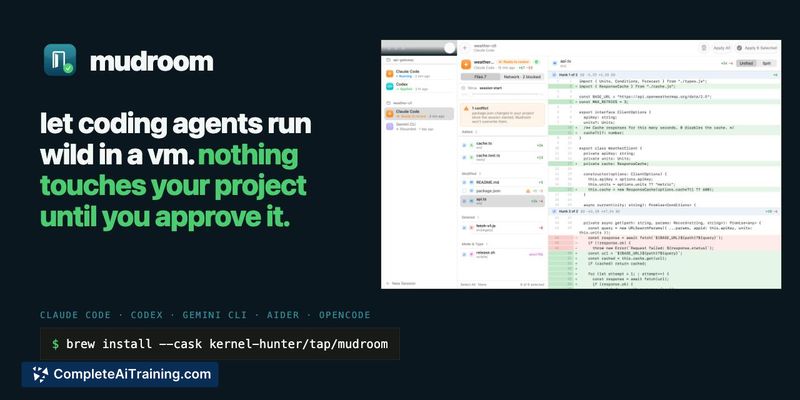
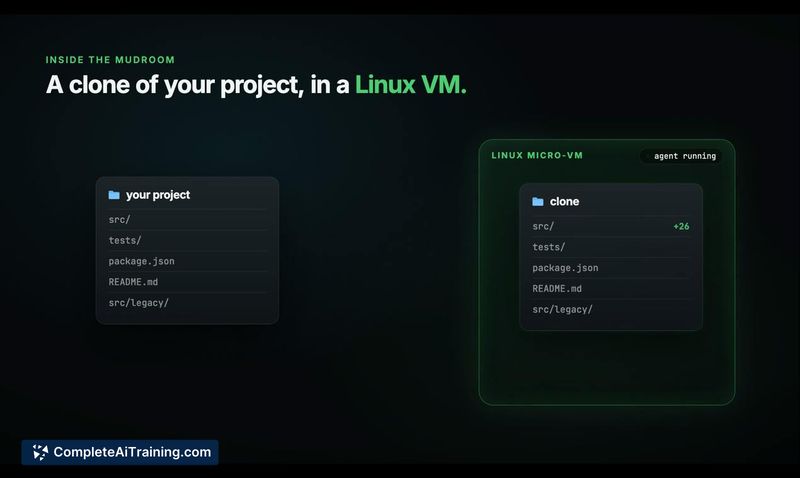
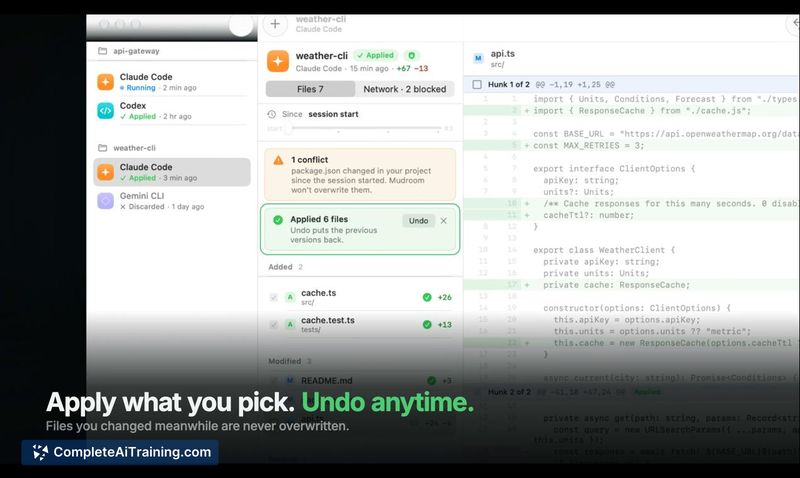
Mudroom addresses a specific friction point for developers who use coding agents like Claude Code, Codex, or Gemini CLI: the desire to run them with fewer permission interruptions without losing control over what actually lands in the codebase. It does this by shifting the agent's workspace onto a copy-on-write clone of the project, running inside a container or micro-VM, and routing network access through a proxy that logs every connection. The diff review workflow mirrors what you'd expect from a pull request, with the ability to accept whole files, individual hunks, or nothing at all.
Key Features
- Project cloning via APFS copy-on-write on macOS, which avoids disk usage until files diverge from the original.
- Linux sandbox that mounts only the project copy - using Apple's container runtime on macOS, Docker or Podman on Linux and Windows.
- Network allowlist that blocks all DNS and outbound traffic by default, except for agent API hosts and user-specified additions, with connection logging through a local proxy. Locked-down networking on Windows is still in testing.
- Diff review interface that lets you apply all changes, select specific files, or pick individual hunks, with the ability to undo any apply step.
- Multiple agent support: the tool's creator mentions running two agents in separate Mudroom copies, though concurrent edits to the same file from separate copies may produce conflicts when applying the second set of changes.
Pricing and Value
Mudroom is free and MIT-licensed. There is no paid tier, subscription, or usage-based pricing mentioned in the available materials. The source code is open, and the tool runs locally without a cloud service dependency.
Pros
- Keeps agent activity off the real working directory, reducing the risk of unintended modifications to tracked or untracked files.
- Network isolation defaults to no outbound access except for explicitly allowed hosts, with a log of every connection attempt.
- Selective apply and undo give fine-grained control over what changes reach the project.
- Open-source MIT license with no usage costs.
- Works across macOS, Linux, and Windows through a combination of native and CLI interfaces.
Cons
- Windows networking lockdown is still being tested and may not yet match the isolation level available on macOS and Linux.
- Running multiple agents in separate copies that touch the same file can create merge friction when applying results sequentially.
- The tool is not well suited for developers who want a fully automated agent pipeline with no manual review step - Mudroom intentionally inserts a human gate before changes land.
Mudroom fits workflows where developers want to let coding agents run with fewer prompts but still inspect and approve every change before it touches the real project. Teams that already treat agent output as something to review, rather than auto-merge, will recognize the pull-request-like flow. It's less useful for those who prefer fully hands-off agent execution or who work primarily on Windows and need the strictest network isolation right now.