AI tool
Onepin
Onepin checks AI-generated voiceover for pronunciation errors in names, prices, and dates before release. It fixes mistakes without re-rendering the original audio. The tool is for production teams and platforms shipping voiceover at scale.
About Onepin
Onepin is a production layer for AI text-to-speech that works with existing voice models from ElevenLabs, OpenAI, Google, and 30+ other providers. It checks scripts before they ship by spelling out prices and dates, verifying names against a 4-million-word pronunciation dictionary, and scoring each line for accuracy. The tool also fixes individual mispronounced words in the same voice without requiring a full re-render of the take.
Review
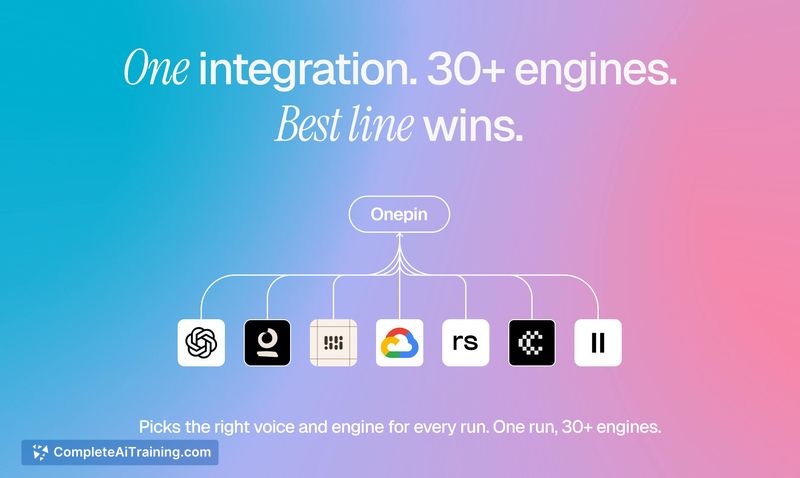

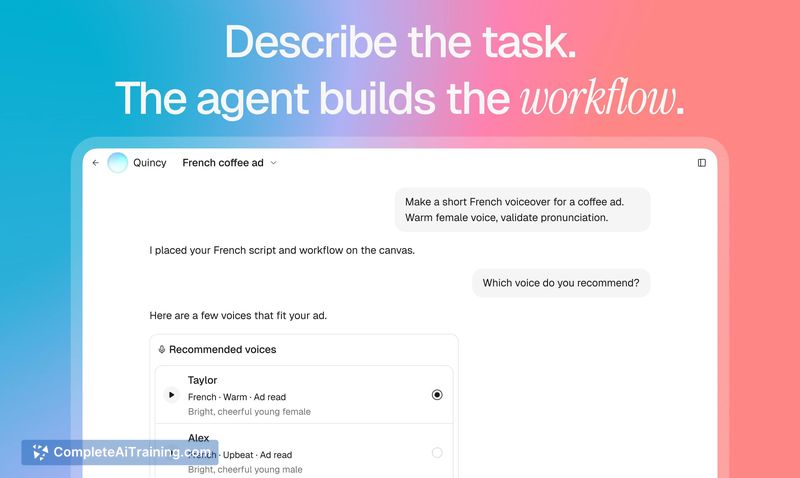
AI-generated voices have reached a point where they sound convincingly human, but they still stumble on proper nouns, branded terms, and numerical expressions-guessing from spelling rather than applying correct pronunciation. Onepin addresses that gap directly. It sits on top of the TTS engines teams already use and adds a script-checking and correction workflow that catches errors before publication.
Key Features
- Script preprocessing: Spells out prices, dates, and abbreviations so the voice engine reads them as intended.
- Pronunciation checking: Matches names, brands, and specialized terms against a 4-million-word dictionary, checking how a word was said rather than just what the transcript spells.
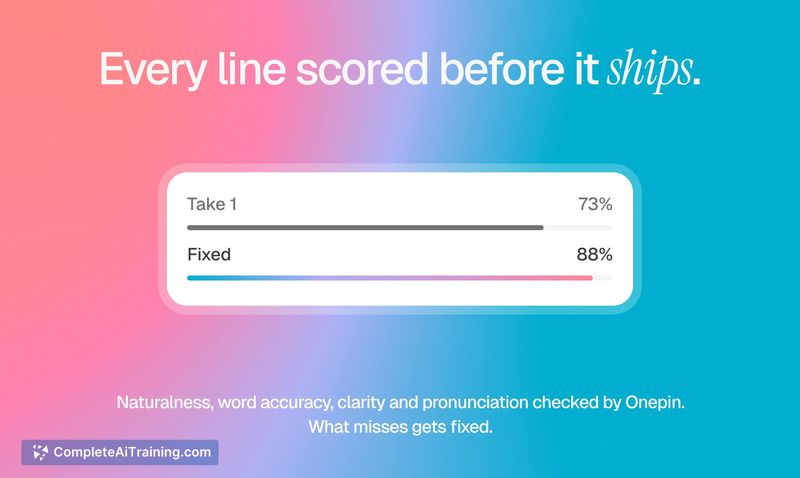
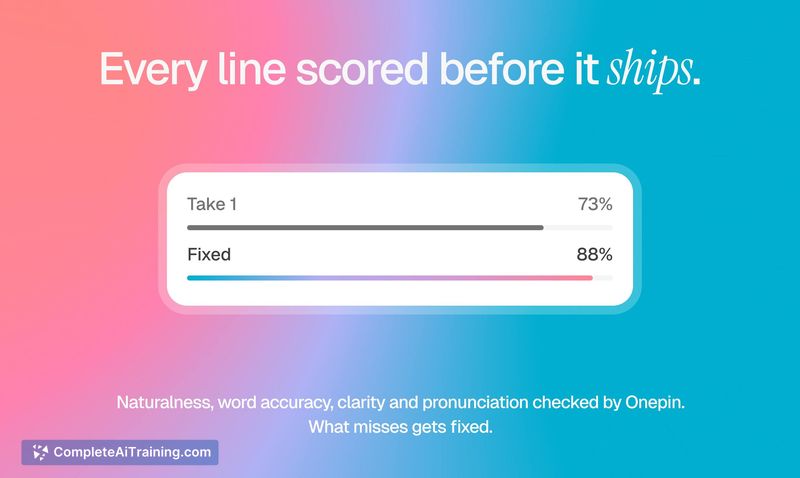
- Line scoring: Rates every line on naturalness, clarity, word accuracy, and pronunciation against a user-defined bar.
- Single-word fix: Repairs one mispronounced word in the same voice without re-rendering the entire take, using an internal voice model that clones the voice and style.
- API, SDK, and MCP access: Available from day one for integration into existing production pipelines. SOC 2 Type II compliance is in place.
Pricing and Value
Onepin is free to start with no credit card required. A launch promotion offers 20% off for Product Hunt users through October 31. Detailed pricing information is listed at onepin.ai/pricing. The maker states that the fix feature uses Onepin's internal voice model rather than regenerating through the original TTS provider multiple times, which can reduce the 2x-9x cost multiplier that teams typically encounter when fixing pronunciation issues through repeated re-renders.
Pros
- Works with 30+ existing TTS providers, so teams keep their established voices and cloned profiles.
- Checks pronunciation against how a word was actually spoken, not just transcript text matching.
- No phonetic spelling input required-the dictionary and fix feature handle that automatically.
- Supports 10 locales with plans to expand to 30.
- Single-word correction avoids the time and cost of re-rendering full audio files.
Cons
- Paralinguistic cues like [breath] and [pause] are not yet detected; this is on the roadmap.
- Direct plugins for Premiere Pro and DaVinci Resolve are still in development-currently, access is through the web dashboard, API, SDK, or MCP.
- Teams that rarely use proper nouns, branded terms, or numerical data in their voiceover scripts won't encounter the specific problems Onepin solves.
Onepin fits into workflows where AI voiceover is produced at volume-product videos, ads, explainers, dubbing, audiobooks, courses, and platforms serving millions of users. It's most useful when script accuracy on names, prices, and dates is critical and manual line-by-line review isn't practical. For solo creators or projects with minimal named-entity content, the additional production step may not add enough value to justify changing an existing process.