About OpenObserve
OpenObserve is an AI-native, open-source observability platform that collects logs, metrics, and traces in a single engine. Built in Rust with a stateless architecture and object-storage backing (S3/MinIO/GCS), it targets lower storage costs and fast query performance.
Review
OpenObserve delivers a unified observability workflow with SQL-based queries and compatibility with common collectors and protocols. The project is community-driven and actively developed, offering both a self-hosted open-source option and a cloud service for quicker onboarding.
Key Features
- Unified data model for logs, metrics, and traces with a single query surface (SQL).
- Rust-based, stateless engine that stores data on object storage to reduce infrastructure footprint.
- Drop-in compatibility with Prometheus, OpenTelemetry, FluentBit, Vector and other standard collectors.
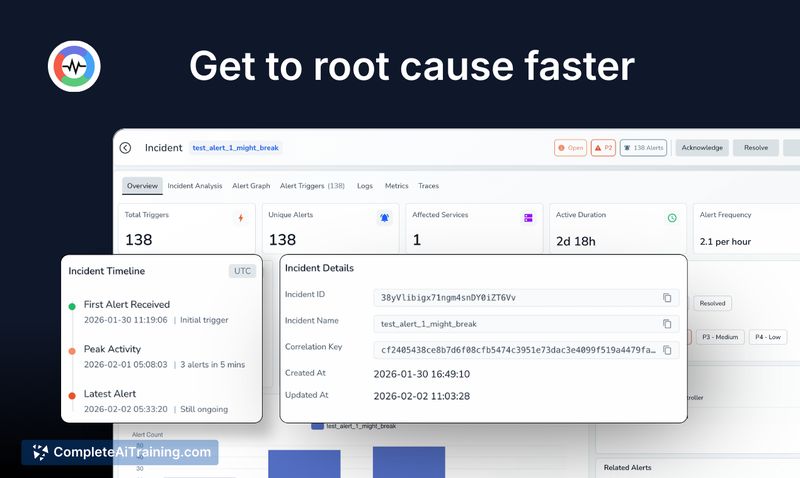
- Native AI Assistant and AI SRE agent for natural-language query help, incident summarization, and correlation.
- Open-source codebase with cloud option and documentation to expedite trial and adoption (website, docs, GitHub).
Pricing and Value
OpenObserve is available as open-source for self-hosting and as a hosted cloud service with a free trial. The platform emphasizes lower long-term storage costs by using object storage instead of block storage; marketing materials cite large reductions in storage compared with some other systems. For self-hosting, costs are mainly object storage, compute for collectors and the engine, and operational overhead. The cloud option simplifies setup and testing at the expense of subscription fees, while self-hosting gives full control and potential cost savings for high volumes of data.
Pros
- Unified logs/metrics/traces workflow reduces context switching and simplifies root-cause work.
- Object-storage approach can cut storage expenses and lets teams retain more raw data without aggressive sampling.
- Familiar SQL-based queries lower the learning curve compared with proprietary query languages.
- AI Assistant and SRE agent help speed up query construction and incident summaries, which can reduce time-to-diagnosis.
- Active open-source community and integrations with established collectors make adoption flexible.
Cons
- The project is still maturing in some enterprise areas; certain features and polish may lag behind long-established commercial vendors.
- Self-hosting requires setup around object storage, orchestration (Helm/Kubernetes), and ongoing ops work that teams must plan for.
- Feature parity between cloud and self-hosted editions can change as the platform develops, so evaluate both paths against specific requirements.
OpenObserve is a good fit for engineering teams and SREs who want a single platform for observability with lower storage costs and modern AI-assisted workflows. It's particularly attractive for teams willing to self-host or try the cloud trial to assess fidelity and operational trade-offs before committing to a longer-term deployment.
Open 'OpenObserve' Website
Your membership also unlocks: