AI tool
Opposable
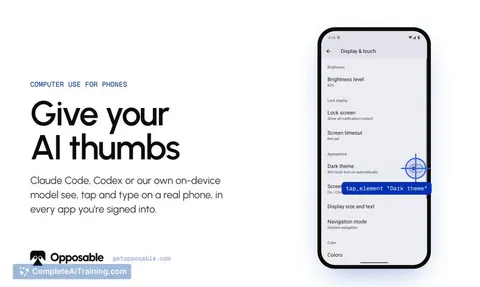
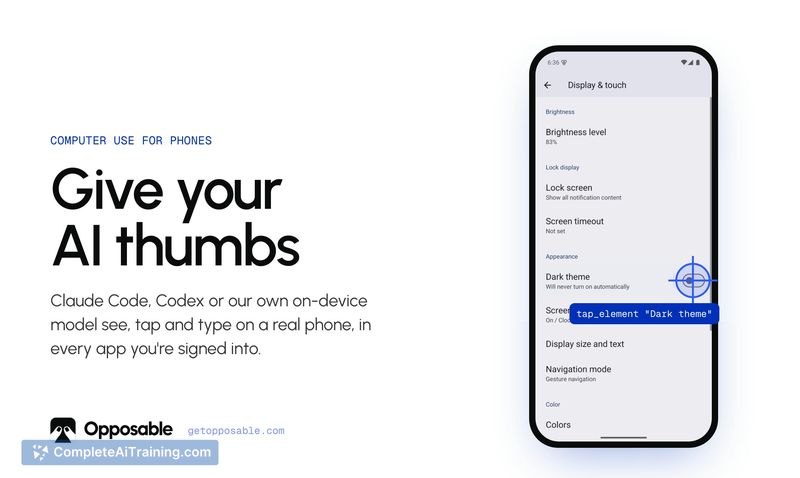
Opposable lets AI agents control a real Android phone to open apps, read screens, tap, type, and swipe. It is for developers who use Claude Code or Codex and need to automate tasks that only exist inside mobile apps.
About Opposable
Opposable is a tool that connects AI agents like Claude Code or Codex to physical smartphones. It lets these agents see the screen, tap, type, and swipe on real Android or iPhone devices, operating inside any app the user is signed into. The Android version uses a dedicated app, while iPhone support works through a small ESP32 USB stick that the phone recognizes as a Bluetooth keyboard and mouse.
Review
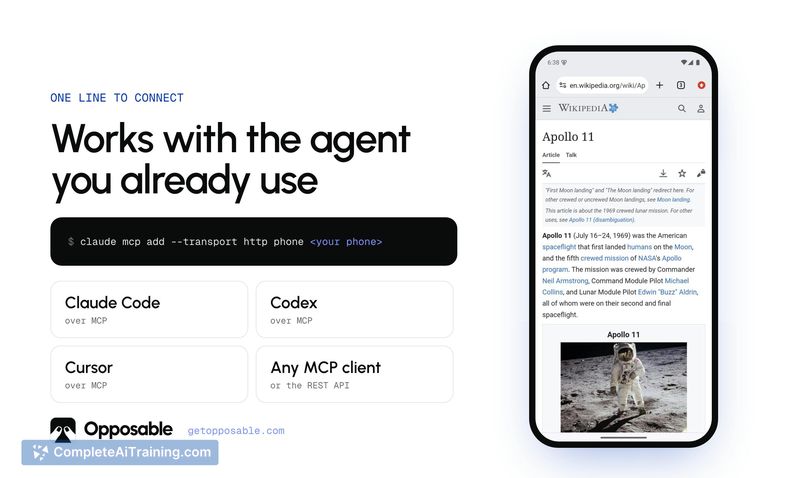
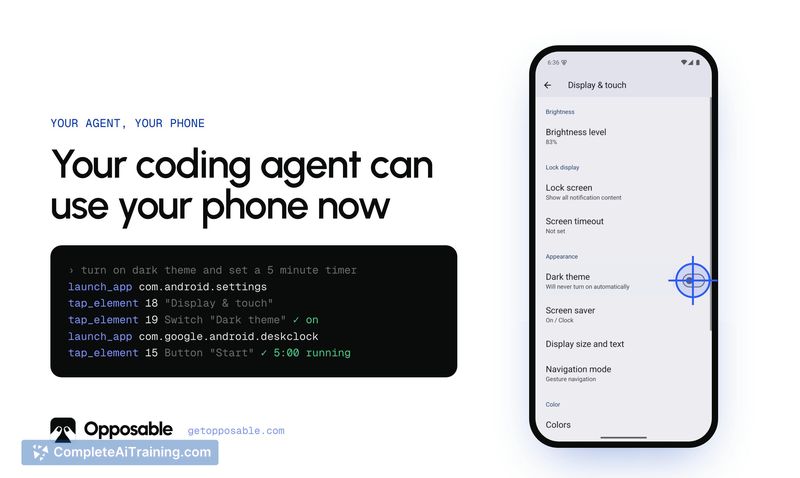
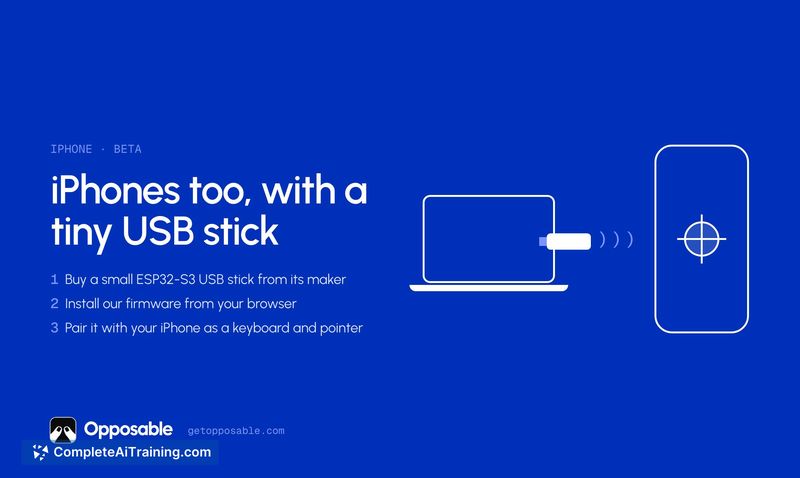
Opposable addresses a specific gap in AI agent capabilities-interacting with mobile apps that don't have web or API equivalents. The tool routes actions through a real device, which means an agent can check a delivery in a carrier app, grab a 2FA code, or book a service that only exists on a phone. The setup is lightweight on Android, requiring just an app install and a single line pasted into the agent, while the iPhone path involves flashing firmware onto an $8 USB stick and using AssistiveTouch.
Key Features
- Direct screen interaction on real phones-agents can open apps, read on-screen content, tap, type, and swipe.
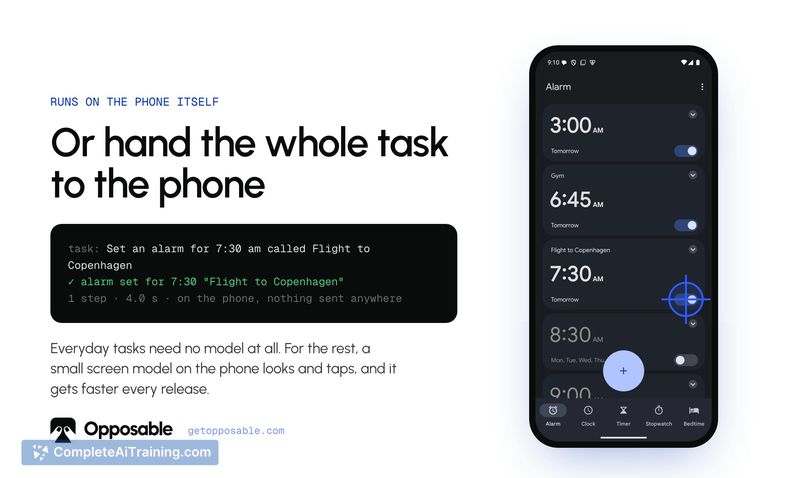
- On-device task handling for simple actions like alarms, texts, and settings changes, which run without any model at all.
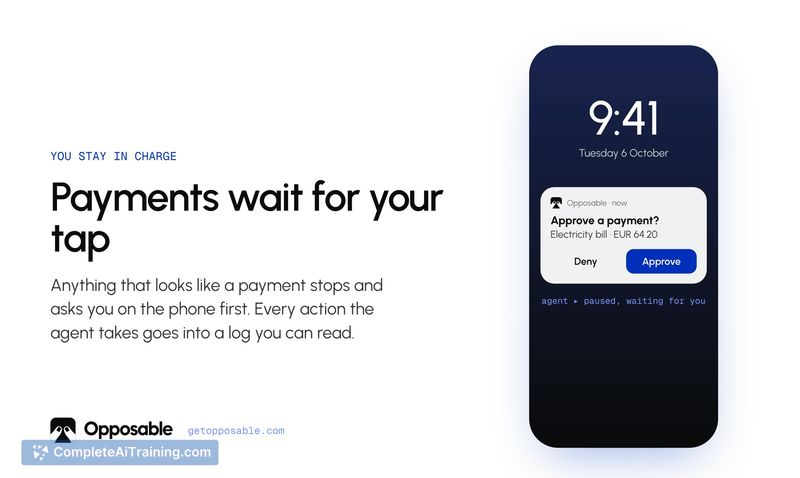
- A payment guard that scans the entire screen for amounts, currencies, balances, card numbers, or payment sheets and pauses for user approval before confirming any tap.
- Cross-platform support spanning Android (via an app) and iPhone (via an ESP32 USB stick emulating Bluetooth input through AssistiveTouch).
- An activity log that records agent decisions and user approvals for later review.
Pricing and Value
The Android app is listed as free. The iPhone method requires an ESP32 USB stick that the maker notes costs about $8. No subscription tiers, usage limits, or paid plans appear in the current product information. The long-term pricing model is not yet defined.
Pros
- Works with apps that have no API or web interface, expanding what an agent can actually reach.
- Payment detection doesn't rely on a static list of known apps-it checks for money-related signals on screen before any tap proceeds.
- Small, on-device model keeps the phone working on tasks even after the connected laptop is closed.
- iPhone support, though described as beta, gives a path for iOS users despite Apple's restrictions on app-to-app control.
- The maker actively requests feedback on where the tool gets stuck, which suggests a development cycle responsive to breakage reports.
Cons
- The iPhone setup is explicitly described as a hack and in beta-it requires flashing firmware and routing input through AssistiveTouch, which introduces friction and potential fragility.
- Payment detection, while broad, can miss value transfers that lack currency symbols, such as crypto token sends, loyalty point redemptions, or in-game currency spending where real money was converted earlier.
- This tool is not well suited for users who need deterministic, API-level reliability for mobile workflows-it operates against live, visual UIs that can change layout or break automation without warning.
Opposable fits scenarios where an agent must interact with a mobile app that has no alternative interface-think pulling a 2FA code mid-workflow, checking a delivery status in a proprietary app, or tapping through a booking flow that only lives on a phone. The Android path is straightforward and free, while the iPhone path asks for more setup tolerance from the user. Anyone whose mobile tasks involve frequent UI changes or ambiguous payment screens should expect to spend time tuning and monitoring the agent's behavior.