AI tool
PandaProbe
PandaProbe captures full AI-agent sessions (LLMs, tools, APIs) for tracing, evaluation, monitoring and debugging, so teams can measure production quality and reliability. Open-source + cloud.
About PandaProbe
PandaProbe is an open-source agent engineering platform that provides observability for AI agent applications. It captures structured traces, evaluates session-level behavior, and offers monitoring and analytics for both development and production workloads.
Review
This review looks at PandaProbe's capabilities as a tracing, evaluation, and monitoring tool for agent-based systems. It summarizes core features, integration options, and practical trade-offs for teams choosing between self-hosting and a managed cloud option.
Key Features
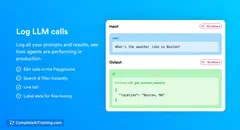
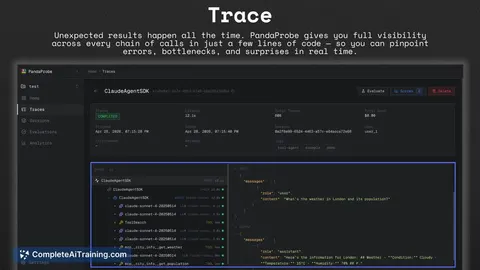
- Trace: Capture full agent executions as sessions, traces, and spans across LLMs, tools, sub-agents, and custom logic.
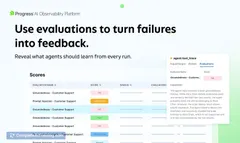
- Evaluate: Score traces and sessions with trajectory-level metrics and composable, agent-specific rubrics to detect quality drift.
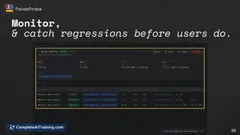
- Monitor: Schedule recurring evaluations and alert on regressions, with support for async and sampled evaluation strategies to control cost.
- Analytics: Track performance, cost, latency, errors, and quality trends over time for versioned comparisons and long-term visibility.
- Open source + integrations: Use the open-source core (GitHub) or a cloud-hosted option; includes native integrations and manual instrumentation APIs for custom tool calls.
Pricing and Value
The core platform is open source and available for self-hosting, which makes the basic product accessible at no licensing cost. A cloud-hosted service is offered for teams that prefer managed infrastructure; specific pricing for hosted tiers should be checked on the product site. The main value is reducing time spent debugging complex multi-step agents and providing repeatable metrics for production quality and regression detection.
Pros
- Open-source core enables self-hosting and local control of sensitive traces and evaluations.
- Focus on trajectory/session-level evaluation helps surface subtle failures that single-response checks miss.
- Flexible instrumentation model: native integrations plus manual decorators for custom workflows and raw API calls.
- Built-in analytics and scheduled evaluations support long-term quality tracking and cost/latency visibility.
- Designed to work across LLMs, tools, and multi-agent flows rather than only logging prompts and responses.
Cons
- New project with early-stage ecosystem and fewer mature integrations than longer-established observability platforms.
- Operational questions remain for large-scale storage and long-term trace retention when self-hosting; exact storage backends and scaling details require validation.
- Hosted evaluation costs can grow if many traces are judged frequently; teams will need to plan sampling and async strategies to manage expense.
Overall, PandaProbe is a strong fit for AI engineers, platform teams, and startups building agentic systems who need deeper visibility and repeatable evaluation beyond simple logs. It is particularly useful for teams that want a self-hostable solution with the option of a managed cloud offering and who are prepared to instrument their agents to get full session-level observability.
Jobs PandaProbe suits
We checked PandaProbe against 500+ jobs; these get the most out of it.
Alternatives to PandaProbe
Other tools that do the same main job. Our AI compared PandaProbe with similar tools and kept the ones you could use instead.