AI tool
Polygraph
Polygraph creates a synthetic monorepo to give AI agents full context across multiple repositories. It helps developers and teams manage dependencies, run CI, and open cross-repo pull requests without losing session history.
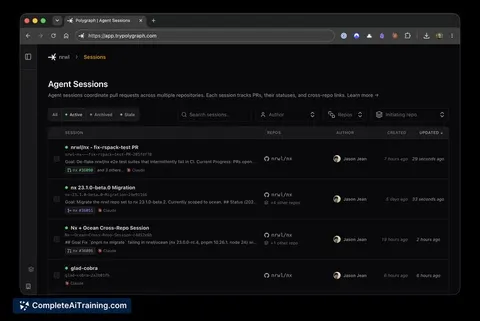
About Polygraph
Polygraph is a meta-harness giving AI coding agents visibility across repository boundaries and persistent session memory. It connects private and public repositories into a unified dependency graph without moving code. Agents can then maintain context and resume work across different machines.
Review
AI coding agents frequently encounter context limitations and agentic amnesia. Polygraph addresses these issues through a unified dependency graph and persistent state management. Developers can then use the tool to integrate with existing agent frameworks and coordinate cross-repo tasks.
Key Features
- Builds a unified dependency graph indexing all connected repositories semantically. Agents use this to locate relevant code across boundaries.
- Stores normalized session transcripts so developers can resume work on a different machine or switch between agent frameworks like Claude Code and Codex.
- Opens and tracks pull requests across multiple repositories in a single interface while monitoring CI statuses.
- Checks out repositories locally and delegates subagents to work directly inside them rather than relying solely on embeddings.
Pricing and Value
Polygraph is currently available for free. The documentation doesn't specify future pricing models or enterprise tiers, so long-term costs are not yet defined.
Pros
- Connects multiple private and public repositories into a single dependency graph without requiring code migration.
- Preserves session memory across different developer machines and agent environments. This reduces the need to re-explain context.
- Manages cross-repo pull requests and continuous integration statuses from a centralized dashboard.
Cons
- Developers working exclusively within a single repository do not need cross-repo dependency mapping and will not benefit from this tool.
- The dependency graph updates only once a day or on demand. This might lag behind highly active repositories with constant interdependent changes.
- Requires granting access to multiple repositories, which introduces security considerations for organizations with strict data isolation policies.
Polygraph targets development teams coordinating changes across multiple services and shared libraries. Individual developers managing multi-part features across several distinct repositories will also find it useful.
Jobs Polygraph suits
We checked Polygraph against 500+ jobs; these get the most out of it.