AI tool
PostHog Desktop
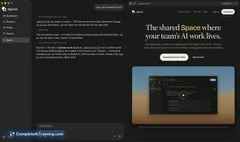
PostHog Desktop is a multiplayer workspace for product teams and their AI agents. It provides shared context from your product data, tools for building and editing products, a system to run fleets of agents, and a way to turn product signals into ...
About PostHog Desktop
PostHog Desktop is a multiplayer workspace for product builders, launched as the fifth product from PostHog. It combines a code editor with production product data-logs, errors, session recordings, funnels, flags, and experiments-so builders and AI agents can work with live context. The tool was previously known as PostHog Code.
Review
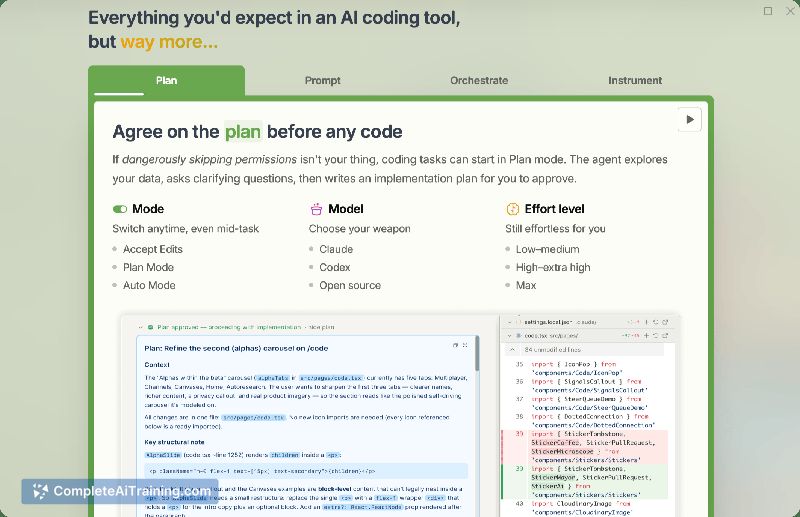
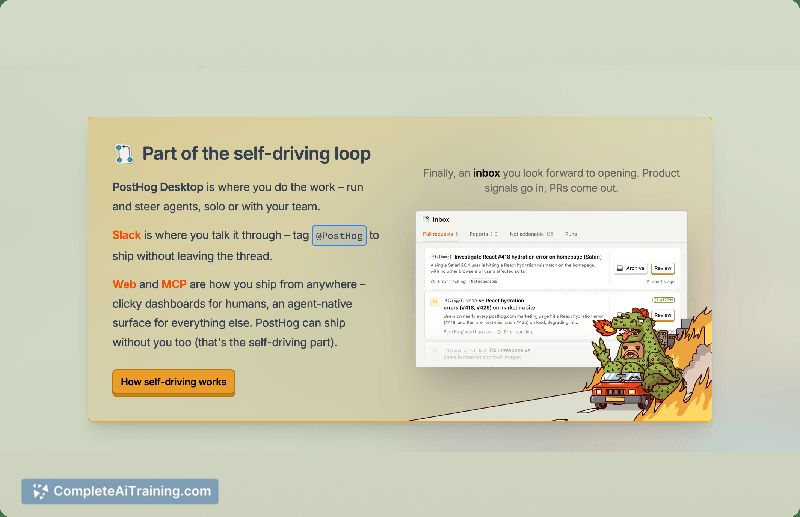

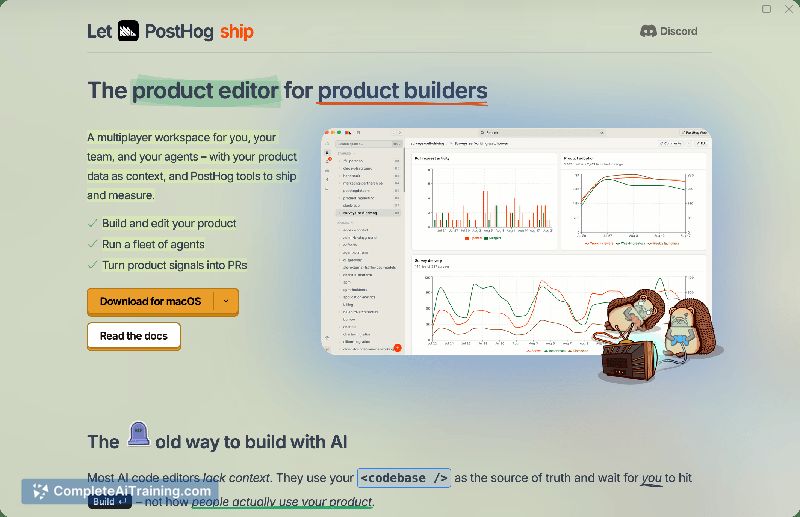
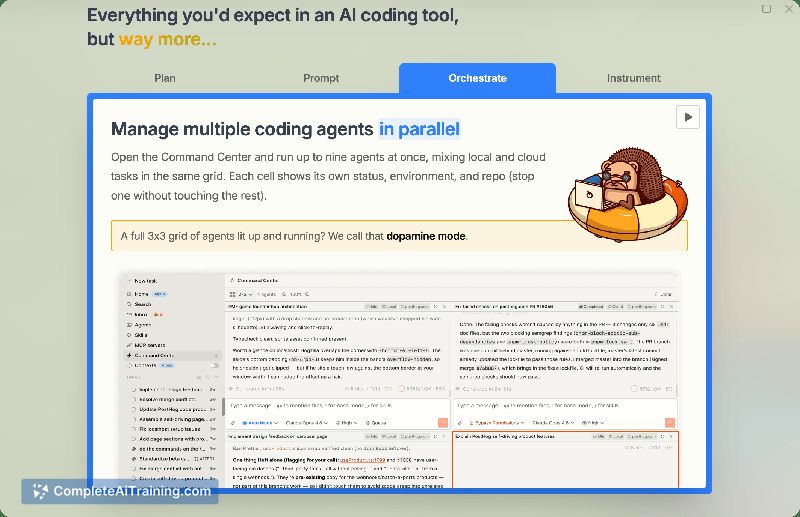
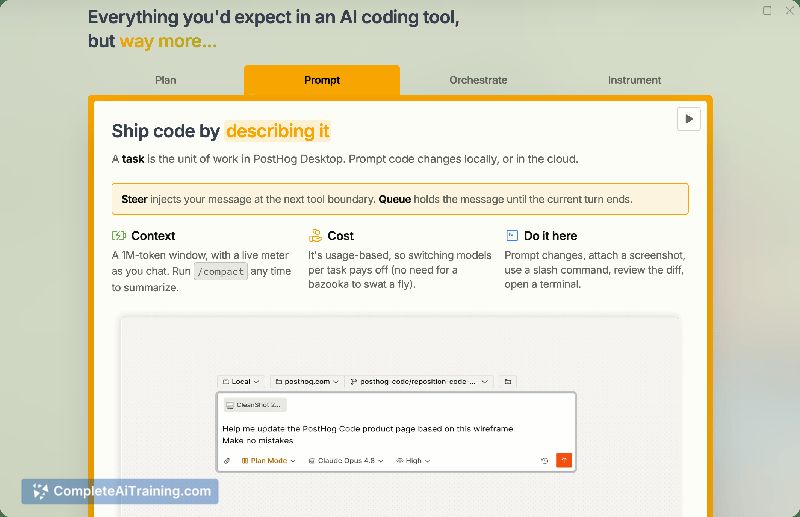
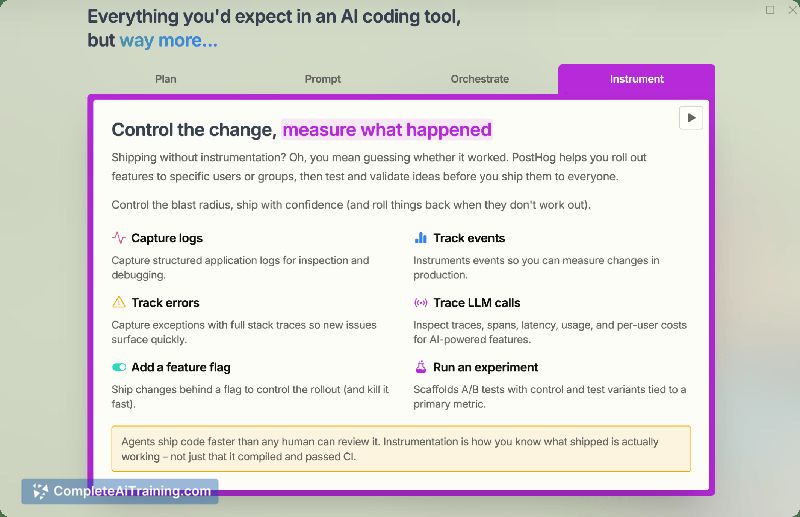
PostHog Desktop positions itself as a product editor rather than a generic AI coding tool. The core idea is that agents operate on real signals from your production environment, turning them into pull requests. It's a shift from writing code to orchestrating outcomes, and the tool provides the workspace to do that.
Key Features
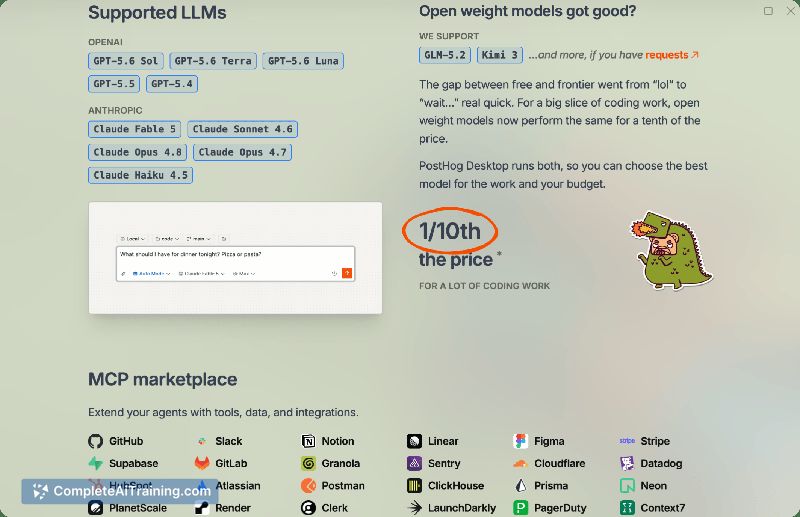
- Run a fleet of agents in parallel with plan and auto modes, and switch between models like Claude, Codex, and open-weight options.
- Personal and team skills, plus a skills marketplace with PostHog-maintained skills for events, flags, experiments, and error tracking.
- MCP marketplace integrations covering GitHub, Slack, Linear, Figma, Stripe, and Sentry.
- Multiplayer channels with persistent memory, so agents don't need re-briefing between sessions.
- An inbox that surfaces reports and pull requests generated from product signals.
Pricing and Value
The launch page lists PostHog Desktop under "Free Options" and tags it as Open Source. Specific pricing tiers or usage limits are not defined in the reference content. The parent PostHog platform offers a free tier, and a separate "PostHog for Startups" program provides $50k in free credits, but that program applies to the broader PostHog platform rather than Desktop specifically.
Pros
- Agents start with real product context-logs, errors, funnels, session recordings-rather than a blank session.
- Parallel agent execution with multiple model choices gives teams flexibility in how they delegate work.
- Persistent memory in channels reduces repetitive briefing and keeps agent work aligned across a team.
- The inbox converts product signals into concrete artifacts like reports and PRs, which shortens the loop from observation to action.
- MCP integrations connect the workspace to common development and communication tools.
Cons
- The tool is newly launched, and the reference content doesn't specify platform support beyond macOS, so Windows and Linux availability is unclear.
- Pricing details are not yet defined, which makes it hard to assess cost for team-wide adoption.
- It's not well suited for teams that want a traditional IDE experience or that prefer manual control over every code change; the workflow assumes you're comfortable delegating to agents.
PostHog Desktop fits product teams that already use PostHog for analytics and want to close the loop between data and code. It's most useful for engineers who are comfortable reviewing AI-generated PRs and orchestrating agent work rather than writing every line themselves. Teams that need a conventional editor or that don't have production signals feeding into their workflow will find less value here.
Jobs PostHog Desktop suits
We checked PostHog Desktop against 500+ jobs; these get the most out of it.
Alternatives to PostHog Desktop
Other tools that do the same main job. Our AI compared PostHog Desktop with similar tools and kept the ones you could use instead.