AI tool
Product Intelligence
Product Intelligence automates feedback from support tickets into evidence-backed feature requests, saving hours and giving Product and Engineering clear, actionable validation to prioritize work.
About Product Intelligence
Product Intelligence automatically turns support tickets into evidence-backed feature requests, collecting excerpts and metadata from customer conversations. It aggregates signals from multiple channels so post-sales and product teams can see demand with context and reduce manual effort.
Review
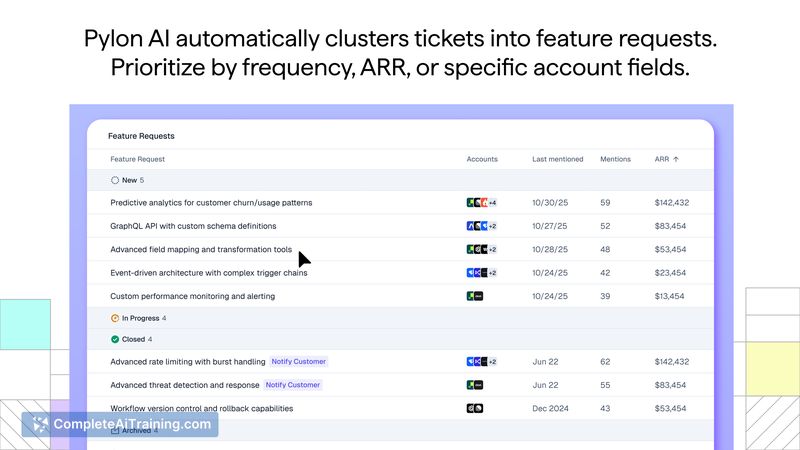
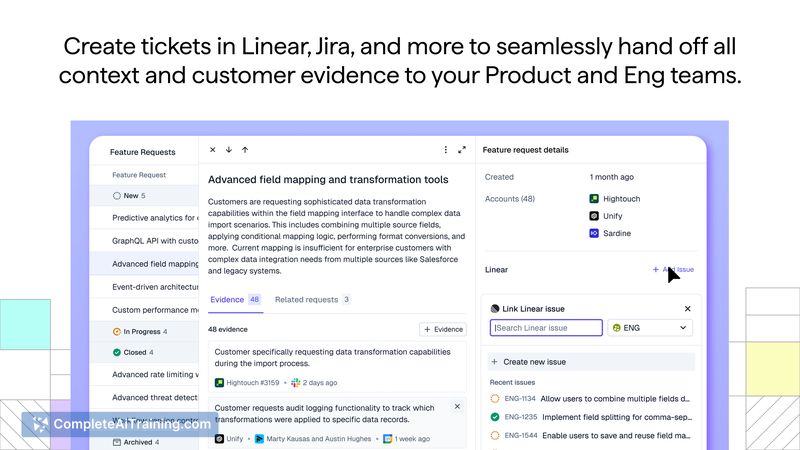

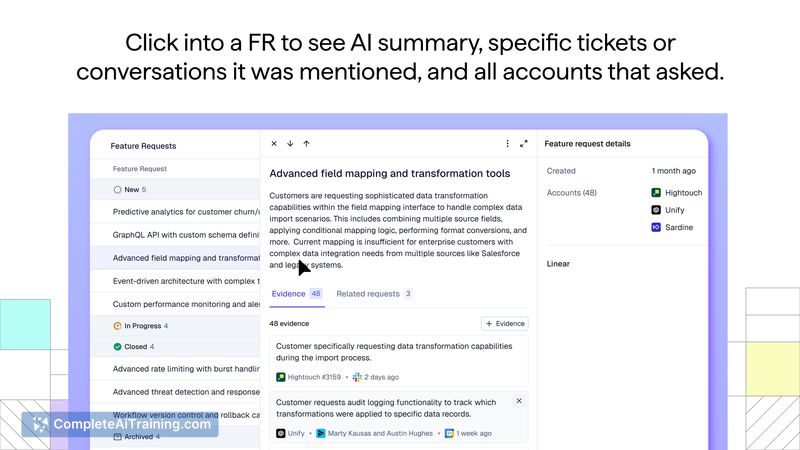
Product Intelligence targets the frequent friction between support and product teams by automating the feedback collection and packaging process. In practice it detects candidate requests in tickets, gathers supporting examples, and provides a way to hand those findings off to product managers with minimal manual work.
Key Features
- Automatic detection and classification of feature requests from support tickets and conversations.
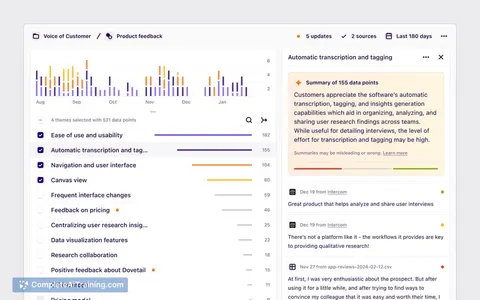
- Evidence aggregation: snippets, ticket counts, customer metadata and timestamps to build a case for features.
- Integrations with common communication and support tools (chat, email, collaboration platforms, and call transcripts).
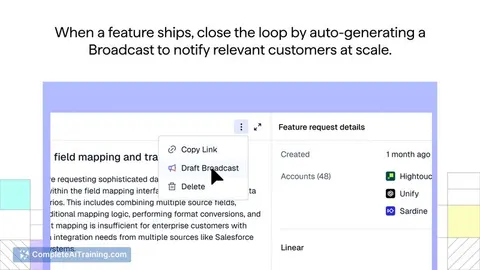
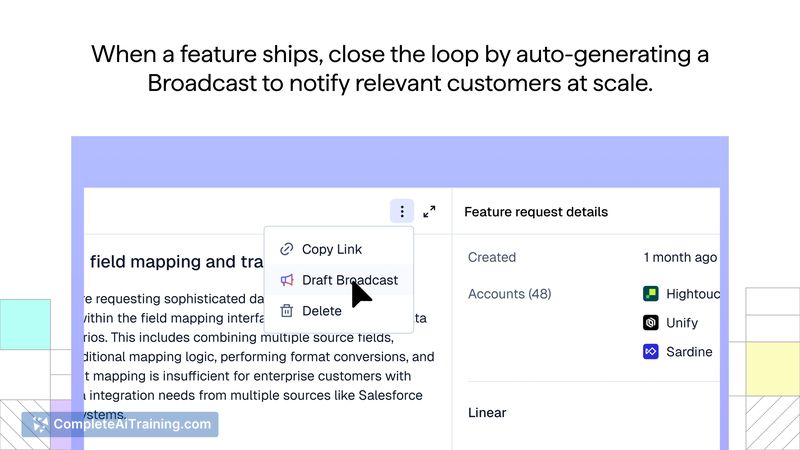
- Workflow tools to generate feature requests, track status, and close the loop when items ship.
- Prioritization signals and account-level insights to help surface high-impact opportunities.
Pricing and Value
At launch Product Intelligence lists free options and appears to follow a tiered approach common to SaaS tools, with higher tiers likely adding integrations, volume processing, and admin controls. The main value proposition is time saved on manual research and stronger, evidence-based requests for product teams. Pricing specifics and enterprise terms should be confirmed via a demo or sales conversation, especially if you expect heavy volume or custom integrations.
Pros
- Significantly reduces manual effort required to turn support signals into actionable feature requests.
- Consolidates examples and context so product conversations are anchored in customer evidence.
- Supports common communication channels and can ingest different ticket sources.
- Helps formalize the feedback lifecycle, including tracking when requests are shipped.
Cons
- Classification accuracy will vary; teams should expect initial tuning and review to avoid false positives.
- Setup and integration work may be required to connect all relevant data sources and map workflows.
- Detailed pricing and enterprise capabilities are not fully published at launch, which complicates planning for large organizations.
Product Intelligence is best suited for B2B SaaS support, success, and product teams that receive recurring feature requests and want to reduce manual compilation and proof-building. Evaluate it with a pilot that mirrors your ticket volume and tools so you can confirm accuracy and ROI before wider rollout.
Jobs Product Intelligence suits
We checked Product Intelligence against 500+ jobs; these get the most out of it.
Alternatives to Product Intelligence
Other tools that do the same main job. Our AI compared Product Intelligence with similar tools and kept the ones you could use instead.