AI tool
Render Sandboxes
Render Sandboxes provides each AI agent with its own isolated Linux computer that starts in under a second. It is for developers running agents like Claude Code or Codex who need to test changes with Docker Compose and control network access. Idle...
About Render Sandboxes
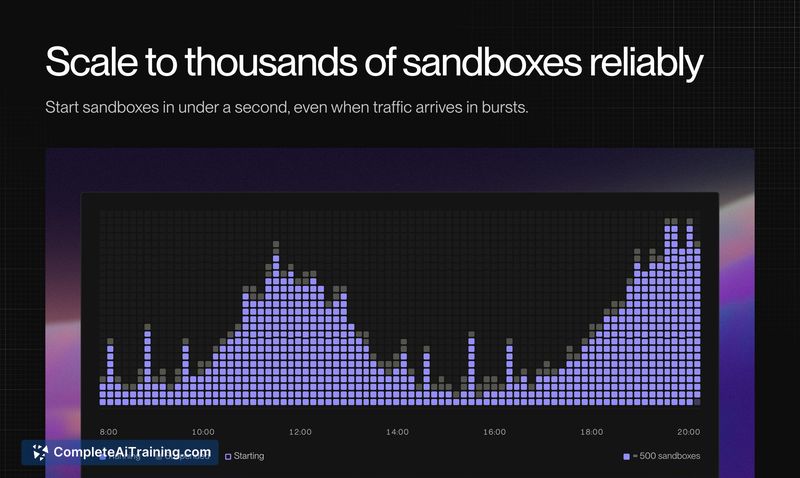
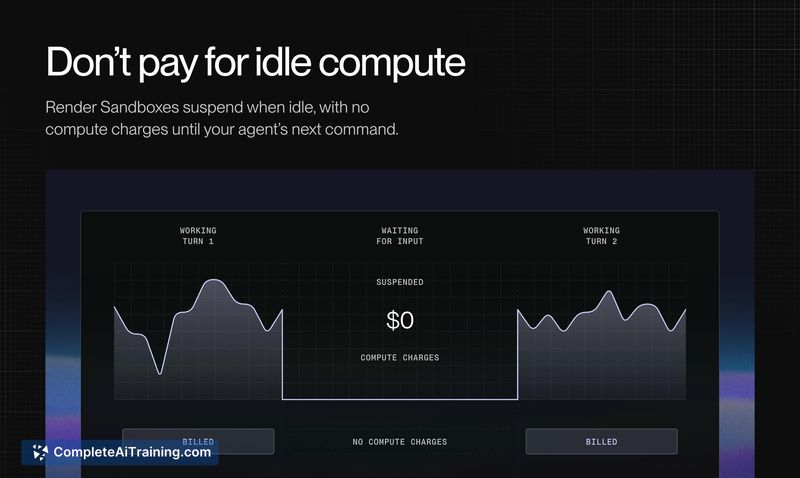
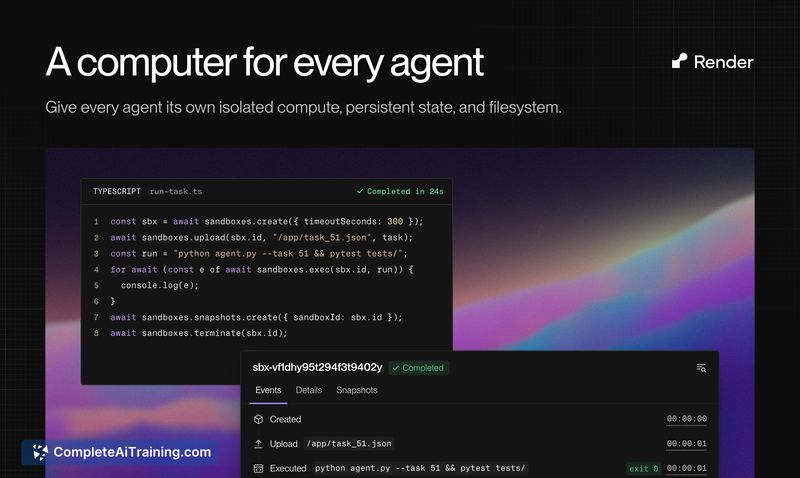
Render Sandboxes is a feature within the Render cloud platform that gives each AI agent its own isolated Linux environment. Each sandbox runs inside a Firecracker microVM, starts in under a second, and can execute agent harnesses like Claude Code or Codex. When an agent goes idle, the sandbox suspends - stopping compute charges while preserving files and memory - and wakes on the next command.
Review
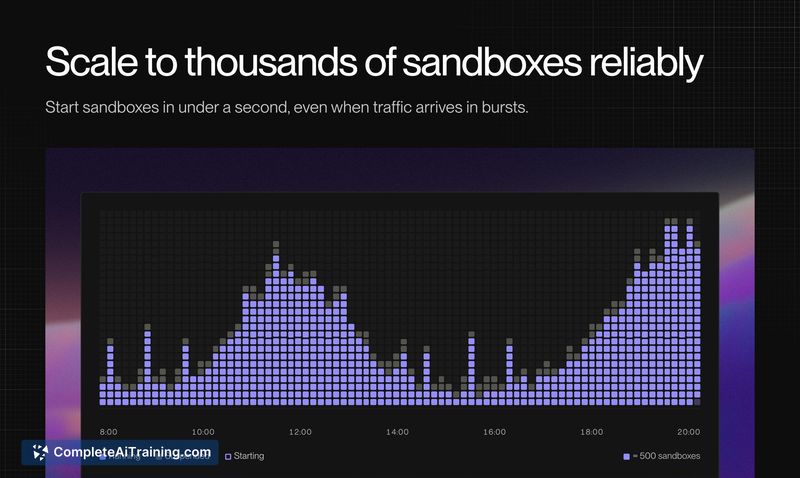

Render Sandboxes tackles a specific infrastructure problem: running AI coding agents safely and at scale without them stepping on each other. The isolation model means one agent hitting a memory limit won't crash its neighbors, and the suspend/wake cycle keeps costs tied to actual usage rather than uptime. It's a beta product, so some edges are still being smoothed, but the core mechanics are functional and well-documented.
Key Features
- Firecracker microVM isolation: Each sandbox gets the isolation properties of a real VM, not a shared container. If one sandbox exhausts its memory, other sandboxes continue running unaffected.
- Sub-second startup: A sandbox is ready for its first command in under a second, which keeps agent workflows from stalling on cold starts.
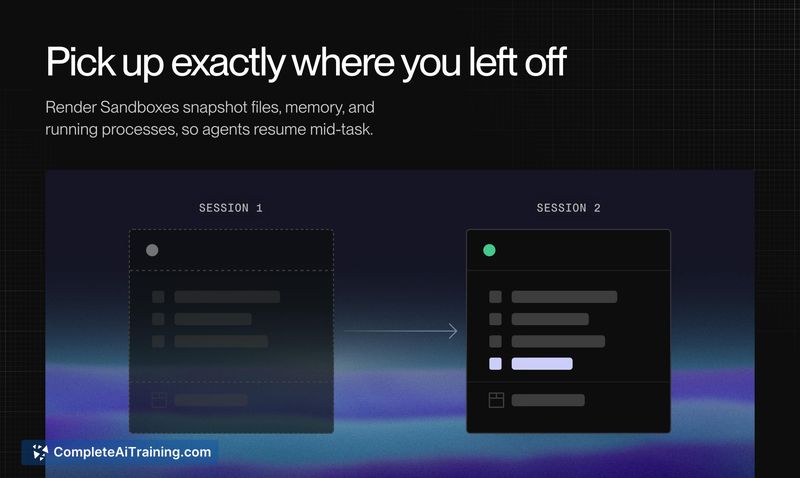
- Suspend and wake with state intact: When an agent goes idle, the sandbox suspends. Files and memory persist, and the sandbox resumes on the next command. Compute charges stop during suspension; only snapshot storage continues to bill.
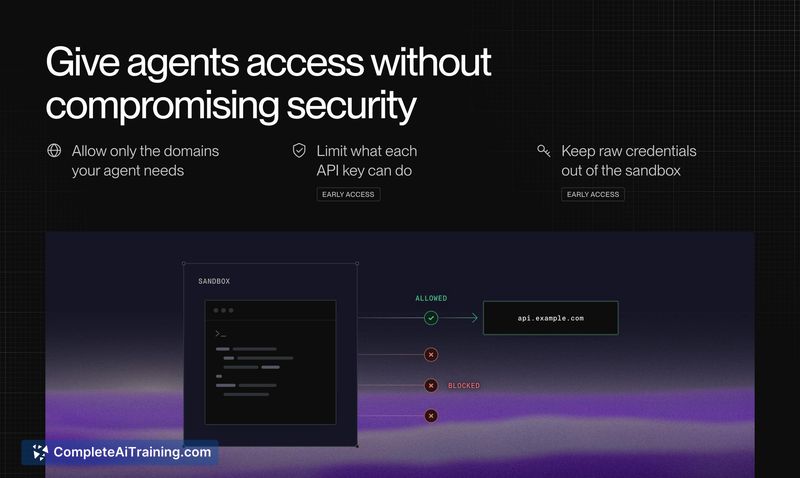
- Outbound traffic controls: You can configure a sandbox to allow all outbound traffic, restrict it to a list of domains you specify, or block outbound traffic entirely.
- Credential brokering (early access): Rather than storing API keys inside the sandbox, this mechanism attaches them to outgoing requests. The feature is in early access and requires contacting Render for access.
Pricing and Value
Render Sandboxes bill based on the CPU a sandbox actually uses and the memory it allocates. When a sandbox suspends, both CPU and memory charges stop; only snapshot storage continues to incur cost. There is no time limit on how long a sandbox can run. Sandboxes live in the same workspace as other Render resources - web services, background workers, and Render Postgres databases - and appear on a single bill with one API key and one SDK.
Pros
- Isolation at the VM level prevents noisy-neighbor problems when running many agents concurrently.
- Suspend/resume with state preservation means long-running agent tasks don't lose context between bursts of activity.
- Multiple sandboxes can spin up from the same snapshot, reducing setup time for repeated environments.
- Outbound network controls let operators lock down what external resources an agent can reach.
- Unified billing and a single SDK mean sandboxes don't add a separate platform to manage.
Cons
- Suspend performance scales with disk and memory size; a 20 GB disk can take tens of seconds to suspend, which may affect workflows with large dependencies like an 18 GB node_modules directory.
- Credential brokering, a feature that keeps API keys out of sandbox environments, is only available in early access and requires contacting Render directly.
- The product is not well suited for teams that need sandboxes to wake themselves on a schedule. A sandbox requires an external command to wake; it cannot self-trigger on a cron-like timer.
Render Sandboxes fits teams already deploying AI agents who need per-task isolation and don't want to manage the underlying compute lifecycle themselves. It's most practical for workloads where agents run in bursts - coding sessions, test runs, code review tasks - rather than continuous always-on processes. The beta status means some performance characteristics are still evolving, but the isolation model and suspend behavior address real failure modes that arise when multiple agents share a single machine.