AI tool
Sente
Sente is a bilingual voice AI agent that lets you speak requests and hear replies in your own voice. It unifies access to multiple AI models under one plan and is open source. It is for people who already pay for more than one AI subscription or t...
About Sente
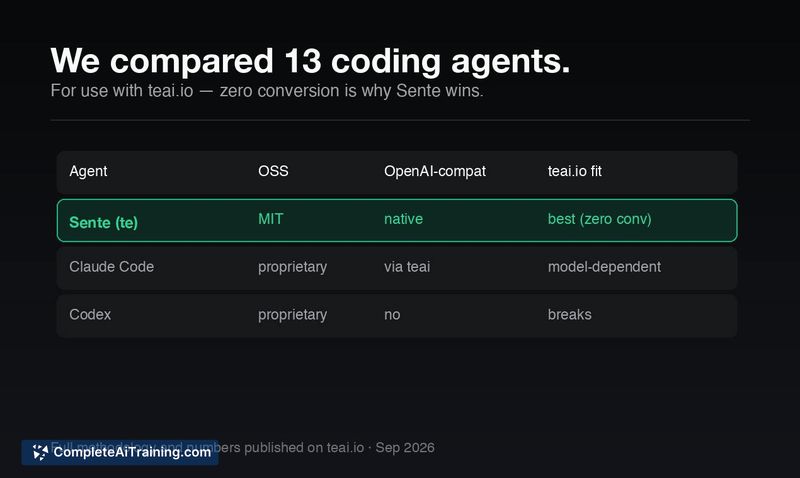
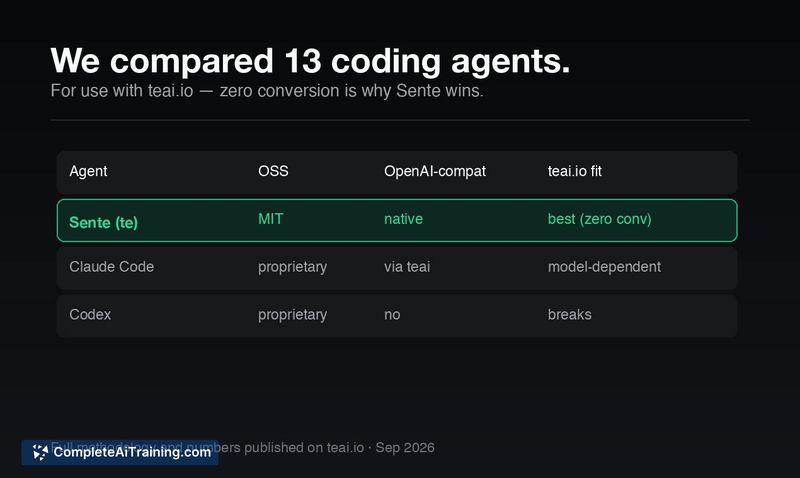
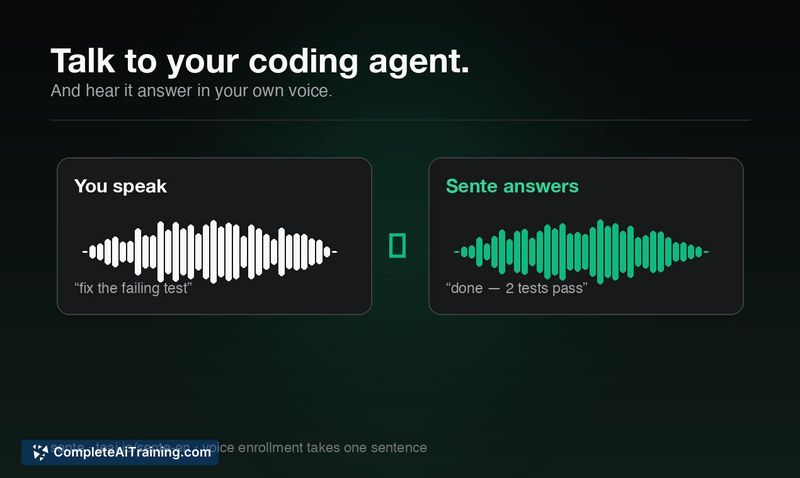
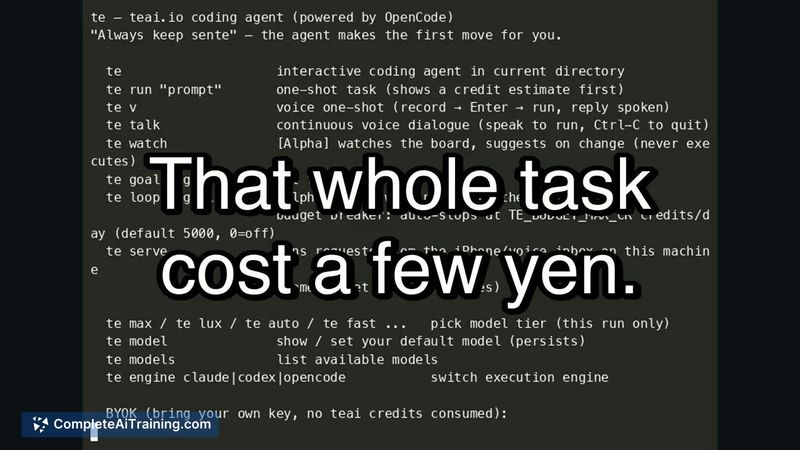
Sente is a terminal-based coding agent with bidirectional voice capability. It lets you speak requests and hear responses in your own cloned voice after a short, one-time enrollment. The tool also functions as a multi-model gateway, giving a single account access to over 400 models including Claude, GPT, Gemini, and DeepSeek through OpenAI-compatible and Anthropic-Messages-compatible endpoints.
Review
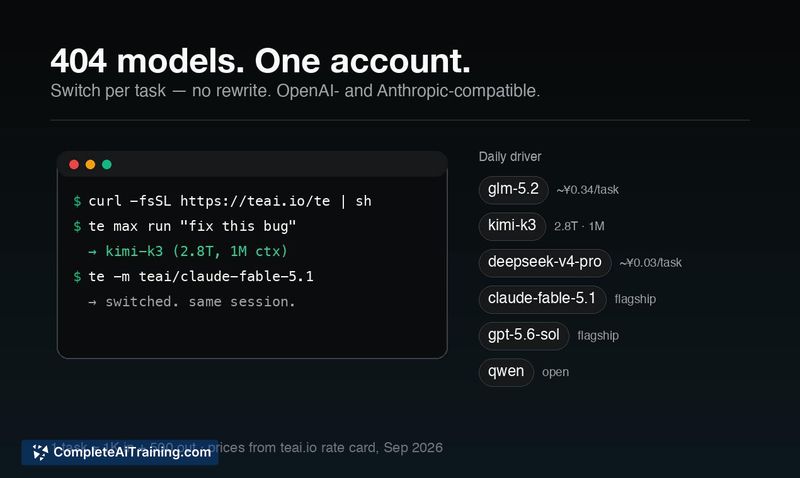
Sente approaches the coding agent category with an unusual combination of terminal-first design, voice I/O, and transparent metering. The project is MIT-licensed, and the installer is available on GitHub for inspection. This review covers what's shipped, what's stated on the roadmap, and where the tool currently sits for working developers.
Key Features
- Bidirectional voice with personal voice cloning. After reading a single sentence aloud (about 10 seconds), the agent can respond in your voice. Voice cloning is consent-based and limited to the user's own voice.
- Multi-model gateway. One account connects to 404 models across providers. The API layer is compatible with both OpenAI and Anthropic Messages formats, so switching models doesn't require rewriting integration code.
- Terminal and mobile access. The primary interface is the terminal, with a companion phone app. The tool prints what data leaves the machine when you run the
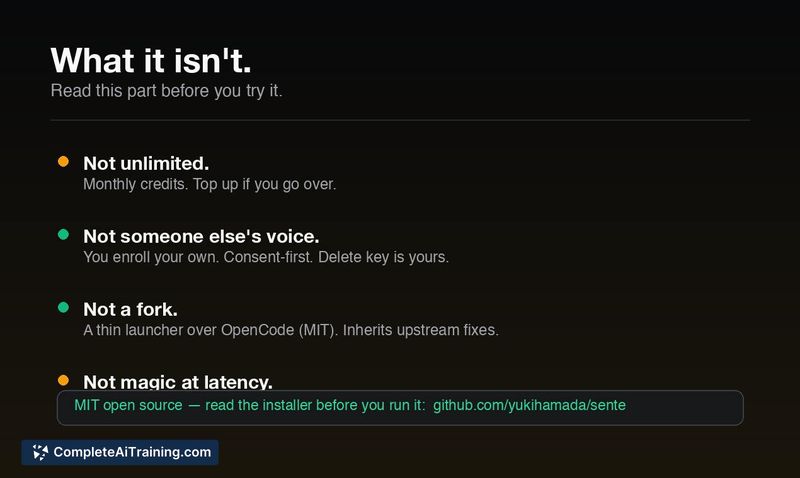
te privacycommand. - Metered credit system. Usage draws from a monthly credit allowance rather than an "unlimited" plan. Users who exceed the allowance can top up.
- MIT open source. The codebase is publicly available, letting users read the installer and audit behavior before running it.
Pricing and Value
Sente uses metered monthly credits with top-up options for heavy usage. The maker describes the limits as "honest" and explicitly states it is not an unlimited service. Pricing tiers and exact credit amounts are not yet defined in the available reference material. Billing is conducted in JPY from Tokyo.
Pros
- Single account consolidates access to multiple major model providers, reducing the need for separate subscriptions.
- Voice enrollment is fast - one sentence, roughly 10 seconds - and the system won't clone a voice that isn't yours.
- Open-source codebase and the
te privacycommand give users a direct way to check what data is transmitted. - API compatibility with OpenAI and Anthropic formats means existing toolchains and scripts don't need major rework to switch models.
- Terminal-native design fits into workflows that already rely on command-line tools and shell environments.
Cons
- Voice-based approval of code changes introduces a trust boundary question - the maker hasn't yet clarified whether users are expected to review diffs visually before confirming spoken summaries.
- Measured latency numbers come from Tokyo-based measurements; users outside that region may see different response times.
- The tool is not well suited for developers who prefer fixed-cost subscriptions with predictable, uncapped usage, since heavy use requires manual top-ups.
Sente fits developers who already pay for multiple AI subscriptions and want to consolidate them behind one terminal interface, especially those who think faster out loud than they type. It's less appropriate for teams that need predictable flat-rate pricing or for workflows where every code change must be visually reviewed before acceptance. The voice feature is functional now, but the practical boundaries around auditory-only approvals are still being worked out in real-world use.
Jobs Sente suits
Useful in almost any job.