AI tool
Solarch
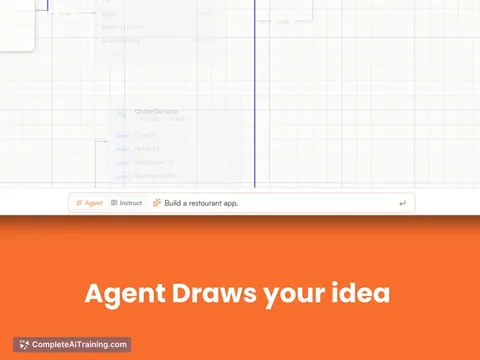
Solarch converts architecture diagrams into clean NestJS boilerplate, letting you draw or auto-map services, tables, DTOs and edit nodes (methods, columns, relations) with instant code sync-automating the repetitive 80% of backend setup.
About Solarch
Solarch is a diagram-to-code platform that converts visual nodes into deterministic NestJS boilerplate such as DTOs and Services. It uses a strict rules engine to generate consistent scaffolding and focuses on automating the repetitive 80% of backend architecture work so developers can spend more time on core logic.
Review
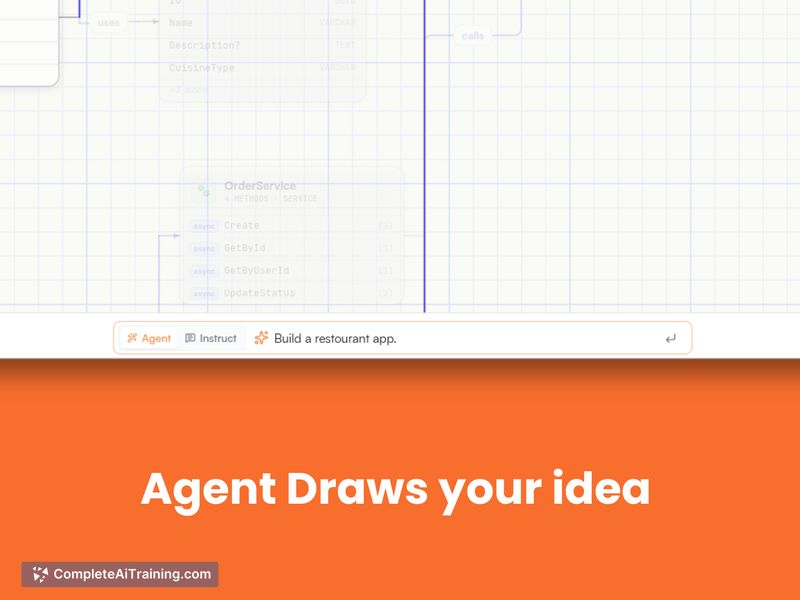
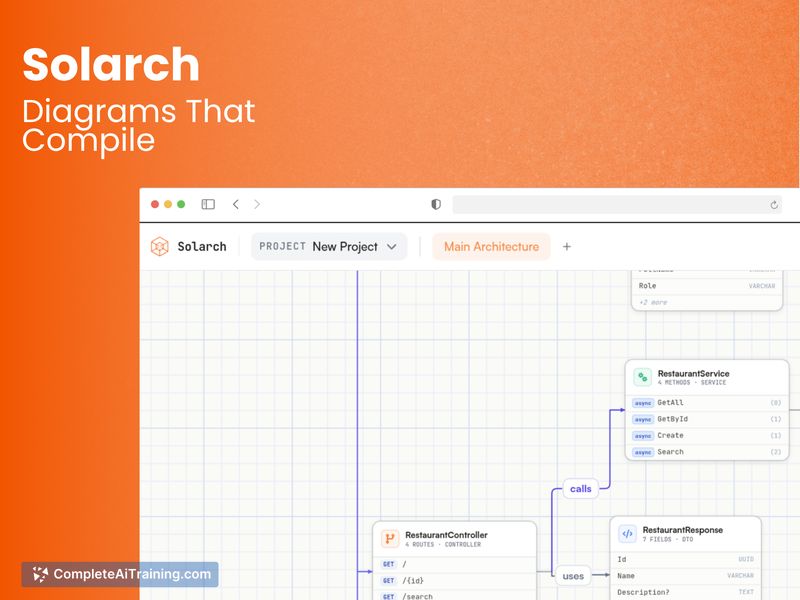

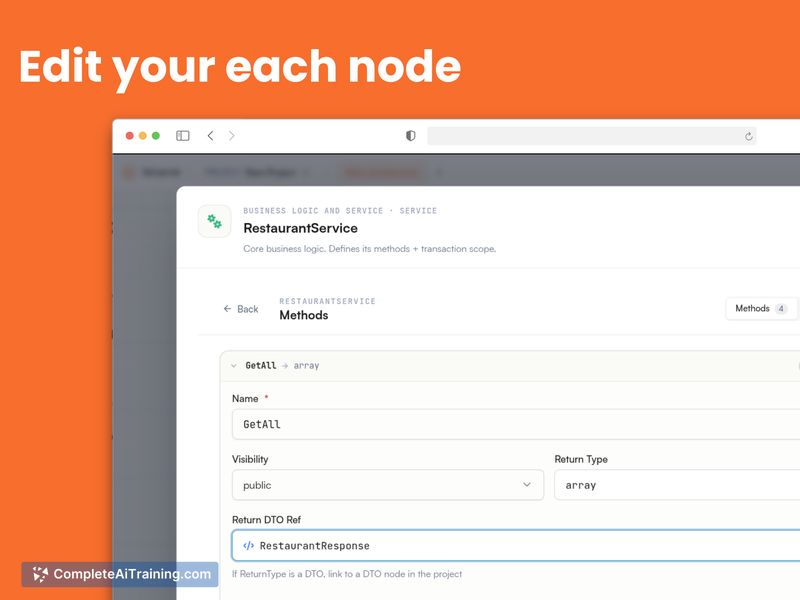
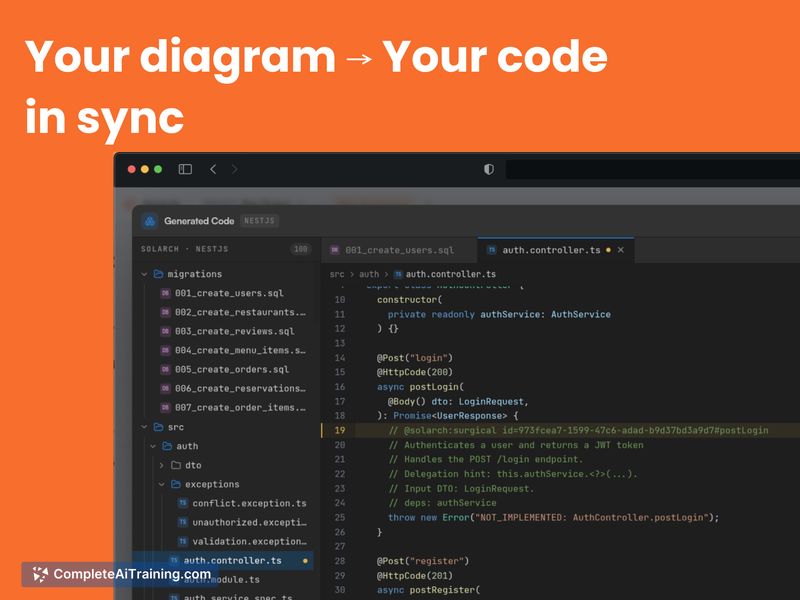
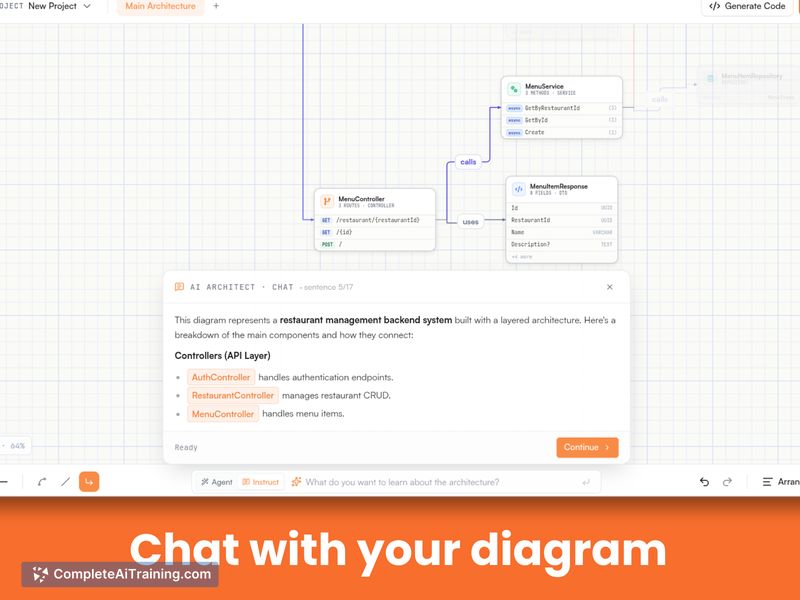
Solarch pairs an interactive canvas with deep node editing and an export pipeline that outputs clean NestJS structure. Launched this week, the product is aimed at developers who want faster, reproducible scaffolding while keeping a visual map of their system. The current v1 workflow is strictly one-way export; a bi-directional VS Code extension with git-based merging and AST awareness is planned.
Key Features
- Interactive AI mapping: draw architecture or let the AI generate a diagram from your ideas.
- Deep node editing: open any visual node to edit methods, table columns, and relations inline.
- Deterministic diagram-to-code compiler: a strict rules engine produces compile-ready NestJS boilerplate.
- Instant export and code sync: the canvas exports structural DTOs, services, and initial project scaffolding.
- Roadmap for bi-directional sync: upcoming VS Code extension promises smarter merges so hand-written logic is preserved.
Pricing and Value
At launch Solarch lists free options for early users, with paid tiers likely to follow as additional integrations and sync features ship. The core value is time savings: by automating repetitive setup and producing deterministic code, it reduces the effort spent on initial architecture and keeps diagrams aligned with generated artifacts. For teams that rely on consistent project structure, the platform can cut setup time substantially; individual developers should weigh that against the current one-way export limitation until smarter sync arrives.
Pros
- Speeds up backend scaffolding by generating standard DTOs and services from a visual map.
- Deterministic output-rules-driven generation helps ensure the code compiles consistently.
- Deep node editing keeps diagram elements meaningful and directly editable.
- Active roadmap: promised VS Code extension and smarter merging address a key workflow gap.
- Free entry point at launch makes it easy to trial with a small project.
Cons
- Current workflow is one-way: re-exporting will overwrite manual changes in generated files.
- Export targets are limited today (NestJS and built-in node types only); custom node types are not yet supported.
- Early-stage product: some features and integrations on the roadmap are not available yet.
Solarch is a strong fit for backend developers and small teams who want to prototype or standardize server-side architecture quickly, especially when working with NestJS. If your workflow depends on hand-edited generated files, treat the current version as a scaffolding tool until the bi-directional sync and merging arrive; for rapid prototypes and consistent boilerplate, it can save substantial time.
Jobs Solarch suits
We checked Solarch against 500+ jobs; these get the most out of it.