About Sonarly
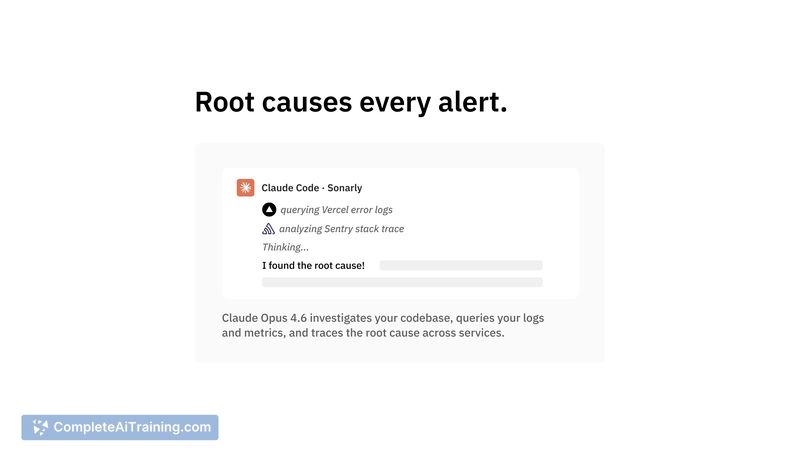
Sonarly is an AI-driven tool that connects to monitoring systems to triage alerts, deduplicate noise, and produce proposed fixes. It analyzes logs, traces, metrics, and code to create production-aware pull requests that include supporting evidence and confidence signals.
Review
Sonarly targets engineering teams that receive high volumes of monitoring alerts and want a more efficient way to turn incidents into actionable fixes. It combines deep context from your production system with automated agents to investigate issues and generate PRs that can be reviewed or configured to be created automatically.
Key Features
- Integrations with monitoring tools (e.g., Sentry, Datadog) to ingest alerts, logs, traces, and metrics.
- Alert triage and deduplication to group related events and reduce noise for on-call engineers.
- Automated investigation that links evidence (log lines, traces, code locations, commits) and assigns a confidence score to root-cause findings.
- Auto-generated, production-aware pull requests with linked evidence and the option to configure automation thresholds.
- Slack-native notifications so findings, evidence, and PR links arrive in existing team channels.
Pricing and Value
Sonarly offers an introductory trial period (two weeks of full access was available at launch) and lists free options for evaluation. After the trial, access continues under paid plans; specific tiers and limits are provided on the product site. The main value proposition is time saved by reducing alert noise, speeding up investigation, and delivering ready-to-review fixes that include concrete evidence and confidence scores.
Pros
- Reduces alert fatigue by grouping duplicates and filtering low-impact notifications.
- Produces PRs that reference logs, traces, and code context to make reviews faster and more informed.
- Integrates with common workflows (monitoring tools and Slack) so teams don't need to switch tools to see findings.
- Configurable automation thresholds let teams choose when to create PRs automatically versus requiring manual review.
- Runs continuous investigations (24/7) so issues are addressed even outside regular hours.
Cons
- Automated fixes require careful trust management-teams will likely want strict review or staged automation for high-risk changes.
- Effectiveness depends on the quality and coverage of your monitoring and observability data; gaps there reduce confidence in fixes.
- As a recently launched product, some workflows and integrations may still evolve and require close evaluation before full production rollout.
Overall, Sonarly is best suited for engineering teams that receive frequent production alerts and want to shorten time-to-resolution by turning monitoring signals into evidence-backed PRs. Teams that prioritize careful review processes can use its configurable automation thresholds to gain efficiency while maintaining control over what gets merged. For evaluation, try the available trial to see how it performs with your monitoring stack and codebase.
Open 'Sonarly' Website
Your membership also unlocks: