AI tool
Specsight
Specsight generates a living product map, feature knowledge, and release notes from code changes. It helps Product, Sales, and Support teams stay aligned with what the software does and what recently changed.
About Specsight
Specsight is a product observability tool that reads your source code to generate a living map of your software's features, behaviors, and connections. It tracks how the product evolves with every release, translating code changes into plain-language updates for Product, Sales, and Support teams. The tool connects to GitHub or GitLab, scans a repository and branch, and typically produces an initial product map within an hour.
Review
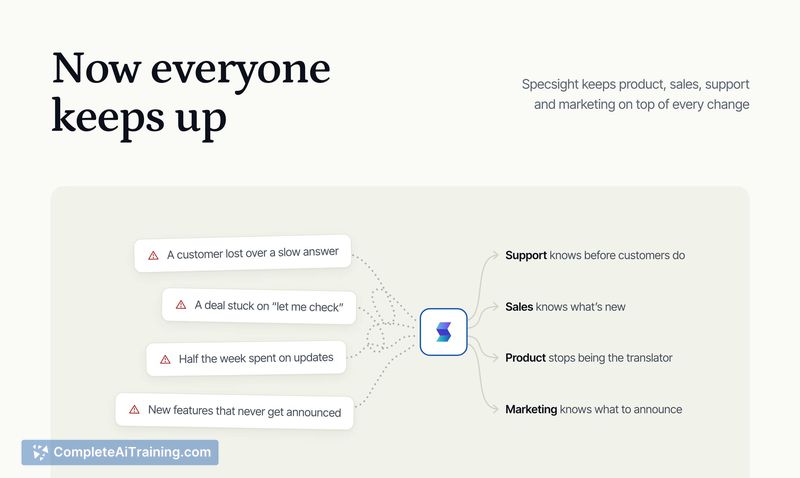
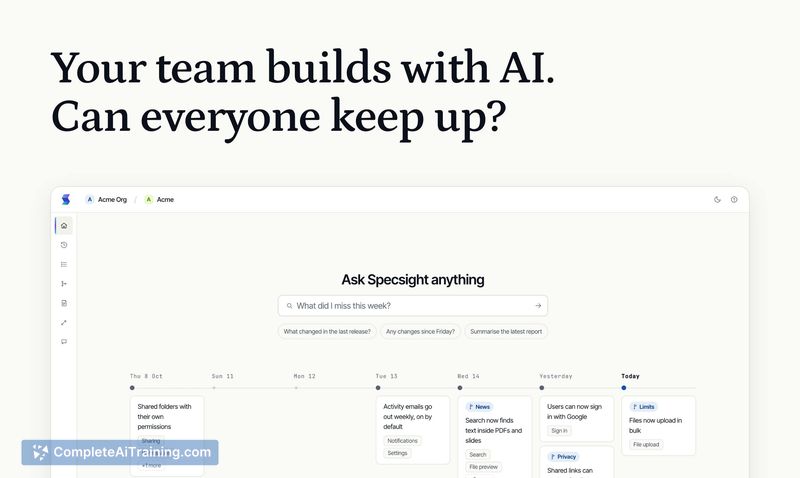
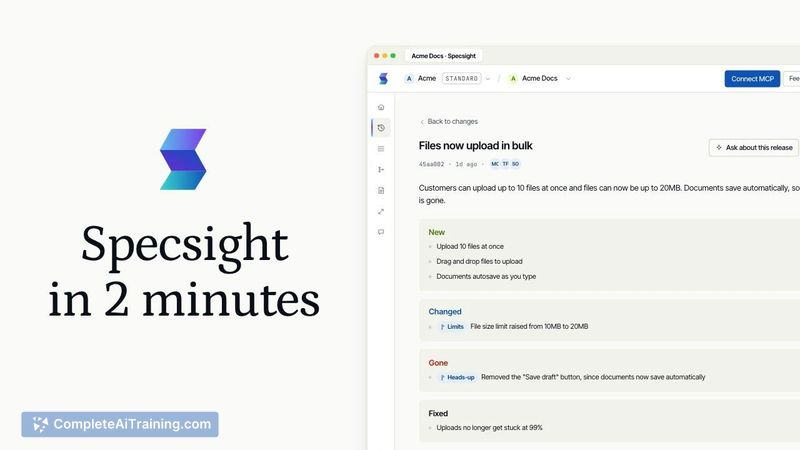
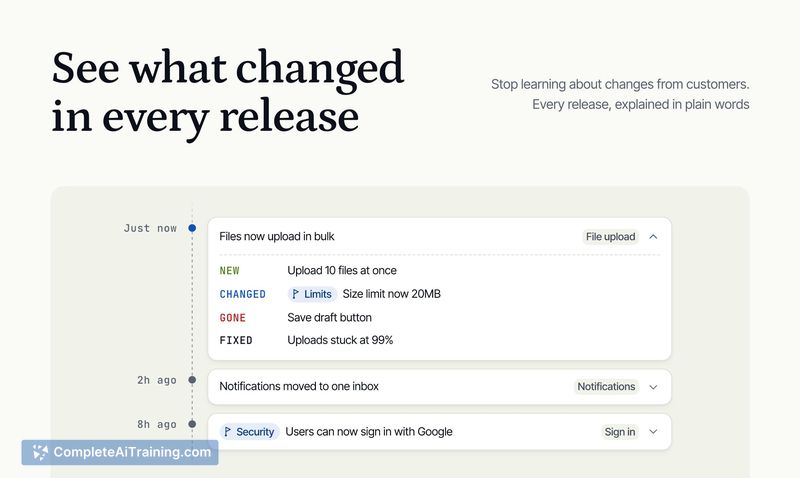
Specsight addresses a friction point common in fast-moving engineering teams: non-technical departments often don't know what's live, what changed, or how things actually work. Instead of relying on manual documentation that quickly becomes stale, Specsight pulls its understanding directly from the codebase. The result is a shared, auto-updated reference that reduces the constant back-and-forth between engineering and the rest of the company.
Key Features
- Living product map - Specsight scans the connected codebase and builds a map of every feature, how it behaves, and how it connects to other parts of the product. This map updates automatically with each release.
- Plain-language change detection - Each new release is checked against the existing product map. Changes that alter user-facing behavior or product functionality appear in the updates, while refactors or version bumps that don't affect users are filtered out.
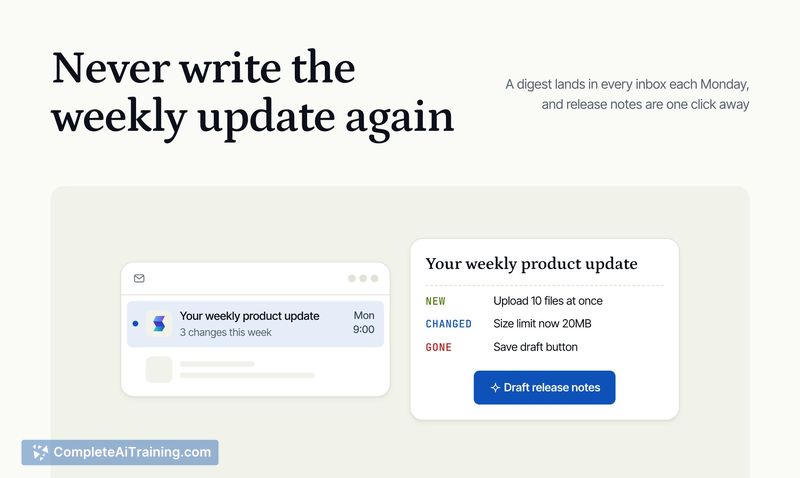
- Weekly product digests - The tool compiles and sends automatic weekly summaries of what shipped, so teams stay informed without chasing information.
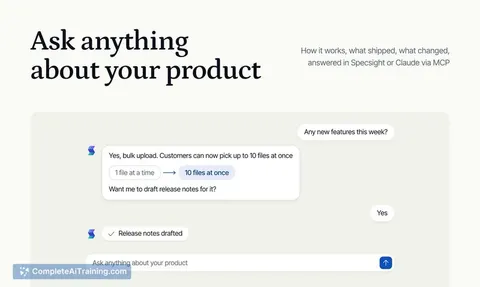
- Release note drafts - Specsight generates draft release notes based on detected changes, giving teams a starting point for external communications.
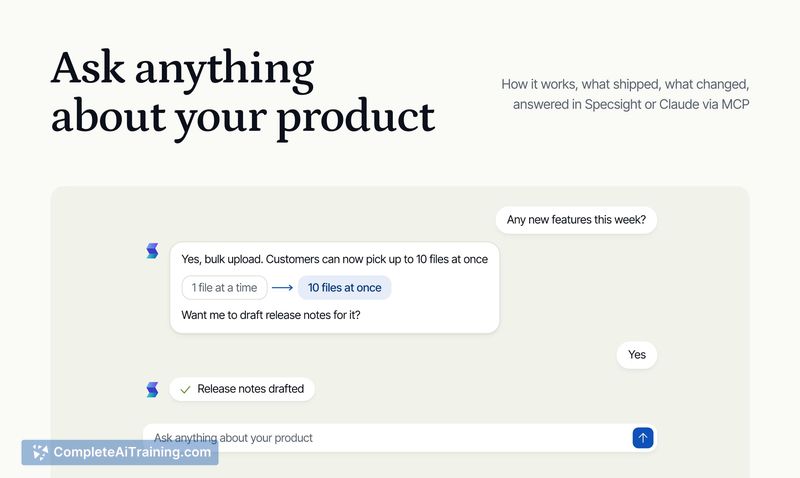
- MCP integration - Specsight can connect to Claude over MCP, allowing Claude to answer questions from the product map rather than raw code. The company states this also speeds up dev work in Claude Code or Codex by giving the agent a pre-built understanding of the product.
Pricing and Value
Specsight offers a free tier, though the specific limits or features included in that tier are not detailed on the current page. Paid plans exist, with a 50% discount on the first 3 months available through the Product Hunt launch using code PH2026 until 8 November 2026. The exact subscription price after the discount period is not yet defined in the available information. Payment processing runs through Stripe.
Pros
- Generates product understanding from source code rather than manual documentation, keeping information aligned with what's actually deployed.
- Filters out engineering-only changes like refactors and version bumps, so non-technical teams see only what matters to users.
- Weekly digests and release note drafts reduce the need for engineering to manually communicate every change.
- MCP connection lets AI coding agents start with a mapped understanding of the product, potentially reducing repeated file scanning.
- Setup requires only connecting a repository and selecting a branch; the first product map arrives within an hour for most projects.
Cons
- Feature-flagged or partially rolled-out changes aren't clearly surfaced in the current version, which can lead to inaccurate demos when features are live for some customers but not others.
- Specsight is not well suited for teams that don't have access to the legacy application's source code when replacing old systems - it works from code, not from screen recordings or usage videos.
- Integrations with analytics tools like PostHog are on the roadmap but not available yet, so connecting code changes to user behavior data requires manual work for now.
Specsight fits teams where AI-assisted development or rapid shipping cycles have made it difficult for Sales, Support, and Product to track what's actually live. It's most useful when the gap between what engineering builds and what the rest of the company understands has become a recurring bottleneck. Teams that already maintain rigorous, up-to-date internal documentation may find less immediate need for automated code-to-knowledge mapping.