About: STORM
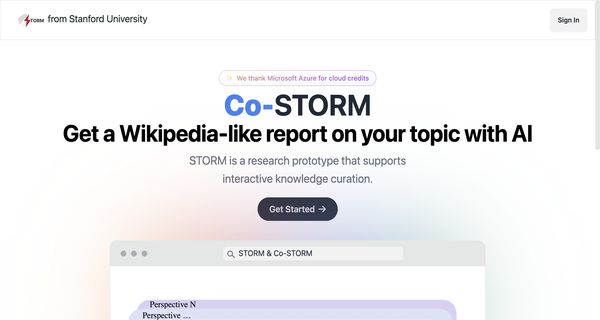
STORM is an innovative research tool developed by the Stanford Open Virtual Assistant Lab, designed to streamline the process of knowledge curation. By automating the collection and summarization of information on user-defined topics, STORM enables users to quickly generate concise, Wikipedia-like reports. This tool is particularly beneficial for researchers, students, and professionals who need to compile and synthesize information efficiently, eliminating the need to manually sift through multiple sources.
Key features of STORM include its ability to aggregate data from a variety of credible sources, ensuring that the content presented is both relevant and accurate. Users benefit from structured reports that enhance learning and provide valuable insights for decision-making. The convenience of receiving a well-organized summary saves time and effort, making STORM a valuable asset for anyone engaged in research or information gathering. Its unique capability to automate the knowledge acquisition process sets it apart, making it an essential tool for effective information management in today’s fast-paced environment.
Review: STORM
Introduction
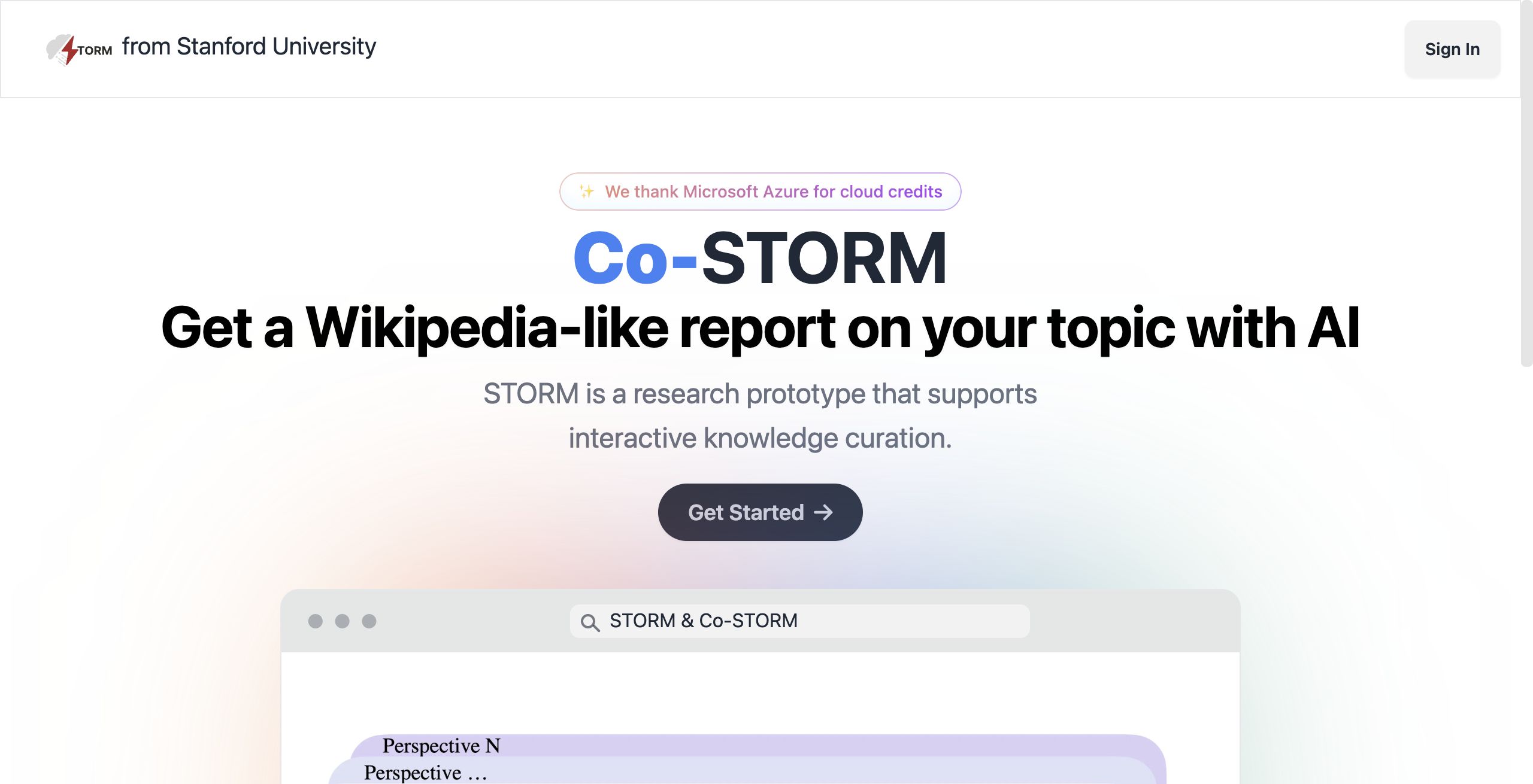
STORM is an innovative research prototype developed by the Stanford Open Virtual Assistant Lab. Designed to automate the process of gathering and summarizing information on specific topics, STORM generates concise, Wikipedia-like reports that synthesize data from various sources. This tool is primarily aimed at researchers, students, and individuals who need to rapidly collect and condense information for learning, analysis, or decision-making. Given the ever-growing demand for quick and reliable information curation, STORM's AI-driven approach is both timely and relevant.
Key Features
STORM stands out from its competitors by focusing on interactive knowledge curation. Here are some of its core functionalities and standout features:
- Automated Knowledge Aggregation: STORM streamlines the gathering of information on any given topic, providing users with a structured and concise report similar to a Wikipedia entry.
- Interactive Interface: The tool supports an interactive curation process that adjusts to the user's needs, ensuring that the most relevant data is highlighted.
- Research Prototype Innovation: Developed by a reputable institution, it leverages state-of-the-art AI techniques to enhance data accuracy and report quality.
- Cloud Integration: With acknowledgment to Microsoft Azure cloud credits, the tool benefits from robust cloud infrastructure for scalable performance.
Pros and Cons
- Pros:
- Highly efficient in aggregating and summarizing information.
- Provides a structured, concise report which saves time in research.
- Interactive and adaptable to user-specific queries.
- Developed by a reputable research team, ensuring a focus on innovation.
- Cons:
- Being a research prototype, it may have limitations in stability or full-scale deployment.
- The experimental nature might mean that the tool is subject to frequent updates or refinements.
- Potential users in need of enterprise-grade solutions might need to consider its maturity.
Final Verdict
Overall, STORM offers a promising tool for those looking to efficiently synthesize large amounts of information into a manageable, structured format. Researchers, students, and casual information seekers who value speed and conciseness will find STORM especially useful. However, those in search of a fully matured, production-level solution should be aware of its prototype status and potential stability issues. In summary, STORM is a remarkable innovation in the realm of interactive knowledge curation, balancing efficiency and ease-of-use with cutting-edge AI research from Stanford.
Open 'STORM' Website
Your membership also unlocks: