AI tool
Tetriz Harness
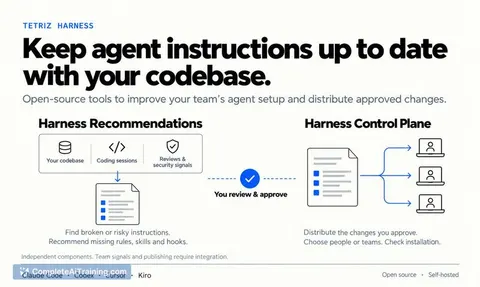
Tetriz Harness finds what your AI coding agent setup needs and distributes approved changes across your team. It is for senior engineers and platform teams who want to keep rules, skills, and hooks current across Claude Code, Cursor, and other tools.
About Tetriz Harness
Tetriz Harness is a pair of open-source tools that analyze and manage AI coding agent configurations across teams. It checks rules, skills, hooks, and permissions for Claude Code, Codex, Cursor, and Kiro setups, flags what's broken, and distributes approved fixes. The project launched this week and is MIT-licensed and self-hosted.
Review
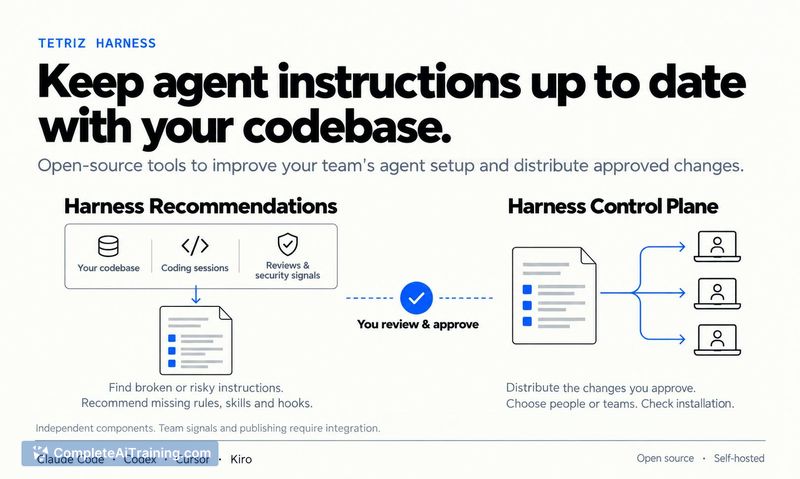
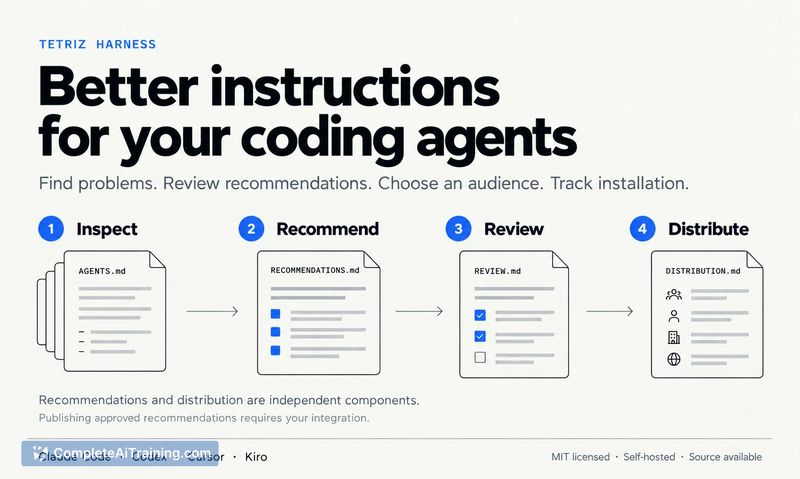
Tetriz Harness enters a space where team leads already spend hours manually syncing agent configs after model updates or workflow discoveries. The tool splits the problem into two parts: detecting what needs attention, then shipping changes. It's built by a distributed team of 13 makers who used Claude Code, Codex 3.0, and Cursor during development.
Key Features
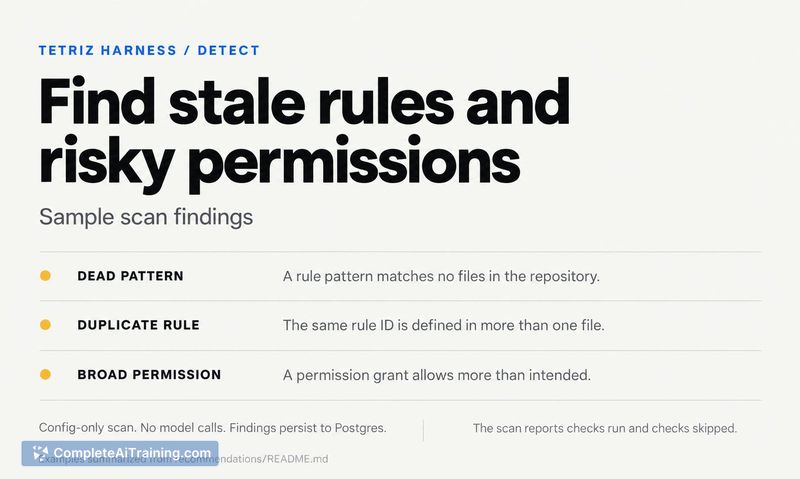
- Scans CLAUDE.md, AGENTS.md, MCP config, and other agent instruction files to flag duplicate rules, rules that match no files, and permission settings that skip every prompt
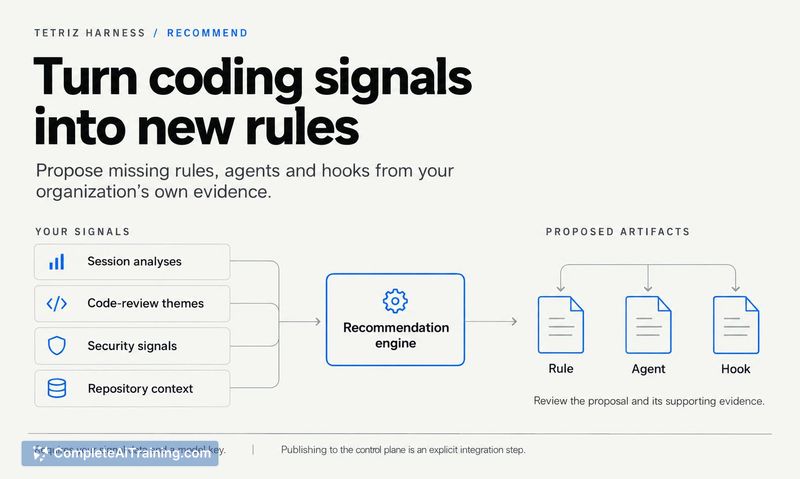
- Generates recommendations for new rules, hooks, and agents based on team coding sessions, review feedback, and security incidents
- Attaches evidence to every recommendation so you decide what to change; the tool never edits files on its own
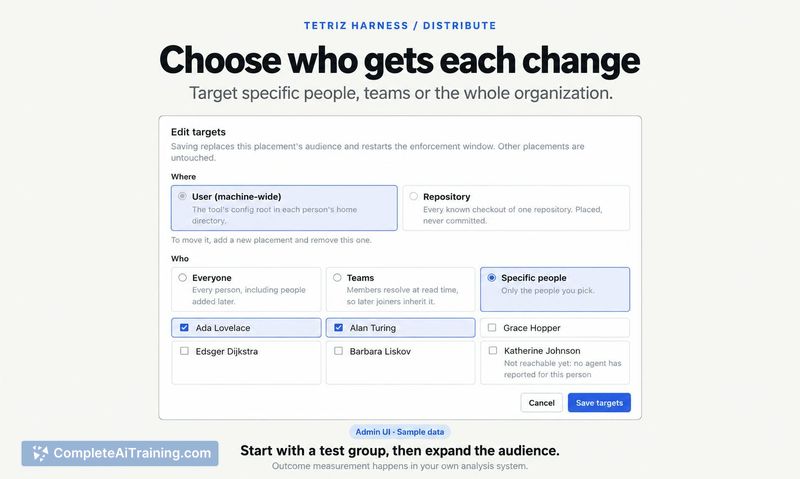
- Distributes approved changes to specific people, teams, or repos across Claude Code, Codex, Cursor, and Kiro via the Control Plane component
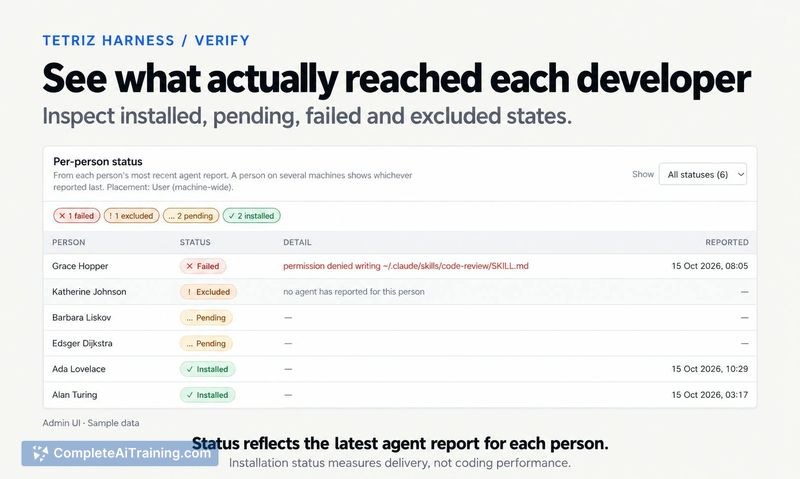
- An agent on each machine installs updates and reports back, letting you verify who received what
Pricing and Value
Both Harness Recommendations and Harness Control Plane are free and MIT-licensed. The quick start scans a sample repo with Go and a local Postgres database, requiring no model or account. Generating proposals for missing items requires your own session data, review data, and a model key. Pricing for any future managed service or support tier is not yet defined.
Pros
- Self-hosted architecture means you keep your codebase and session data on your own infrastructure
- Recommendations come with evidence, so engineers can evaluate before applying changes
- Control Plane pushes updates team-wide and reports installation status per machine
- Works across multiple coding agents instead of locking you into one editor
- MIT license removes friction for teams that need to audit or fork the code
Cons
- Proposing missing rules requires wiring in your own session data, review data, and model key-there's no turnkey data pipeline included
- Only supports Claude Code, Codex, Cursor, and Kiro; teams using other coding agents won't get the same coverage
- Not well suited for solo developers or very small teams where manual config sync takes minutes rather than hours
Teams with five or more engineers who regularly tweak agent rules across different editors will find the scan-and-distribute loop most useful. The evidence-backed recommendations fit workflows where senior engineers want to review before anything touches production configs. Solo devs and pairs who sync configs informally won't see much benefit from the added infrastructure.