About Tusk 2.0
Tusk 2.0 is an open-source testing platform that converts production app traffic into unit and API tests. It generates and maintains a test suite from recorded traces so teams can validate code changes against real user behavior with minimal manual test authoring.
Review
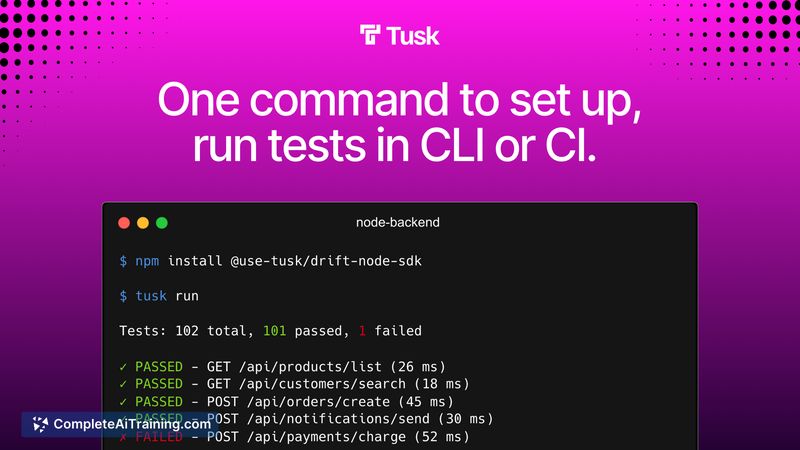
Tusk 2.0 focuses on turning live traffic into repeatable tests through an SDK and a CLI, paired with an optional cloud service for analysis. The workflow-record, replay, detect-aims to give developers fast, concrete feedback on whether a change introduces regressions.
Key Features
- Record: SDKs instrument services to capture inbound requests and outbound calls (HTTP, gRPC, DB queries, caches).
- Replay: CLI replays recorded traces as idempotent tests with external dependencies mocked from captured data, keeping tests fast and deterministic.
- Detect: Cloud compares current responses to recorded baselines, flags deviations, and can suggest fixes for regressions.
- Open-source SDKs and CLI with a paid cloud offering for team-level features, compliance, and maintenance.
- Security and privacy controls including configurable PII redaction and enterprise compliance support.
Pricing and Value
The core CLI and SDKs are open source and available to use for free. The cloud service that hosts test results, performs differential detection, and offers collaborative features is a paid product; new users may encounter promotional trials or short-term offers for the paid plan. For teams that want to reduce manual API test maintenance and get faster verification of pull requests, the cloud offering can provide clear time savings and more predictable releases.
Pros
- Automatically generates tests from real production traffic, capturing real-world scenarios that are easy to miss with hand-written tests.
- Fast, idempotent test runs without requiring a live database or external services.
- Open-source SDKs and CLI make local adoption and inspection straightforward.
- Cloud features add comparison, classification of changes, and compliance controls for teams that need them.
- Configurable PII redaction and enterprise compliance options help address privacy concerns.
Cons
- Relies on having meaningful production traffic; low-traffic projects will have less benefit.
- Initial instrumentation and test triage can require setup and some workflow changes for teams.
- The most convenient, team-oriented capabilities are part of the paid cloud product rather than the open-source core.
Overall, Tusk 2.0 is best for development teams that operate services with steady user traffic and want to reduce the time spent writing and maintaining API tests. It fits CI workflows where quick, objective feedback on regressions matters, and it can be especially useful for teams that prefer an open-source core with an optional managed cloud layer for collaboration and compliance.
Open 'Tusk 2.0' Website
Your membership also unlocks: