AI tool
Webless Agents
Webless Agents builds AI agents from your published content that answer questions, qualify buyers, send quotes, book meetings, and hand off to your team. It is for businesses that want to review every instruction before an agent goes live.
About Webless Agents
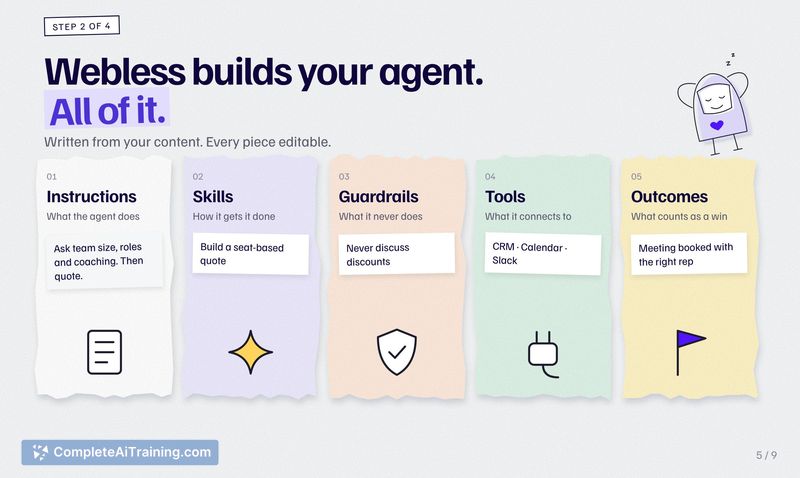
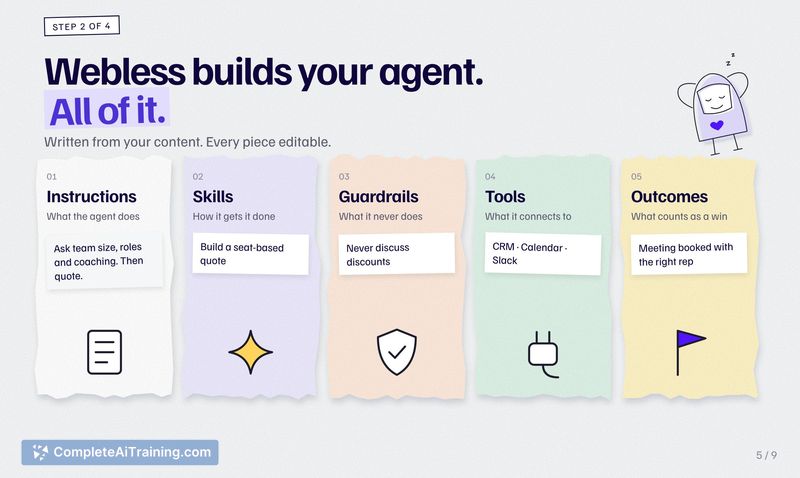
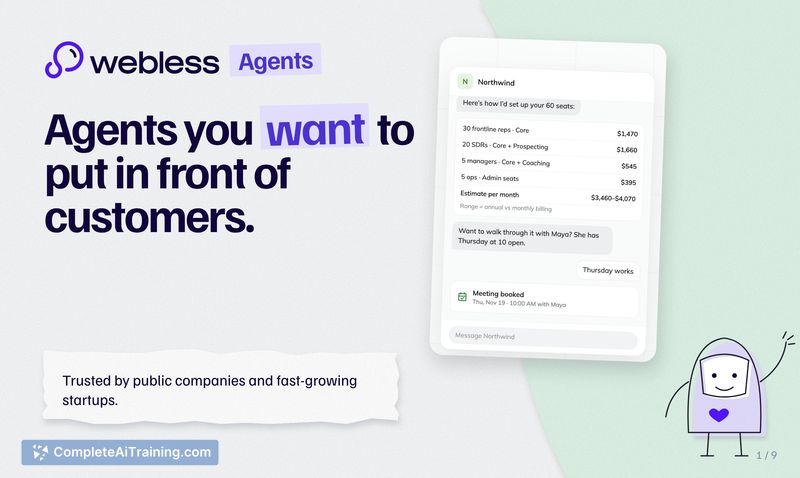
Webless Agents is a self-serve tool that creates AI agents grounded in a company's published website content. Users describe the desired outcome in plain English, and the system builds an agent with instructions, skills, guardrails, and tools derived from the site. The agent answers visitor questions, qualifies buyers, sends quotes, books meetings, and hands off to human teams when needed.
Review
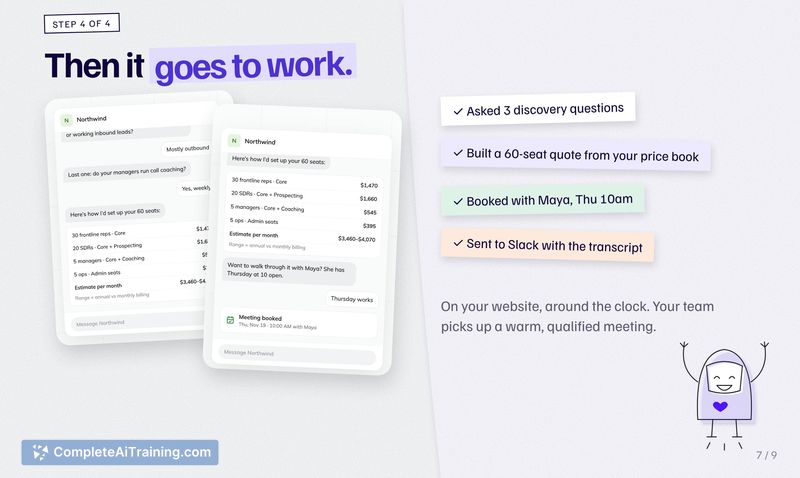
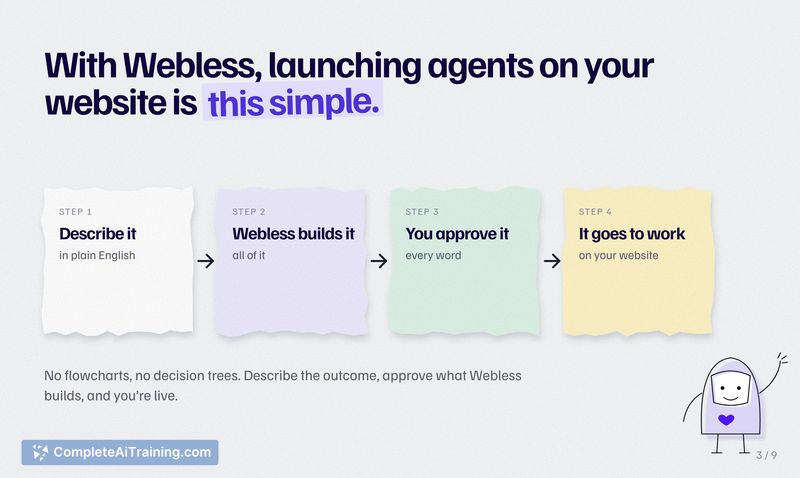
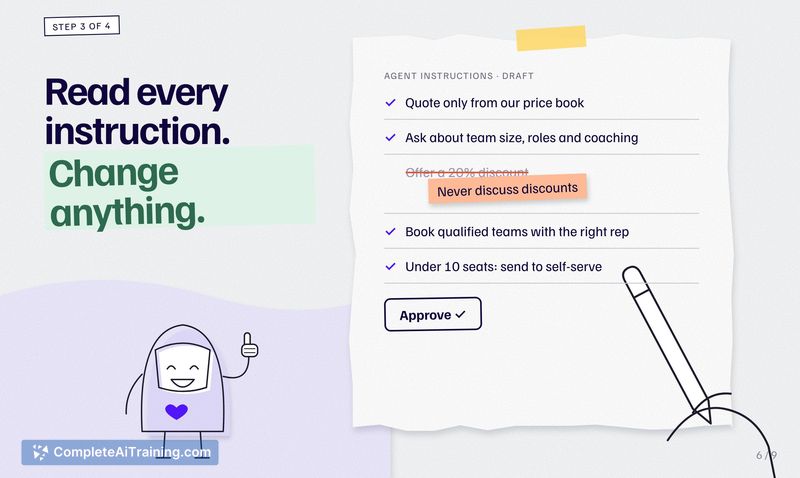
Webless Agents enters the conversation around website AI with a specific constraint: every response an agent gives must trace back to content the business has already published. The four-step setup-describe, build, approve, go live-puts a human review gate between the generated agent and a live customer interaction. This review focuses on what the tool does today, based on the launch information and maker comments.
Key Features
- Content-grounded agents. Agents answer only from published site content, uploaded pricing sheets, or discount rules. If the answer isn't in those sources, the agent says so or hands off to a team member instead of guessing.
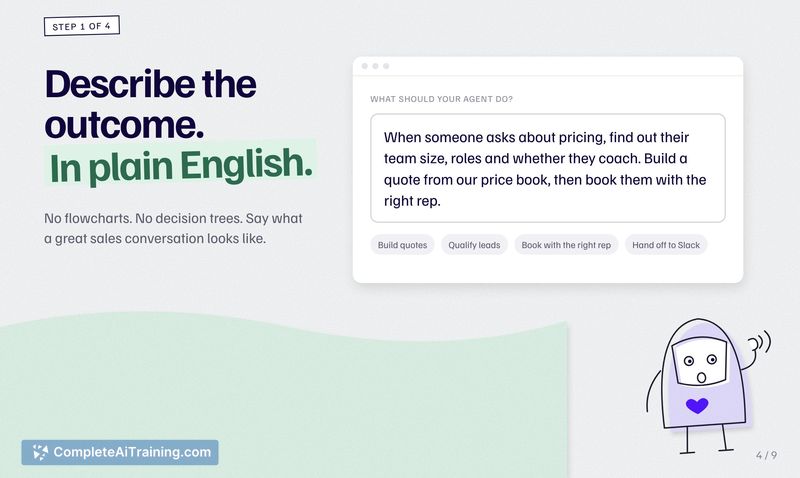
- Plain-English agent creation. Instead of building flowcharts or decision trees, a user describes the outcome they want. Webless generates the agent's instructions, skills, and tool configurations from that description and the site content.
- Human approval step. Every instruction, skill, and guardrail is visible for review before the agent goes live. Nothing deploys until the user confirms it.
- Coverage view. After crawling the site, the tool flags topics the site doesn't clearly address. It surfaces additional gaps as real visitors ask questions the agent can't answer from existing content.
- Multi-agent handoffs. A general agent can route visitors to specialist agents for pricing, RFPs, or security questions. The system supports 50+ languages for both content ingestion and responses, replying in the visitor's query language.
Pricing and Value
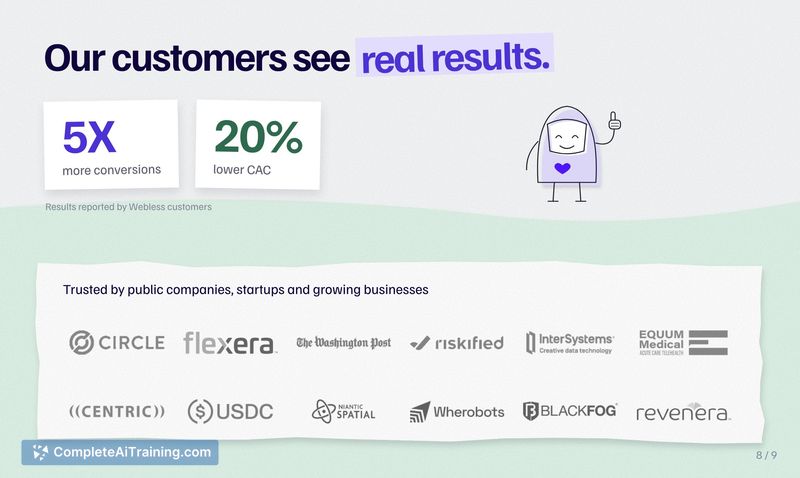
Specific pricing tiers are not detailed in the launch materials. The Product Hunt launch offers three months of the highest plan at no cost. The maker mentions that customers see 5X conversions and 20% lower customer acquisition cost, though independent verification of these figures isn't provided. For teams evaluating the tool, the free trial period is the primary way to assess fit before committing to a paid plan.
Pros
- Agents stay within the boundaries of approved content, reducing the risk of fabricated answers on pricing or product details.
- The approve-before-go-live workflow gives teams a chance to catch gaps or edge cases before a visitor encounters them.
- Coverage reporting connects agent performance directly to content strategy, surfacing documentation gaps that also affect SEO and answer engine optimization.
- Uploading separate pricing sheets or discount rules means businesses don't have to publish sensitive pricing publicly for the agent to handle those questions accurately.
- CMS-agnostic design and a claimed sub-30-minute setup time lower the barrier for teams without dedicated engineering resources.
Cons
- The agent's knowledge is only as current as the last site crawl. A page change doesn't automatically update the agent; the maker hasn't clarified the refresh cadence or whether re-crawling is manual.
- Reviewing skills and instructions still requires a human to read through the generated material. The instructions are described as short (8-10 lines), but the skills section-where content becomes agent behavior-demands closer attention to catch subtle misinterpretations.
- Webless Agents is not well suited for businesses whose site content is thin, outdated, or inconsistent. The tool's grounding mechanism means gaps in published material directly translate to gaps in what the agent can handle, and coverage flags won't fix the underlying content problem on their own.
Webless Agents fits teams that already invest in detailed, accurate site content and want an AI layer that respects those boundaries rather than improvising. It's a practical option for B2B companies with complex buying journeys, multiple buyer personas, or pricing scenarios that need careful handling. Organizations with sparse documentation or a high tolerance for AI hallucination in customer-facing roles will find the content-grounding constraint more limiting than helpful.