AI tool
WikiFix for Confluence
WikiFix for Confluence monitors Confluence spaces for contradicting claims, duplicate pages, and orphaned documents. It asks users to clarify which version is correct, then drafts a fix for approval. This tool is for teams maintaining compliance d...
About WikiFix for Confluence
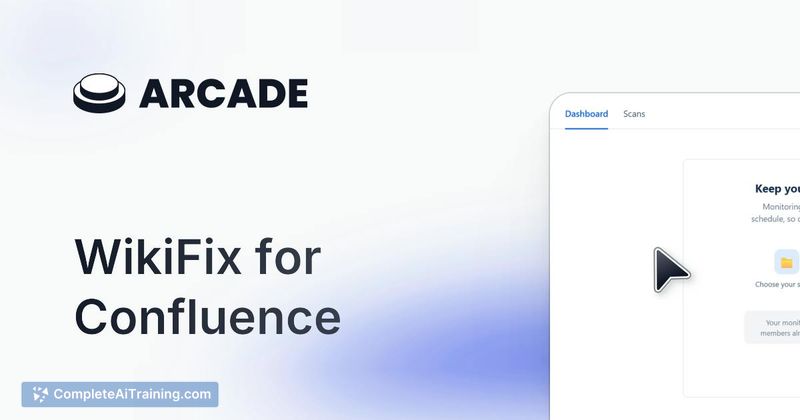
WikiFix for Confluence is a monitoring tool that scans Confluence spaces for knowledge base issues like contradicting pages, duplicates, and orphan documents. It presents findings as multiple-choice questions, then writes and applies fixes once a user approves the correct answer. The tool operates as a Confluence app built on Atlassian's Forge platform, with its scanning engine running on a separate backend.
Review
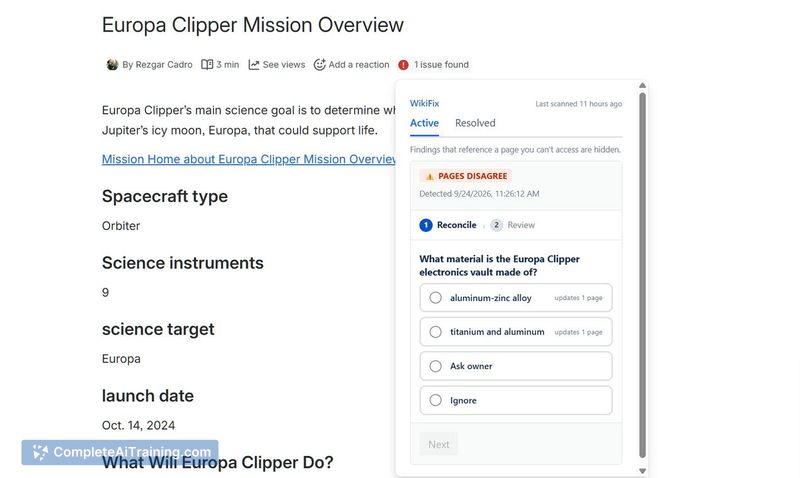

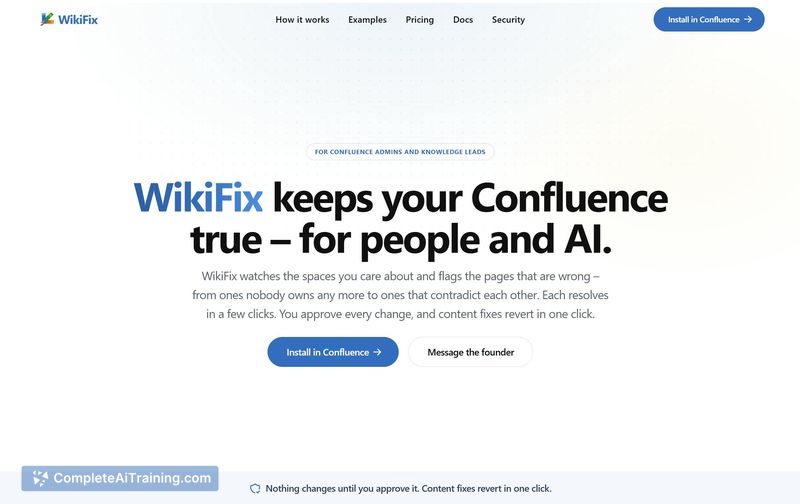
WikiFix tackles a specific pain point in long-lived Confluence wikis: documentation that drifts out of sync over years without anyone having time to manually review it. The tool doesn't just flag problems-it drafts the edits and lets you approve or revert them in one click. A v1 product launched this week, it currently looks only inside Confluence, with standalone support and cross-platform checks planned for later versions.
Key Features
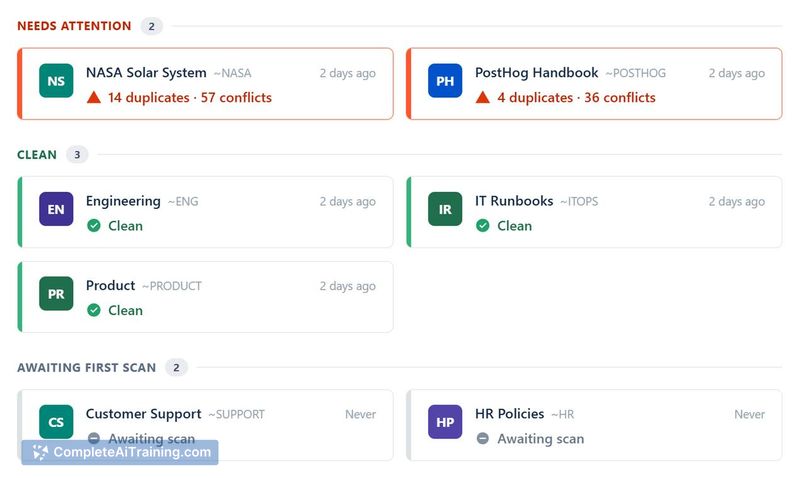
- Scans selected Confluence spaces for contradicting claims across pages, duplicate documents, and orphan pages
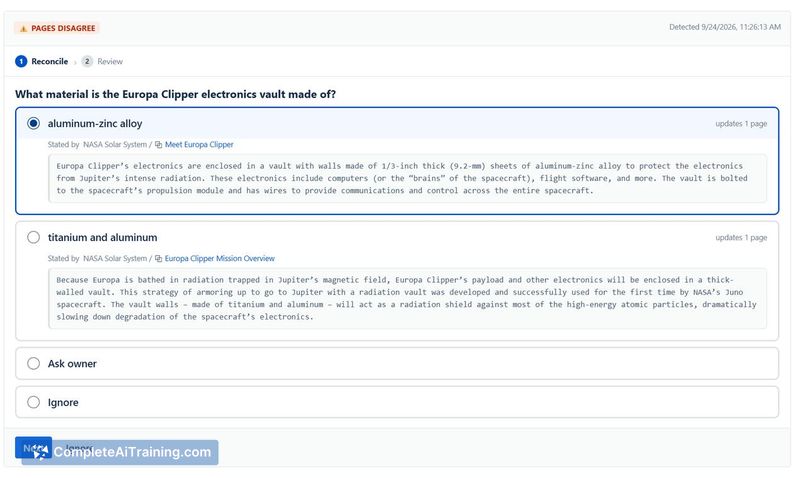
- Presents contradictions as multiple-choice questions with quoted passages, letting users pick the correct answer
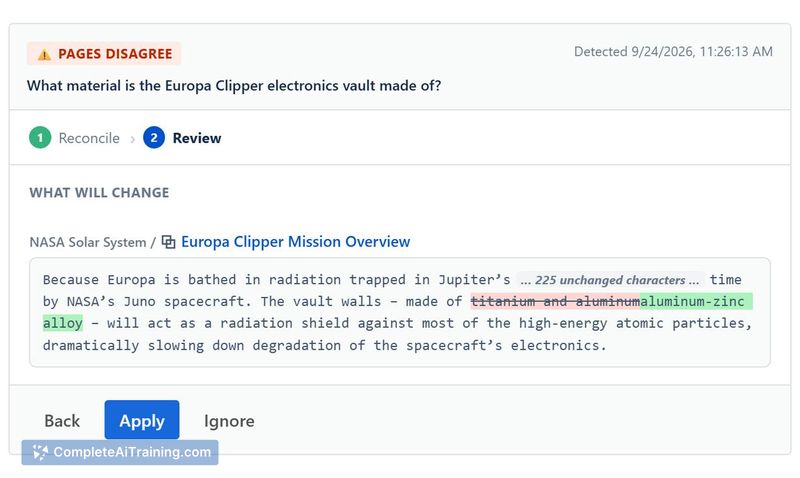
- Writes fixes for approved answers and applies them, with one-click undo and Confluence's native page versioning as a second safety layer
- Runs scans on an ad-hoc or scheduled basis, with weekly or monthly reports summarizing new findings
- Uses a quality gate system-Jev, a custom AI decision layer-that audits suspected contradictions before they become findings, returning a calibrated probability score
Pricing and Value
WikiFix launched with free options available, though specific pricing tiers are not yet defined in the current release information. The maker has stated that if a user scans a space and WikiFix finds nothing useful, they will refund credits at double the amount. The tool's backend uses Neo4j Aura for graph database operations, with each scan getting its own session that is deleted afterward, which the team notes keeps infrastructure costs tied to actual usage rather than idle runtime.
Pros
- Reduces the manual effort of routine wiki reviews from what the maker describes as roughly an hour of editing to a few minutes of clicking through findings
- Two-layer safety for edits: WikiFix's own one-click revert plus Confluence's built-in page versioning
- Transparent about accuracy-the maker acknowledges roughly 1 in 5 findings may be wrong and includes a feedback mechanism to tune the detection models
- Does not flag within-page contradictions, which avoids false positives from common patterns like before/after examples or good/bad comparisons
- Regular Confluence users see a badge on pages with detected issues and can apply fixes if they know the correct answer
Cons
- Scans currently cover only Confluence content-the tool cannot yet check documentation against external sources like code repositories, configs, or other wiki platforms
- Contradiction detection does not account for document age; it will flag a page from a year ago against one from last week with no date-based filtering
- Not well suited for teams whose documentation intentionally contains multiple valid versions of the same information without clear date or version tagging, as the tool assumes a single correct answer exists
WikiFix fits teams managing large, long-running Confluence instances where manual doc reviews have fallen behind-incident runbooks, compliance procedures, and onboarding guides are the scenarios the maker cites. The scheduled scanning and report-based workflow mean the tool can operate in the background until something needs attention. Organizations with smaller, actively maintained wikis or those using multiple documentation platforms may find the current Confluence-only scope limiting until v2 expands coverage.
Jobs WikiFix for Confluence suits
We checked WikiFix for Confluence against 500+ jobs; these get the most out of it.