11 Recommended AI Courses for Health and Safety Specialists in 2025
Discover the top 11 AI courses tailored for health and safety specialists in 2025. Enhance your skills with cutting-edge knowledge and tools to effectively integrate AI into your safety protocols and decision-making processes.
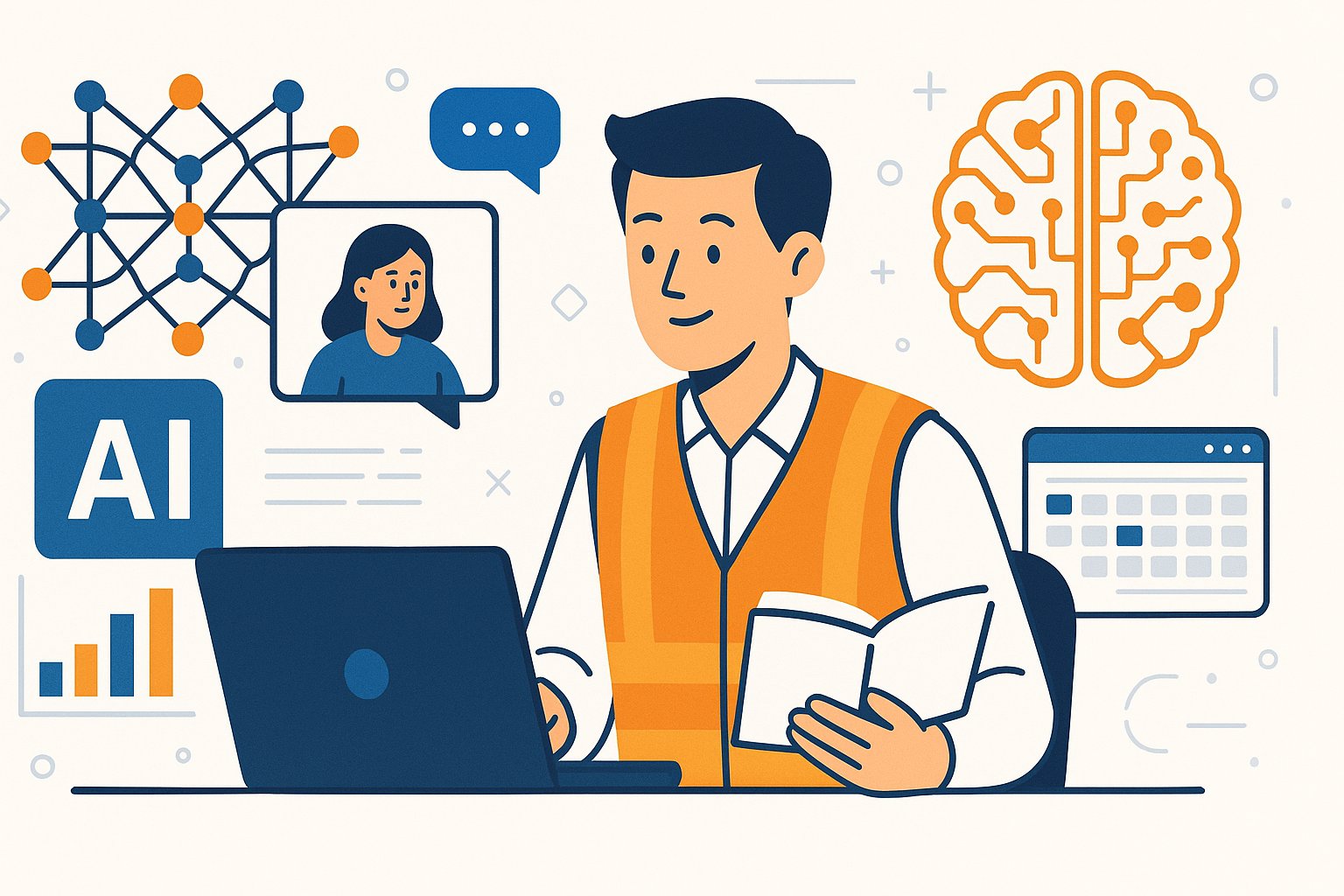
As the field of artificial intelligence continues to expand at an unprecedented pace, its influence permeates various sectors, including health and safety. For Health and Safety Specialists, the integration of AI into their work processes is not just an emerging trend but an essential shift. This shift necessitates a strategic approach to upskilling and reskilling, given AI's potential to transform job roles and enhance productivity. In this evolving landscape, professionals must be proactive in acquiring AI expertise to remain relevant and effective in their roles.
Why AI matters for Health and Safety Specialists today
AI is increasingly becoming a cornerstone in the toolkit of Health and Safety Specialists. Recent statistics reveal that 69% of businesses have integrated AI into their operations, highlighting its pivotal role in modern work environments. For Health and Safety Specialists, AI offers tools for predictive analytics, risk assessment, and incident management, thus improving safety outcomes. This article aims to guide specialists in identifying the top AI courses that can equip them with the necessary skills to excel in their profession.
The Growing Role of AI in Health and Safety Specialists
The application of AI in health and safety is multifaceted, ranging from automation of routine tasks to enhanced decision-making processes. AI tools can personalize safety protocols based on real-time data analysis, thus ensuring a tailored approach to risk management. Moreover, AI-driven insights can streamline workflows, reduce human error, and lead to more informed decisions, thereby optimizing the overall safety of work environments. These advancements demonstrate how AI is altering traditional practices, making the role of Health and Safety Specialists more dynamic and impactful.
Benefits of becoming an AI expert in Health and Safety Specialists
For professionals in health and safety, mastering AI technologies offers several advantages. Firstly, it enhances their ability to analyze and interpret complex data sets, leading to more effective safety strategies. Additionally, AI proficiency can improve job satisfaction by reducing the burden of repetitive tasks, allowing specialists to focus on more strategic initiatives. Furthermore, acquiring AI skills can increase career advancement opportunities, as organizations increasingly seek experts who can seamlessly integrate AI into safety protocols. By leveraging these technologies, Health and Safety Specialists can significantly contribute to creating safer and more efficient workplace environments.
This article will compare 11 comprehensive AI courses tailored for Health and Safety Specialists, including the CompleteAI Training program. These courses offer a range of learning experiences, from foundational knowledge to advanced applications, ensuring that professionals are well-equipped to meet the demands of their evolving roles.
Comparison: All AI Courses for Health and Safety Specialists (Updated Q2' 2025)
| Course Name | Provider | Price | Key Topics | Pros | Cons | Best For |
|---|---|---|---|---|---|---|
| AI for Health and Safety Specialists (Video Courses + Certifications) | CompleteAI Training | $29/month (monthly) or $8.25/month billed annually | Extensive library of over 100 specialized video courses and certifications | Highest rating, Extensive range of AI courses, Daily updates, Affordable pricing | Subscription based | General learners |
| Artificial Intelligence in Occupational Safety & Health (2025) | University of Illinois Chicago (UIC) | $1,000 | AI fundamentals, Practical applications, Project-based learning | Tailored for OSH professionals, No AI background required, Certificate of completion | Limited slots, Requires commitment of 40 hours | General learners |
| AI in Healthcare Specialization | Stanford University (via Coursera) | $39-$79/month (subscription, financial aid available) | Healthcare fundamentals, Clinical data, Machine learning, Capstone project | Taught by Stanford experts, CME accreditation, Flexible learning | Requires subscription, Intensive time commitment | General learners |
| AI in Health Care: From Strategies to Implementation | Harvard University (via Coursera) | $2,000-$4,000 (approximate) | Strategic frameworks, Diagnostic applications, Ethical governance | Strategic focus, Leadership perspectives, Ethical considerations | Higher price point, Geared toward leadership roles | General learners |
| Artificial Intelligence in Healthcare: Fundamentals and Applications | Massachusetts Institute of Technology (MIT) | $2,000-$4,000 (approximate) | Innovative AI decision frameworks, Healthcare simulations, Ethics | Future-focused, Ethics and innovation, Networking opportunities | Advanced content, Cost-intensive | General learners |
| Artificial Intelligence AI in Healthcare Free Course | University of Oxford | Free | AI healthcare tools, Ethical and regulatory frameworks | Free, Practical focus, Ethical insights | Smaller cohort sizes, Limited depth | General learners |
| Medmastery ChatGPT Essentials for Clinicians | Medmastery | Free | ChatGPT integration, Healthcare workflows | Free, Concise lessons, Practical tips | Focused on ChatGPT only, Limited scope | General learners |
| University of Illinois AI in Medicine Certificate | University of Illinois | $1,500 | Machine learning, Software deployment, CE credits | Technical depth, CE credits, Practical skills | Moderate cost, Technical focus may require prior knowledge | General learners |
| Royal College of Surgeons in Ireland: AI and Medical Imaging | Royal College of Surgeons in Ireland (RCSI) | $2,000-$3,000 (approximate) | AI in medical imaging, Ethical challenges, Clinical validation | Specialized content, Ethical focus, Clinical relevance | Niche audience, Cost | General learners |
| University of Central Lancashire: Artificial Intelligence in Healthcare | University of Central Lancashire | $1,400 | AI in clinical decision-making, Ethical frameworks | Ethical focus, Clinical application, Moderate price | Requires commitment, Less technical depth | General learners |
| American Academy of Family Physicians: AI in Family Medicine | American Academy of Family Physicians (AAFP) | Free | AI to reduce administrative tasks, Patient engagement | Free, Practical applications, Administrative focus | Limited to family medicine context | General learners |
Understanding AI Training for Health and Safety Specialists Professionals
As technology continues to advance, the integration of Artificial Intelligence (AI) into various industries, including health and safety, becomes increasingly important. Health and Safety Specialists can enhance their skills and knowledge through specialized AI courses tailored to their field. This article evaluates several AI training courses available for these professionals, highlighting their content, costs, and benefits to help you make an informed decision.
Course 1: CompleteAI Training
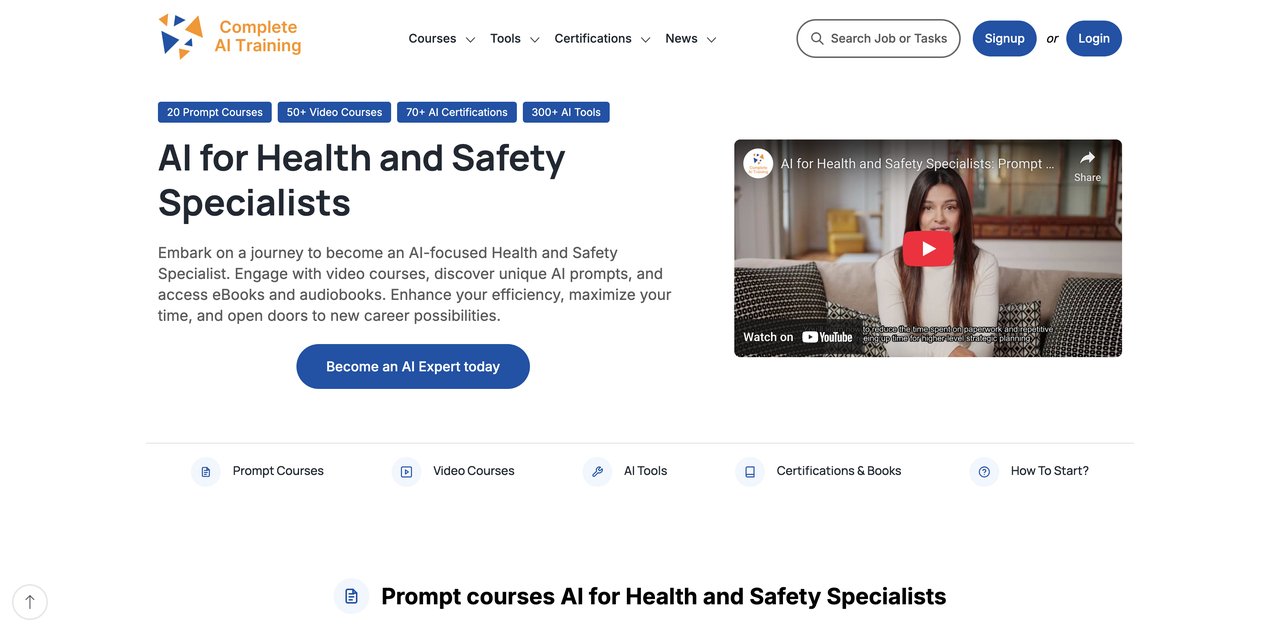
Complete AI Training offers an extensive library of over 100 video courses and certifications specifically for Health and Safety Specialists. For $29/month or $8.25/month billed annually, subscribers receive comprehensive AI education, updates on the latest AI tools, and curated news relevant to their profession. This course is ideal for professionals seeking to stay current with AI developments in health and safety.
Key Topics Covered: AI fundamentals, tool updates, industry news
Target Audience and Skill Level: Health and Safety Specialists at all levels
- Pros:
- Highly rated and comprehensive course offering
- Affordable pricing, especially with annual billing
- Daily updates on relevant tools and news
- Cons:
- Subscription-based model requires continuous learning
Best For: Professionals aiming for comprehensive AI training and regular updates
Course 2: Artificial Intelligence in Occupational Safety & Health (2025) by University of Illinois Chicago
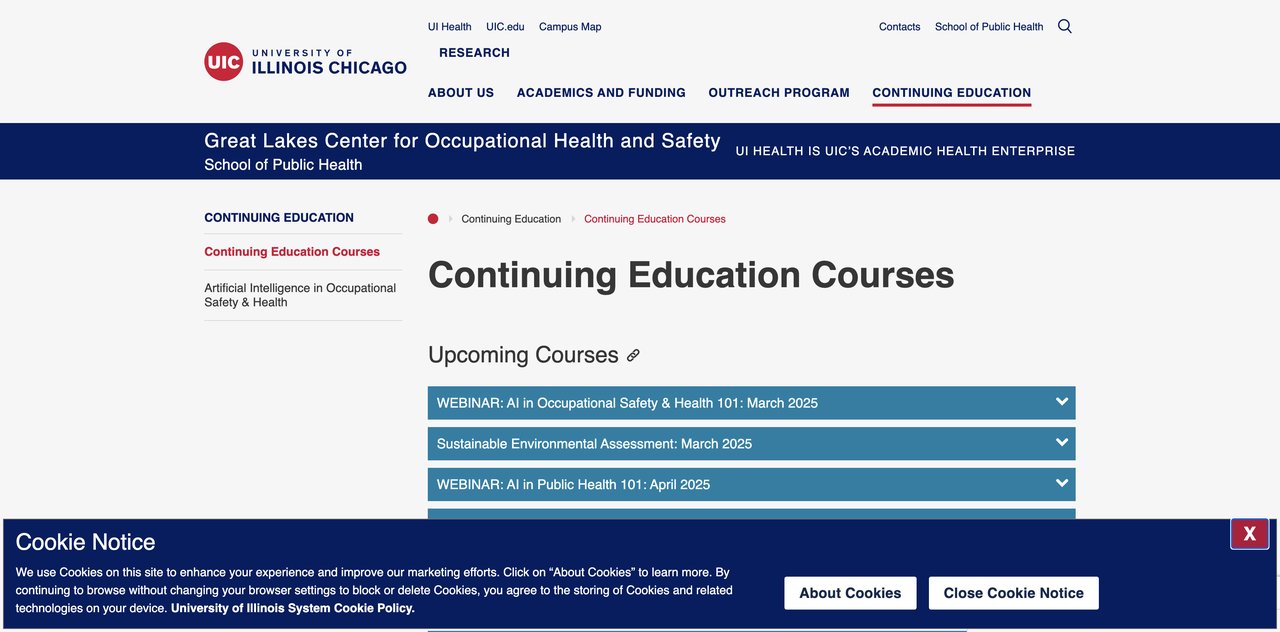
The University of Illinois Chicago offers a four-week project-based online course costing $1,000. Specifically designed for Occupational Safety and Health professionals, the course covers AI fundamentals and their application in reducing workplace hazards, featuring hands-on projects and expert collaboration.
Key Topics Covered: AI fundamentals, hazard reduction, hands-on projects
Target Audience and Skill Level: OSH professionals, no AI background required
- Pros:
- Project-based learning with real-world applications
- Collaboration with AI experts
- Certificate of completion with CEUs
- Cons:
- Limited slots available
- Requires a commitment of 40 hours
Best For: OSH professionals seeking practical, project-based AI learning
Course 3: AI in Healthcare Specialization by Stanford University (via Coursera)
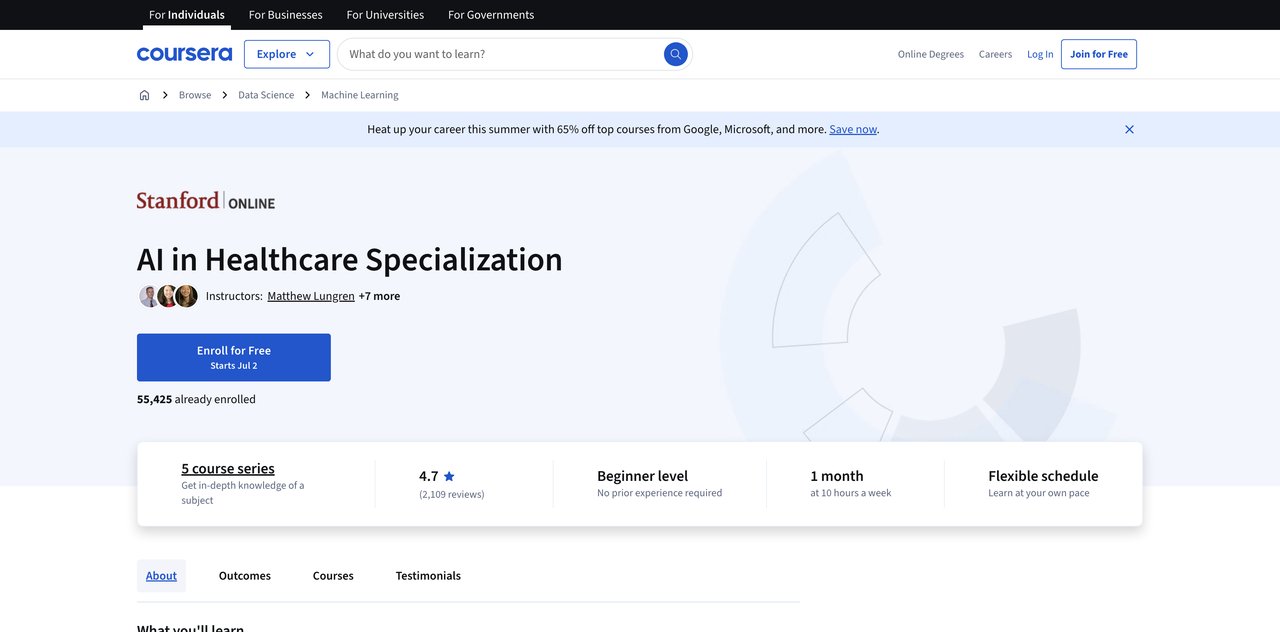
The AI in Healthcare Specialization by Stanford University offers a 5-course program priced between $39-$79/month. The specialization is for healthcare providers and computer science professionals, focusing on applying AI technologies safely and ethically in healthcare settings.
Key Topics Covered: Healthcare fundamentals, clinical data, machine learning
Target Audience and Skill Level: Healthcare and computer science professionals
- Pros:
- Flexible, self-paced learning
- Hands-on capstone project with real-world data
- CME accreditation available
- Cons:
- Requires subscription for full access
- Intensive time commitment
Best For: Professionals seeking flexible learning with a focus on healthcare AI
Course 4: AI in Health Care: From Strategies to Implementation by Harvard University (via Coursera)
Harvard University's course for healthcare leaders is priced between $2,000-$4,000. It focuses on strategic frameworks for AI implementation, diagnostic applications, and ethical governance, ideal for leaders involved in decision-making or policy-making.
Key Topics Covered: AI strategies, diagnostics, ethical governance
Target Audience and Skill Level: Healthcare leaders and decision-makers
- Pros:
- Strategic and leadership focus
- Comprehensive ethical considerations
- Cons:
- Higher price point
- Geared toward leadership roles
Best For: Leaders seeking strategic insights into AI implementation
Course 5: Artificial Intelligence in Healthcare: Fundamentals and Applications by MIT
The MIT course, priced at $2,000-$4,000, covers innovative AI decision frameworks, simulations, and ethics in AI development. It prepares professionals to handle complex healthcare challenges with future-oriented AI applications.
Key Topics Covered: AI frameworks, healthcare simulations, ethics
Target Audience and Skill Level: Advanced learners with interest in future-focused applications
- Pros:
- Focus on future-oriented AI applications
- Ethical and innovative content
- Cons:
- Advanced content
- Cost-intensive
Best For: Professionals seeking advanced, future-focused AI training
Course 6: Artificial Intelligence AI in Healthcare Free Course by University of Oxford
The University of Oxford offers a free course providing hands-on experience with AI healthcare tools and insights into European ethical and regulatory frameworks. It’s ideal for specialists seeking practical skills without cost.
Key Topics Covered: AI tools, ethical and regulatory frameworks
Target Audience and Skill Level: Healthcare specialists at all levels
- Pros:
- Free of charge
- Focus on practical skills and ethics
- Cons:
- Smaller cohort sizes
- May lack depth compared to paid courses
Best For: Specialists seeking practical AI skills with a global perspective
Course 7: Medmastery ChatGPT Essentials for Clinicians by Medmastery
Medmastery provides a free course focusing on integrating ChatGPT in healthcare workflows through concise lessons. It’s designed for clinicians new to AI, helping them quickly adopt AI tools for daily efficiency.
Key Topics Covered: ChatGPT integration, workflow tips
Target Audience and Skill Level: Clinicians new to AI
- Pros:
- Free and concise lessons
- Practical workflow integration tips
- Cons:
- Focus only on ChatGPT
- Limited scope
Best For: Clinicians seeking to integrate ChatGPT quickly and efficiently
Course 8: University of Illinois AI in Medicine Certificate by University of Illinois
The University of Illinois offers a $1,500 certificate program focusing on machine learning and software deployment in medicine, with CE credits. It’s suitable for specialists seeking technical expertise in AI implementation.
Key Topics Covered: Machine learning, software deployment, CE credits
Target Audience and Skill Level: Specialists seeking technical depth
- Pros:
- Technical depth and practical skills
- Includes CE credits
- Cons:
- Moderate cost
- May require prior knowledge
Best For: Specialists looking for in-depth technical AI training
Course 9: Royal College of Surgeons in Ireland: AI and Medical Imaging by RCSI
RCSI offers a course specializing in AI applications in medical imaging, priced at $2,000-$3,000. It covers ethical challenges and clinical validation, beneficial for those involved in radiology or imaging safety.
Key Topics Covered: Medical imaging, ethical challenges, clinical validation
Target Audience and Skill Level: Imaging specialists
- Pros:
- Specialized content for imaging
- Focus on ethics and clinical relevance
- Cons:
- Niche audience
- Higher cost
Best For: Imaging specialists focusing on AI applications
Course 10: University of Central Lancashire: Artificial Intelligence in Healthcare
The University of Central Lancashire offers a course emphasizing AI in clinical decision-making and ethical frameworks, costing $1,400. It's well-suited for specialists focusing on patient-centered care and ethical AI use.
Key Topics Covered: Clinical decision-making, ethical frameworks
Target Audience and Skill Level: Specialists in patient-centered care
- Pros:
- Focus on ethics and clinical application
- Moderate pricing
- Cons:
- Requires commitment
- Less technical depth
Best For: Specialists seeking ethical AI integration in clinical workflows
Course 11: American Academy of Family Physicians: AI in Family Medicine
The AAFP provides a free course for primary care physicians, focusing on AI to reduce administrative tasks and improve patient engagement. It's practical and accessible for family medicine specialists.
Key Topics Covered: Administrative AI applications, patient engagement
Target Audience and Skill Level: Family medicine or primary care specialists
- Pros:
- Free and practical applications
- Focus on administrative efficiency
- Cons:
- Limited to family medicine context
Best For: Family medicine specialists looking to improve efficiency with AI
Overall Recommendations
Choosing the right AI course depends on your specific needs and career goals. For comprehensive AI training with regular updates, CompleteAI Training offers an affordable and extensive option. If you prefer project-based learning with real-world applications, the University of Illinois Chicago's course might be ideal. Healthcare professionals seeking flexible, self-paced learning should consider the Stanford AI in Healthcare Specialization.
For those in leadership roles, Harvard University's course provides strategic insights, while MIT's program is suitable for advanced learners focusing on future-oriented AI applications. If budget constraints are a concern, the University of Oxford and AAFP offer valuable free courses, each tailored to specific aspects of AI in healthcare.
Ultimately, the best course for you will align with your professional focus, learning preferences, and budgetary considerations. Each course reviewed here offers unique strengths that cater to the diverse needs of Health and Safety Specialists in the evolving field of AI.