AI app for science and research · no coding needed
Unstructured research data stewardship console
Reduce time spent locating, labelling and reconciling unstructured research material while keeping provenance and review intact.
Made for: Research teams and data stewards managing mixed text, image and audio collections
What it does for you
The problem
Unstructured research material sits in disconnected stores, so teams cannot search it, label it consistently or trace how conclusions were reached.
What it gives you
Reviewer-approved structured records, topics and searchable embeddings linked to their sources
What you give it
Permitted documentsrecordingsimagesmetadata
Build your own version of Nomic Atlas, Relevance AI and more
One app with what these 3 AI tools do, yours to keep and change: Nomic Atlas, Relevance AI, Quivr.
Everything these tools do, in one app
- Unstructured Data Handling Processes and organizes unstructured data such as text, images, and audio into structured formats for easier analysis.Found in Nomic Atlas, Relevance AI, Quivr
- Multi-modal Analysis Analyzes different data types including text, images, and audio to extract insights.Found in Nomic Atlas, Relevance AI, Quivr
- AI-Powered Embeddings Uses AI models to create vector representations that capture semantic meaning for better search and retrieval.Found in Nomic Atlas
- Topic Modeling Automatically identifies topics and themes within large datasets to aid understanding.Found in Nomic Atlas
- Data Labeling Enables users to label data collaboratively to improve dataset organization and model training.Found in Nomic Atlas
- Sentiment Analysis Evaluates the emotional tone in text data to gauge opinions and feedback.Found in Relevance AI
- AI Agent Workflows Allows building and deploying AI agents that automate tasks like research and follow-ups.Found in Relevance AI
- No-Code Customization Lets users design and customize AI agents using natural language without coding.Found in Relevance AI
- Data Storage Stores various types of unstructured data securely for later access.Found in Quivr
- Rapid Data Retrieval Enables quick access to stored data when needed.Found in Quivr
- Secure Data Control Ensures data privacy and protection through robust security measures.Found in Nomic Atlas, Relevance AI, Quivr
- Open-Source Platform Provides transparency and flexibility for users to customize the platform.Found in Quivr
- Seamless Integrations Connects with existing tools, APIs, and databases to fit into current workflows.Found in Nomic Atlas, Relevance AI, Quivr
- Personal AI Assistant Offers a configurable AI that learns from company data to act as a knowledge assistant.Found in Quivr
- Interactive Visualization Provides a visual interface to explore and collaborate on datasets.Found in Nomic Atlas
- Data Agent Assists with answering queries and guiding users on data actions.Found in Nomic Atlas
- Collaborative Features Facilitates team collaboration on data labeling and dataset management.Found in Nomic Atlas
- Filtering Options Allows users to filter data based on specific criteria for focused analysis.Found in Nomic Atlas
How it works, step by step
- Ingest text, image and audio files with permission records
- Convert permitted material into structured records with source links
- Generate embeddings for semantic search and retrieval
- Detect topics and themes across a collection
- Support collaborative labelling with reviewer roles
- Score sentiment in text where the study requires it
- Build no-code agent workflows for recurring research tasks
- Configure a knowledge assistant over the approved collection
- Store all material with access boundaries and retention rules
- Retrieve records quickly by meaning, label or filter
- Filter and segment records by criteria and metadata
- Visualise topics, clusters and coverage interactively
- Answer data questions with a guided data agent
- Compare the reviewed result with the recorded baseline and value assumptions
- Capture corrections and named-owner approval before consequential use
- Export a versioned reviewer-approved structured record set with source references and unresolved questions
Jobs this app suits
Our AI checked this app against 500 jobs; these get the most out of it. Each job links to its learning path.
Build it yourself with your AI system
Build this app yourself, no coding needed
Start with a quick version you can try in a few minutes. Like it? Then build the full app by copying and pasting our step-by-step instructions: everything is prepared for you.
Sign in to see how to build it yourself
Build a quick version to try, or get the full app pack for Unstructured research data stewardship console with the step-by-step building instructions. You don't need any technical skills: you copy, paste and answer a few questions. Both are included in the membership.
4 Have it built for you days to a few weeks
Rather not do it yourself, or want it fully tailored to your data, your way of working and your brand? Nexibeo builds Unstructured research data stewardship console with you.
What's in the app pack
Included in the Complete AI Training membership.
- The building instructions your AI follows, step by step
- The questions your AI will ask you about your business before it starts
- A clickable demo you can open in your browser, to see how it should work
- A detailed blueprint of the screens, the information it keeps and the checks it runs
Become a member to get the app packAlready a member? Sign in
The files, for the technically curious
- START-HERE.mdHow to build it with your own AI (read first)3 KB
- README.mdOverview and links4 KB
- questions.mdQuestions to answer before you build2 KB
- prompt-cloudflare.mdThe full build prompt, hosted on Cloudflare25 KB
- prompt-vps.mdThe same build on your own server (Docker)25 KB
- spec.jsonData model, API, AI pipeline, acceptance criteria12 KB
- demo/index.htmlThe working demo on sample data196 KB
Questions
Do I need to know how to code?
No. You copy and paste the prompts on this page into ChatGPT or Claude, and the AI does the building. When it asks you something, you answer in your own words.
What does it cost?
The quick version, the app pack and the step-by-step instructions are for members: you pay the membership price, not a price per app (see the plans). Building the full app uses your own ChatGPT or Claude subscription. Putting it online is often cheap or no cost at the start, and your AI tells you before anything costs money.
How long does it take?
The quick version: about two minutes. The real app: an afternoon for a first version you can use, longer if you want every feature.
Can I change it to fit my business?
Yes. Tell your AI what to change in plain words, like “add a column for the price” or “use our logo and colours”. Or have Nexibeo build and customise it for you.
More detailsHow the AI works, safeguards and what to build first
Reduce time spent locating, labelling and reconciling unstructured research material while keeping provenance and review intact. For research teams and data stewards managing mixed text, image and audio collections, convert permitted documents, recordings, images and metadata into reviewer-approved structured records, topics and searchable embeddings linked to their sources. The benefit is a testable hypothesis, measured through reviewed records per steward hour and corrections after publication; do not assume that AI output alone produces business value.
Confirm the buyer's problem and scope, collect permitted documents, recordings, images and metadata, then follow this sequence: 1. Ingest text, image and audio files with permission records. 2. Convert permitted material into structured records with source links. 3. Generate embeddings for semantic search and retrieval. 4. Detect topics and themes across a collection. 5. Support collaborative labelling with reviewer roles. Resolve uncertain cases with qualified reviewers, approve reviewer-approved structured records, topics and searchable embeddings linked to their sources, and measure reviewed records per steward hour and corrections after publication against a documented baseline.
How the AI works
Use AI to interpret permitted inputs, suggest structured mappings and generate candidate outputs for the stated task modules. Use deterministic code for arithmetic, schema validation, hard constraints and reproducible tests. Review source-linked explanations and uncertainty before accepting results. One approved collection scope and permitted media types; final interpretation and publication checks remain with the research team. A model suggestion is never a verified fact, professional decision or authorization to act.
Safeguards
Preserve source attribution, consent records, quotation accuracy and usage permissions. Research owners approve substantive interpretations and publication scope. One approved collection scope and permitted media types; final interpretation and publication checks remain with the research team. Keep all consequential actions under authorized human control and do not fabricate missing inputs, permissions, professional judgments or market evidence.
What to build first
Pilot scope: One approved collection scope and permitted media types; final interpretation and publication checks remain with the research team. Implement one approved input format, a bounded representative case set and the first two task modules: ingest text, image and audio files with permission records; convert permitted material into structured records with source links. Support the third module with operator review: generate embeddings for semantic search and retrieval. Include source references, corrections, basic organization access, approval states, export and value measurement. Use managed operator assistance for unresolved exceptions. The cost estimate covers this narrow prototype, not unrestricted multi-tenant scale, complex production integrations, specialist certification or physical operations.
What it can connect to
Institutional repositories, authorized interviews and permitted research sources. Cloud object storage, file import/export and publication destinations. Start with file exchange and validate destination specifications before promising direct publishing. Start with authorized file exchange. Validate current provider access, usage rights and schema behavior before promising a connector.
The screens in detail
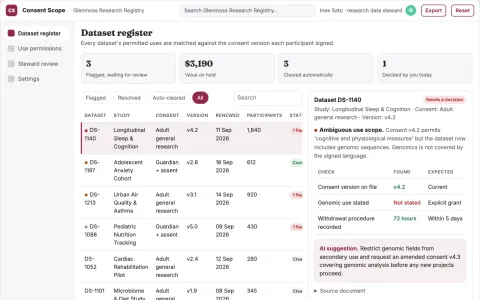
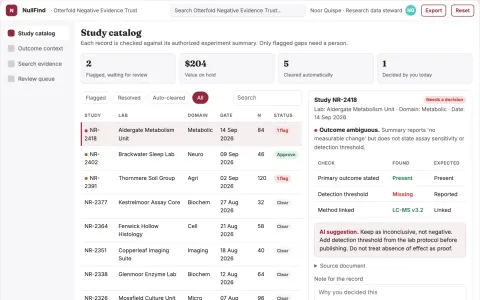
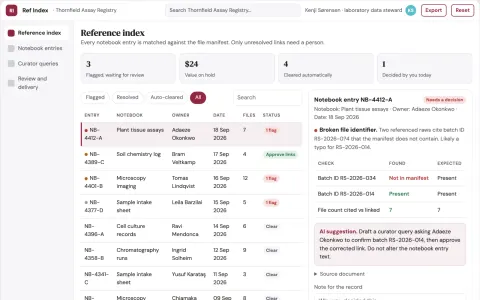
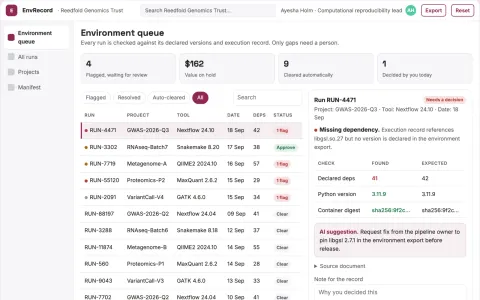
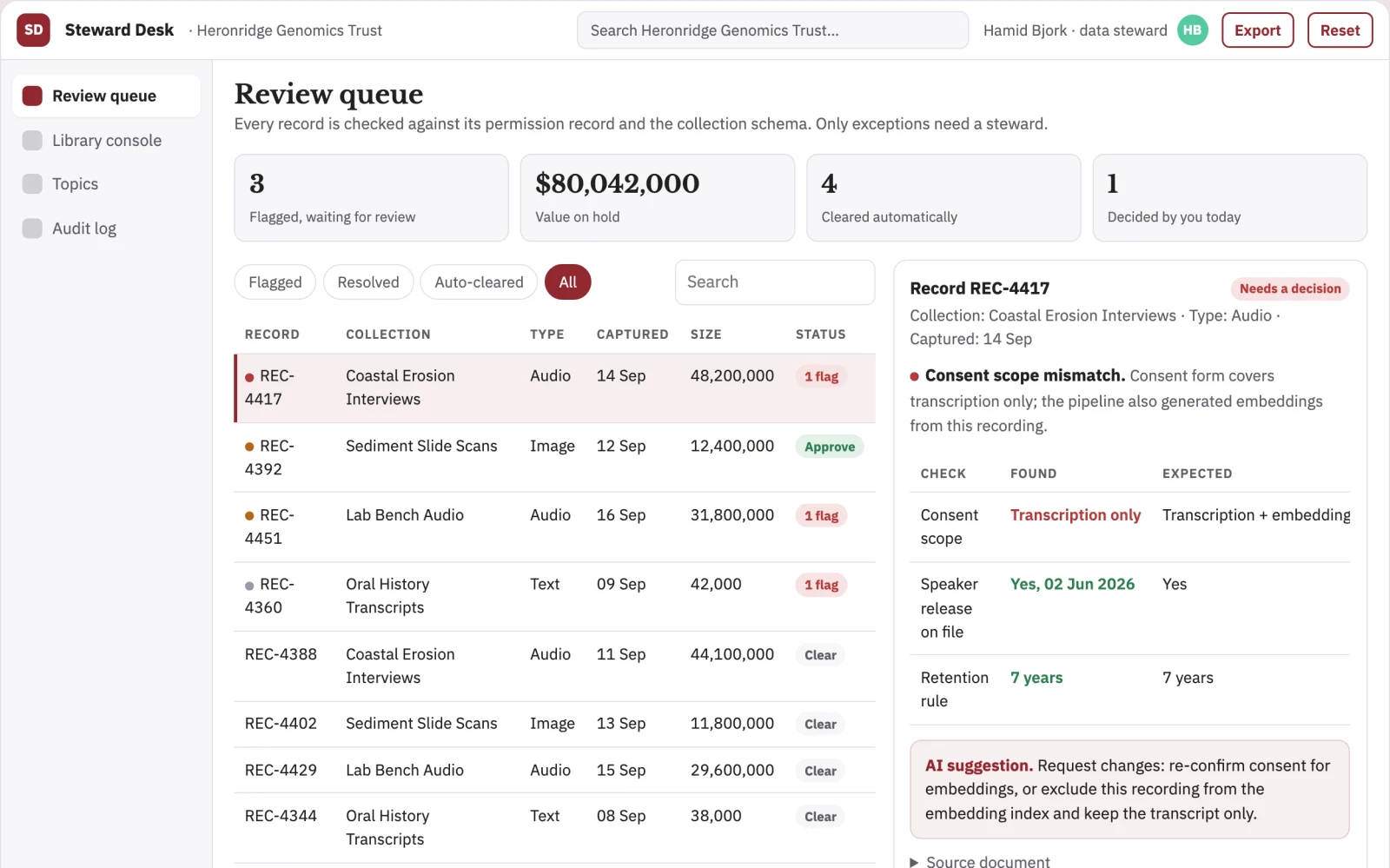
Primary screens: Collection intake and permissions, Searchable library console, Review and labelling queue, Topic and embedding explorer, Export and audit log. Use a left-hand collection tree, a central record list with filters, and a right-hand panel for source preview, labels, topics and comments. Let users compare record versions side by side. Display draft, changes requested and approved states. Provide a read-only reviewer link with comments anchored to the relevant record. Make the task-specific outcome reviewer-approved structured records, topics and searchable embeddings linked to their sources visible beside its evidence, review state and value baseline.