AI in Independent Pet Retail: 10 Operations Takeaways from eTailPet's Lorenzo Trujillo
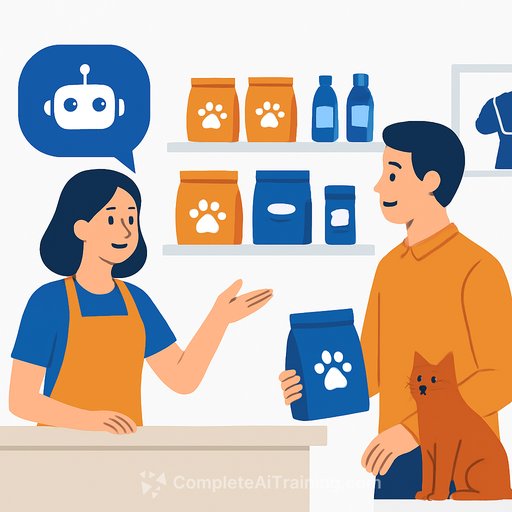
On a recent episode of the Trending: Pet Food podcast, eTailPet product lead Lorenzo Trujillo laid out how artificial intelligence is helping independent pet retailers compete with big box chains. The short version: AI clears admin bottlenecks, lets owners get back on the floor, and turns sales and inventory data into decisions you can act on today.
If you run operations, this isn't about shiny tech. It's about cutting hours of low-leverage work, reducing stockouts and overstocks, and making pricing moves with confidence.
Top 10 takeaways for operations leaders
- AI is already embedded in daily retail workflows. It's handling reporting, ordering, discount code suggestions, and inventory logic. As Trujillo put it, it fits into nearly every part of the platform - and it's here to stay.
- Purchase orders in seconds, not hours. AI can read your sales history and produce complex POs with rules (e.g., "exclude holiday items until Q4") and show its reasoning. That means smarter buys without spreadsheet marathons.
- Retailers are asking for AI - they don't need a pitch. Store owners are showing up with specific integration requests because they already know what they want AI to do. Demand is operator-led.
- Adoption is moving faster than the shift to cloud. Trujillo sees more inbound interest for AI than he did during the on-prem to cloud transition. The window to be early is closing.
- Inventory is the universal time sink. Most operators spend their non-register time editing products, building and receiving POs, and auditing reports. That's the prime target for automation.
- Competitive pricing and promos can be data-driven. AI can track local price benchmarks and suggest discounts where elasticity exists. If a SKU underperforms at full price but moves on promo, you'll know - and act - faster. If pricing strategy is a primary focus, consider the AI Learning Path for Vice Presidents of Finance for guidance on strategic pricing and risk.
- Time saved fuels stronger customer relationships. Offload admin and spend more time with shoppers, rescues, and local partners. The store grows when you're visible in your community.
- Community engagement is a real operational advantage. Top single-door stores show deep ties to events, markets, and rescue work. AI doesn't replace that - it gives you the hours to do more of it.
- AI helps small teams match big-box analytics. You may not have a data department, but you can still get clear recommendations on buys, pricing, and promos - and act with confidence.
- AI will be table stakes within a decade. Expect AI features to be an assumed part of retail software in 10-15 years. Late adopters risk losing speed, margin, and customer loyalty.
What to implement this quarter
- Upgrade purchase ordering. Turn on AI-assisted POs with rules: reorder points by vendor, seasonality flags, max-on-hand, and "do not order" lists. Review the model's reasoning weekly. Project and ops leads can use the AI Learning Path for Project Managers to plan and execute these rollouts.
- Create promo guardrails. Set min-margin thresholds, eligible SKUs, and timing windows. Let AI suggest discounts; you approve final moves.
- Standardize inventory hygiene. Use AI-generated product edits (names, categories, tags) so reporting is clean and comparable across vendors.
- Run a price check routine. Schedule weekly competitive scans on top sellers. Act on anomalies: drop price, bundle, or schedule a short promo.
- Measure time saved. Track hours spent on POs, receiving, and counts before/after rollout. Reinvest those hours into floor coverage and outreach.
Data and governance basics
- Data quality first. Garbage in, garbage out. Clean product IDs, consistent units, and accurate sales attribution amplify AI's value.
- Keep a human in the loop. Use AI for recommendations; keep approvals with your manager until trust and accuracy are proven.
- Set a review cadence. Monthly check: model suggestions vs. outcomes (sell-through, margin, stockouts). Adjust rules, not just results.
- Document your guardrails. Who can approve POs, price changes, and promos? Write it down. For a sensible framework, see NIST's AI Risk Management Framework and the AI Learning Path for CIOs for governance and strategy guidance.
Why this matters now
Independent retailers win on trust and proximity. AI reduces the busywork that keeps you away from customers, while giving you the pricing and inventory intelligence big chains already use.
Start with one workflow: purchase orders or pricing. Prove the time savings, reinvest that time into your community presence, then expand to the next use case.
Further learning
- AI automation resources for retail ops
Lorenzo Trujillo's message is clear: AI isn't a future bet. It's a practical lever you can pull now to run a tighter store and build stronger customer relationships.
Your membership also unlocks: