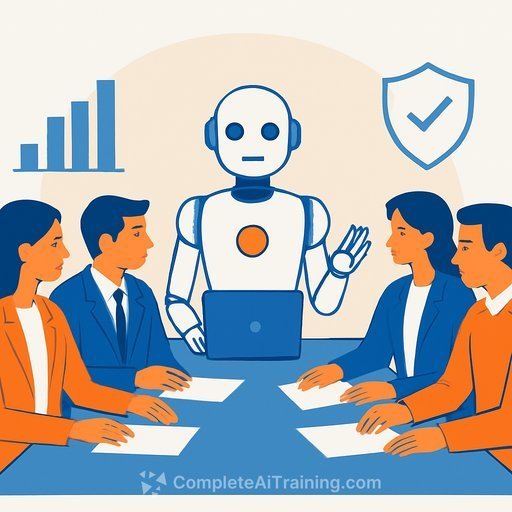
2026: AI gets real, talent goes in-house, and agencies pivot to outcomes
PR leaders are aligned on one thing: 2026 won't reward busywork. Clients will bring more work inside, expect smaller senior teams, and ask agencies to prove impact on revenue, reputation, and culture. AI moves from hype to operations.
What clients will do in 2026
- Make AI operational. The testing phase is over. Clients plan to set clear AI strategies, implement them across functions, and expect agencies to plug into that system.
- Hire in-house, supplement with specialists. More leaders will recruit seasoned agency talent internally. External partners will be expert pods brought in for specific problems, not all-purpose bench strength.
- Favor fewer, senior, strategic teams. "More value, not more volume" becomes the brief. Judgment and fit will beat brand logos.
- Run full-scale communications programs, not one-off campaigns. Crisis-readiness, fast pivots, and integrated channels become table stakes.
- Push for hard metrics. Clear business outcomes, not impressions. Expect tighter KPIs, cleaner dashboards, and real ties to pipeline, retention, and risk mitigation.
- Lean into longer-term, accountable partnerships. Clients want solutions that move fast and measurably, not decks. Confidence comes from teams that can execute and adapt.
- Use better budgets, wisely. If rates ease and refinancing helps P&L, smart leaders will invest in programs that prove returns.
What that means for agencies
The billable-hour era keeps fading. With AI multiplying output, pricing shifts from "how long it took" to "how well it performed." Capacity matters less than judgment, creativity, and responsible use of automation.
Specialization rises. Companies need deep help in issues management, employee engagement, sustainability, and brand protection-while still connecting dots across paid, earned, shared, and owned. The agencies that win will show how comms drives revenue, protects reputation, and strengthens culture-then measure it.
AI: from tool to operating system
- Clients may be ahead. Many have stronger data, better infrastructure, and clear governance. Agencies must meet that bar.
- Use cases to standardize now: social and news intelligence, content drafting and QA, issue/risk scanning, scenario planning, stakeholder mapping, and measurement automation.
- Governance: data access rules, human-in-the-loop review, disclosure standards, and quality thresholds by channel and risk level.
The earned flywheel gets teeth
Expect renewed focus on the PESO model with earned as the spark, amplified and measured across channels. AI can surface trustworthy sources, map narratives, and track outcome lift over time-making placements more persuasive and accountable.
- Learn the PESO model basics: Spin Sucks: PESO Model
- Align to accepted measurement standards: AMEC Integrated Evaluation Framework
How to prepare now (clients and agencies)
- Redesign scopes around outcomes. Tie OKRs to revenue influence, pipeline velocity, site conversions, qualified leads, risk reduction, and employer brand metrics. Retire vanity metrics.
- Shift pricing. Blend value-based fees, output-based units, and success components. Reserve hours for consultative or high-risk work, not production.
- Build specialist benches. Maintain a lean core team and on-demand experts for policy, data, employer brand, crisis, and sustainability. Staff to the problem, not the org chart.
- Stand up an AI operating guide. Approved tools, data sources, review gates, and use cases by risk level. Make "who approves what" obvious.
- Modernize measurement. Use lift tests, matched-market experiments, unique URLs/UTMs, CRM ties, and newsroom analytics. Report leading and lagging indicators, not just results after the fact.
- Rehearse crisis at social speed. Wargame spokesperson scenarios, set response SLAs, pre-build assets, and rehearse distribution paths.
- Clarify in-house vs. partner mix. Keep strategy, exec comms, and issues close to the business. Use agencies for high-skill sprints, creative sprints, and surge moments.
What leaders are signaling
- Hours separate from outcomes as AI boosts throughput. Judgment becomes the premium.
- Client consolidations create frustration; expect more in-house moves and pressure on agency cost structures.
- Senior, small, strategic teams outperform large generalist rosters.
- Boards care about revenue, risk, and culture-not share of voice alone.
- Interest rate relief could open budgets, but only for programs that earn their keep.
Pricing and contracts in 2026
- Outcome-weighted retainers. Clear deliverables, SLA-backed responsiveness, and success accelerators tied to business KPIs.
- Pods over pyramids. Senior-led, cross-functional pods with flexible specialist seats.
- AI transparency. Disclose where AI is used, who reviews, and how quality and IP are handled. Include data and model costs in SOWs.
Capability map for PR teams
- AI fluency: prompt craft, review standards, model limits, and data privacy basics.
- Attribution literacy: experiments, MMM/MTA constraints, and PR lift methods that work in practice.
- Issue foresight: narrative mapping, rumor detection, and escalation paths.
- Commercial acumen: how comms influences pipeline, retention, pricing power, and hiring.
Quick checklist for Q1
- Audit where hours don't drive outcomes; re-scope to outputs and results.
- Stand up two AI pilots with clear success criteria (e.g., media monitoring cost per insight, crisis draft time saved).
- Create a specialist roster and on-call SLAs for high-risk issues.
- Update dashboards to show business impact alongside comms metrics.
- Run a crisis simulation at TikTok/X speed with your spokesperson and legal partner present.
- Upskill the team on AI and measurement. If helpful, see curated AI courses by job or explore AI Design Courses to build user-centered, design-minded AI capabilities for PR and communications.
The bottom line: clients will buy clarity, speed, and outcomes. Agencies that bring senior judgment, smart AI use, and proof of business impact will win in 2026.
Your membership also unlocks: