2026 Marketing Playbook: AI Consolidation Meets Real Human Connection
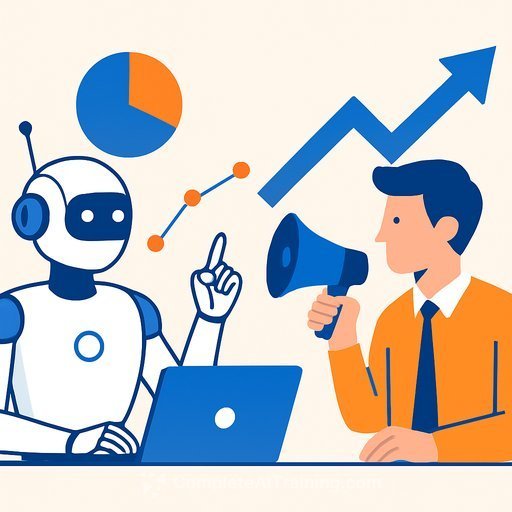
Two forces define 2026: AI getting embedded into everyday decisions, and a stronger push for real human connection. A new survey from Kantar outlines 10 predictions that reinforce this split-and how it will reset strategies across the next 12 months.
Personal agents and recommendation engines are stepping between people and products. That means your brand has two audiences now: consumers and the algorithms that advise them.
AI Moves Closer to the Purchase Decision
Today, 24% of AI users lean on shopping assistants, and 74% use guided recommendations. Leaders agree AI will reset marketing, yet they rate their readiness at 4.9 out of 10. "There is still time and room for brands to accelerate investment and build AI capabilities in a structured way," says Milton Souza, president of Kantar Insights Brazil.
- Map "agent-facing" surfaces: product feeds, FAQs, specs, reviews, Q&A, compatibility data.
- Standardize content so agents can parse it: schemas, clean product taxonomies, consistent naming.
- Stand up a small "agent SEO" squad to test prompts, retrieval flows, and response quality.
- Pilot commerce with shopping assistants: measure assisted conversions and basket lift.
- Train teams in prompt strategy, evaluation, and AI safety so outputs stay on-brand.
Retail Media Is Pulling Budget From Classic Digital
Retail media is winning because it lives close to the cart. Thirty-eight percent of marketers plan to increase spend by 2026, with purchase intent reported at nearly 3x other formats. Drivers: proximity to checkout, retailer data, and new reach on connected TV and streaming.
- Shift budget into retailer networks with clear incrementality testing (geo holdouts or PSA tests).
- Build SKU-level creative and landing pages that match search intent and shelf context.
- Use clean rooms for closed-loop reporting, then feed results into MMM and MTA and consult Research-backed methods for attribution.
- Spin up CTV/streaming creative sized for retail audiences and fast frequency curves.
Creator Spend Rises, Brand Fit Doesn't
Sixty-one percent plan to invest more in creators in 2026, but only 27% of influencer content strongly matches brand positioning. Reach without relevance drains ROI.
- Use a brand fit score in sourcing. Don't approve briefs without message maps and tone guardrails.
- Tie compensation to outcomes: attention, qualified traffic, sales lift, or new-user mix.
- License top-performing posts for paid whitelisting and creative iteration; apply AI-assisted tooling and Design principles to scale.
- Favor steady partnerships over one-offs to build memory structures and lower CAC.
OOH Is Back-Especially in Brazil
Global OOH grew 2.7% last year, while Brazil surged 38% versus 2024, supported by new formats like connected screens and upgraded street clocks. "Growth will remain strong in 2026, as this is the only channel in which users cannot skip ads," says Fabrício Guimarães of Be Mediatech. OOH can also deliver utility-wayfinding, time, local alerts-which earns goodwill.
- Test programmatic DOOH with geo, time, and weather triggers tied to store coverage.
- Plan creative for distance and dwell: bold type, single message, clear CTA or QR.
- Measure with footfall studies, brand lift, and matched-market tests, not just impressions.
- Explore "useful OOH" (charging, local info) to gain attention and PR value.
Spending Splits: Value vs. Premium
Research from Warc suggests the middle class will be less central to category growth. Consumers are barbell spending: low-cost for the basics and premium for what truly matters to them. Traditional life milestones-marriage, kids, home ownership, higher ed-are being delayed or redefined, changing when people enter categories.
- Run a two-track portfolio: sharpen price-value for budget seekers and add "special" cues for premium.
- Rework price-pack architecture (sizes, bundles, refills) to hit new willingness-to-pay thresholds.
- Segment by moments and triggers rather than age or household status.
- Model unit economics by cohort to avoid subsidizing low-margin growth.
Media Concentration and the Auction Reality
Alphabet, Amazon, and Meta are set to account for ~58% of global ad spend in 2026 (ex-China). TikTok and Reddit will grow fast from smaller bases. Global spend is forecast to rise 9.1% in 2026 to $1.3T, then 7.9% in 2027 to $1.4T-about twice pre-pandemic levels. In Brazil, growth is projected at 10.7% in 2026 (boosted by the FIFA World Cup time zone) and 6.7% in 2027.
- Anchor plans on the "big three," but set a fixed test budget for emerging platforms and formats.
- Integrate retail media with search and social for unified frequency and shared creative insights.
- Use MMM to set guardrails, then let auctions rebalance weekly with outcome-based rules.
- Build World Cup scenarios: pacing, creative rotations, and inventory holds.
Agencies Move Upstream
The key skills this year: intellectual curiosity and systems thinking. Richard Hartell of EssenceMediaCom notes how new products-such as slimming pens-can ripple across food, fashion, and social behavior. You need teams that can read these shifts early and respond with media, creative, and product tweaks in sync.
- Form small, cross-functional squads (media, creative, data, commerce) with weekly sprint rituals.
- Stand up a "market sensing" cadence: social signals, search spikes, retail shifts, cultural triggers.
- Write briefs in business terms (penetration, repeat, trade-up, cash flow), not just impressions.
Trust Is the KPI
With elections and more AI-generated content in circulation, the information space will feel volatile. "The main challenge for marketing in 2026 will be to rebuild trust," says Renata Bokel of WMcCann. Consumers will research more, ask harder questions, and expect receipts-transparency and accountability.
- Label AI-assisted content, disclose sourcing, and keep human QA accountable for claims.
- Adopt provenance signals where possible, and create a simple verification page policy.
- Refresh crisis playbooks: detection, takedown routes, creator policies, and response timelines.
- Collect more first-party and zero-party data with clear value exchange and privacy-by-design.
Build These Capabilities in 2026
- Agent-ready product content pipelines (structured specs, reviews, compatibility data).
- Retail media excellence (clean room integrations, incrementality testing, CTV creative).
- Creator governance (fit scoring, licensing, outcome-based contracts).
- Programmatic DOOH planning and measurement.
- Pricing and portfolio analytics for the barbell economy.
- Attention and quality metrics that link to sales, not vanity KPIs.
- Trust and verification practices baked into production workflows.
If your team needs to ramp up AI skills for real business outcomes, consider the AI Learning Path for Business Unit Managers for a practical, leadership-focused approach to integrating AI across marketing and product decisions.
Your membership also unlocks: