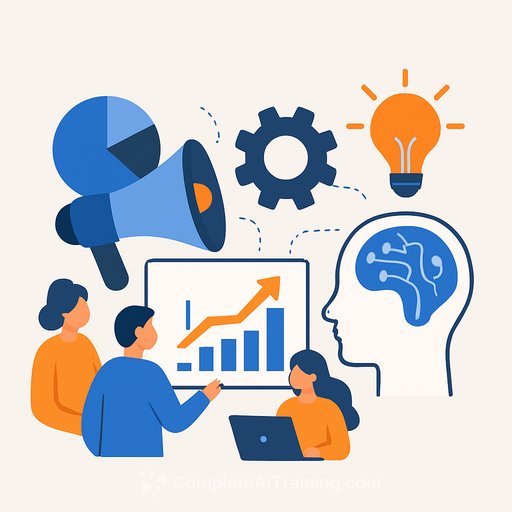
The future of marketing looks a lot like engineering and AI roles. Here are 5 reasons why.
Campaigns used to win quarters. Systems now win markets. The best marketers are building feedback loops, shipping small changes fast, and letting data decide what sticks.
If that sounds like engineering, that's the point. Here's why the job is tilting toward code, AI, and continuous delivery-plus how to adapt without losing the human side.
From campaigns to continuous systems
Campaigns are one-time pushes. Systems are always-on: instrumented, measurable, and self-improving. Think of your funnel as a product with a backlog, sprints, and release notes.
- Instrument everything: events, costs, time-to-value.
- Ship in small batches: copy, offers, creative, routing logic.
- Let signals route actions: triggers, scoring, lifecycle changes.
- Keep score: LTV, payback, retention by cohort and channel.
If it doesn't log, test, or trigger an action, it's noise.
5 reasons marketing is turning into engineering + AI
1) Data pipelines beat dashboards
Reports are lagging indicators. Pipelines let you react in real time. First-party events feed your CDP and warehouse, models score users, and automations fire without waiting for a monthly review.
- Skills to build: event design, SQL, server-side tagging, CDP routing, basic Python.
- Outcome: cleaner data, faster decisions, less attribution fantasy.
2) Experimentation is code, not a campaign "phase"
Feature flags, holdouts, and sequential tests beat "big bang" launches. You test pricing, onboarding, page structure, and creative like product teams test features.
- Skills to build: test design, sample sizing, guardrails, experiment logs.
- Outcome: fewer costly bets, more compounding wins.
3) Automation is the new media budget
Workflow engines, webhooks, and CRM rules decide who sees what-at the right time. You'll spend more time on routing logic and less time herding spreadsheets.
- Skills to build: workflow design, trigger taxonomies, API basics, QA checklists.
- Outcome: consistent follow-up, lower CAC from less leakage.
4) AI is a teammate, not a tactic
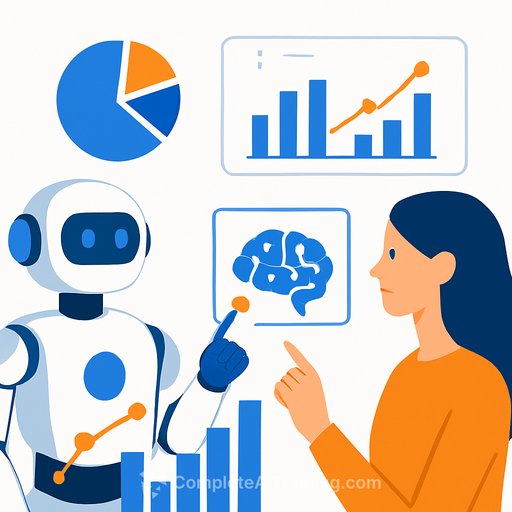
AI drafts, clusters, predicts, and prioritizes. The job is building prompts, guardrails, and evaluation so the outputs are on-brand, accurate, and high-ROI.
- Skills to build: prompt design, retrieval basics, quality evals, human-in-the-loop review.
- Outcome: more coverage (assets, segments, analysis) without adding headcount.
5) Full-stack collaboration is the default
Marketing, product, data, and sales work as one unit. Shared metrics, shared sprints, shared playbooks. You'll think in APIs and events as much as in personas and offers.
- Skills to build: backlog grooming, PRDs for growth work, analytics contracts, postmortems.
- Outcome: less finger-pointing, faster learn cycles.
Why the shift is happening now
Privacy changes and the loss of third-party cookies force stronger first-party data and tighter systems. Browsers have made cross-site tracking harder, and that won't reverse.
Personalization also works-when it's done with real-time data and respect for consent. Companies that do this well see outsized gains, which raises the bar for everyone.
Engineers with empathy - marketing's new mandate
The edge isn't just technical. It's empathy built into logic. That means event schemas that reflect real moments in a customer's life, not just what's easy to track.
Rewrite the onboarding email? Great. Also measure time-to-first-value, run a holdout, and trigger success guides when someone stalls. Caring shows up in the system's behavior, not just in the copy.
The Digital Helix in practice and the inevitable future
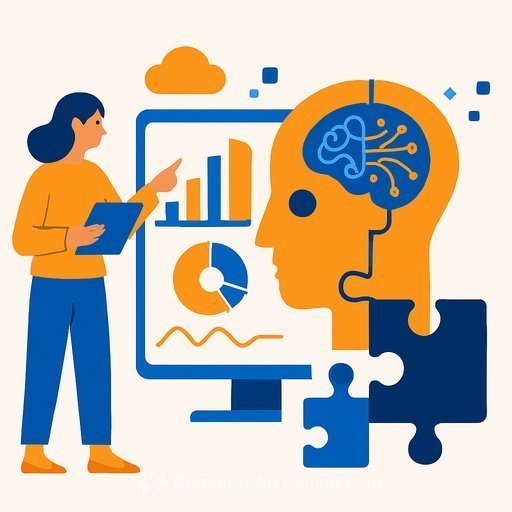
Picture a double helix: one strand is data, the other is creative. They twist through your funnel-collect, generate, test, learn-over and over. Every loop tightens your fit to the customer.
A simple 30-60-90 for marketers
- Days 1-30: Map events from first touch to revenue. Fix broken tracking. Stand up a single source of truth for spend, CAC, LTV, and velocity.
- Days 31-60: Ship three controlled tests: one creative, one conversion flow, one lifecycle trigger. Add feature flags and a clean experiment log.
- Days 61-90: Put AI to work with guardrails: draft variations, cluster intents, predict churn risk. Review weekly with a red/green dashboard and kill low-signal work.
Scorecard to keep you honest
- Percent of funnel events with owners and definitions
- Time from idea to live test
- Percent of programs with holdouts or flags
- Share of content produced with AI assist and human QA
- Lag between signal and automated response
Where to build your skills
If you want a focused path to the skills above-AI prompts, analytics, and automation-this is a solid place to start.
From campaigns to continuous systems
The future is clear: fewer big launches, more small releases. Less opinion, more instrumentation. Creativity stays at the core-but it runs on engineering habits and AI support.
Build the system, keep the empathy, and let the loop make you smarter every week.
Your membership also unlocks: