5 Ways to Boost AI-Fueled Risk Management in 2026
AI is changing how supply chain risk gets managed. Executives no longer have to wait on long studies to act. With accessible platforms, leaders can generate predictive insights, model scenarios, and move fast on clear signals.
The bar is higher now. Your edge comes from putting AI inside the decisions that drive revenue, cost, and compliance-not treating it as a side project. Here's a practical playbook built for management teams that want results this quarter and staying power over the next decade.
1) Start with a clear purpose and vision
Decide what AI should achieve for the business, now and long term. Tie initiatives to concrete outcomes: reduce downtime, improve OTIF (On-Time In-Full), ensure deep-tier UFLPA compliance, and cut expedited freight and logistics spend.
- Near-term goals: shrink detection-to-action time, shorten recovery cycles, and reduce incident costs.
- Long-term goals: support growth into new regions, model regulatory and geopolitical risk, and build visibility into Scope 3 emissions and supplier practices.
Make the mission obvious across finance, procurement, operations, sustainability, and IT. Clear intent keeps teams focused and helps AI produce decisions that move the business, not vanity dashboards. For leaders aligning governance and IT with risk programs, see the AI Learning Path for CIOs.
Helpful reference on policy context: U.S. CBP: UFLPA
Regulatory teams looking to operationalize compliance automation can follow the AI Learning Path for Regulatory Affairs Specialists.
2) Build a data-driven culture and invest in high-quality insights
Better data equals better signals. Without clean, current, and complete data, models produce noise and missed calls. Treat data as an enterprise asset, with owners, SLAs, and audit trails.
- Governance: standardize supplier IDs, dedupe records, and enforce freshness for shipment, logistics, and compliance data.
- External signals: favor providers that combine AI detection with human validation mapped to your actual suppliers, lanes, nodes, and facilities to cut alert fatigue.
- Quality loop: track precision/recall on alerts, false-positive rates, and time saved per decision to justify reinvestment.
As quality improves, value compounds. The org that treats data like capital wins the compounding curve.
For a trusted guidance framework: NIST AI Risk Management Framework
3) Foster human-AI collaboration across the organization
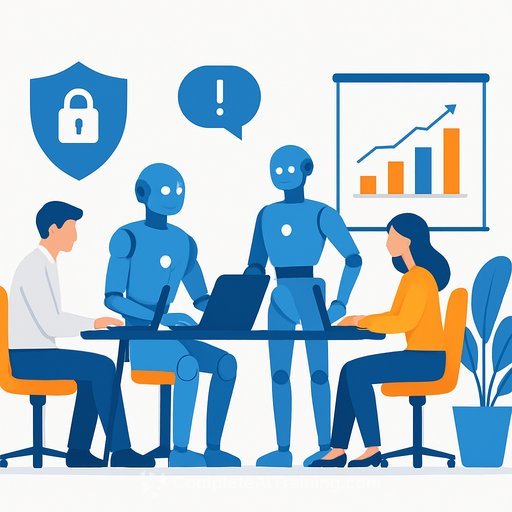
AI amplifies expert judgment; it doesn't replace it. Poor inputs create hallucinations, variability, and wrong calls-so keep people in the loop and make verification a habit.
- Where AI wins: scanning news and filings, anomaly detection, scenario runs, early-warning signals at scale.
- Where people win: context, relationships, commercial trade-offs, and final accountability.
- Operating model: define review thresholds, escalation paths, and approval rules. Build playbooks that pair AI outputs with clear next steps.
- Adoption: invest in training, coaching, and sandbox time. New tools stick when teams see faster wins and fewer reworks.
4) Map what matters and prioritize
Don't try to monitor everything. Focus on the suppliers, products, lanes, and nodes that carry the most revenue risk, single-source exposure, or compliance sensitivity.
- Identify top risk types for your business: geopolitical events, climate and weather, labor issues, port congestion, supplier financial health.
- Map risks to critical suppliers (including Tier 2/3), key routes, and revenue drivers. Tune models to those focal points.
- Stand up targeted programs: deep-tier monitoring can surface a Tier-3 factory fire months earlier than traditional methods-giving you room to switch capacity before production is affected.
- Track leading indicators: large workforce cuts, late payments, contentious labor talks, or sudden capacity shifts often precede disruption.
Start narrow, prove value, then scale. Precision beats breadth until your signal quality is strong.
5) Promote supplier collaboration and transparency
Treat suppliers and logistics partners as core contributors to resilience, not just vendors. Clear expectations on data sharing, risk reporting, and communication cadence lead to faster, better decisions.
- Operating agreements: define what data is shared, how often, and in what format. Incentivize accuracy and timeliness.
- Joint drills: co-create playbooks for the most likely events-quality issues, port closures, sanctions, or blackouts-and test them.
- Enablement: help partners adopt basic AI tools so they can spot and raise risks early. Shared foresight benefits everyone.
KPIs management should review monthly
- Mean time to detect and to respond (MTTD/MTTR) by risk type
- False-positive rate and decision time saved per analyst or manager
- Revenue at risk covered by monitored suppliers and lanes
- OTIF performance, expedite spend, and stockout incidents tied to risk events
- Deep-tier visibility coverage and compliance status (e.g., UFLPA)
How to get started this quarter
- Pick three high-value use cases (e.g., deep-tier supplier monitoring, port disruption alerts, weather-driven rerouting).
- Stand up a data sprint: fix IDs, freshness SLAs, and external signal coverage for those use cases.
- Define "human-in-the-loop" checkpoints and escalation rules.
- Pilot with one product line and a short list of critical suppliers and lanes; publish results and lessons learned.
AI makes risk work faster, clearer, and more actionable-if you set the aim, get the data right, keep people in the loop, focus on what matters, and bring partners into the process. Do that, and you'll make better calls in minutes instead of days-and build resilience that lasts.
If your team needs structured upskilling, explore the AI Learning Path for Vice Presidents of Finance to align KPIs, risk coverage, and finance strategy with your AI program.
Your membership also unlocks: