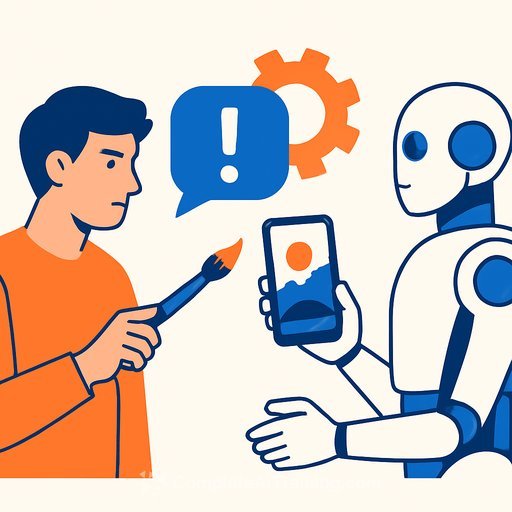
"It's theft, plain and simple": 700+ major artists push back on AI training without consent
More than seven hundred prominent artists-including actors, novelists, and musicians such as Scarlett Johansson-have signed a joint statement calling out how their work is being used to train AI without permission or pay. Their message is blunt: scraping creative catalogs to build products and profits is exploitation, and it threatens the livelihoods that make culture possible.
If you work in film, music, publishing, photography, design, or any creative field, this matters. AI isn't abstract anymore. It's showing up in your feed, on streaming platforms, and in client briefs. The question is how to protect your work while staying smart about how the market is changing.
Why so many artists are pushing back
The frustration isn't about AI existing. It's about how it's built. Massive datasets have been assembled from books, songs, images, scripts, and voices-usually without asking. For creators, that feels like an unpaid internship where your life's work trains the tool that replaces you.
As AI-generated songs, visuals, and text flood platforms, the signal gets buried in a lot of synthetic noise-what many are calling "AI slop." That dilution chips away at reputation, audience trust, and the economics that fund original work.
What the joint statement demands
The coalition's position is clear and actionable. They're asking for three non-negotiables that any working creative can get behind:
- Fair licenses: No use of creative work for AI training without authorization and compensation.
- Real enforcement: Legal tools that make those licenses stick.
- The right to refuse: An explicit ability to say "no" to AI use of one's work.
Some progress is happening. A few AI companies are cutting deals with publishers, record labels, and studios. That's a start. But gaps remain-especially around voice cloning, deepfakes, and casual appropriation that spreads faster than any takedown.
How current AI practices are hitting creative fields
Scraped datasets and style-mimicking models take more than revenue. They take context, intent, and credit. Songs are replicated, scripts imitated, photographs reworked, and voices cloned-all without the relationship between creator and audience that gives work its meaning.
Legal pressure is rising. Lawsuits are stacking up, and individual creators are stuck in drawn-out battles against firms with deeper pockets. That dynamic doesn't foster innovation-it breeds distrust.
Can negotiation create common ground?
It can, if deals respect the source. Think selective catalog access, clear attribution rules, usage caps, and compensation tied to actual value. Record companies and publishers have started negotiating these terms, and some start-ups are taking transparency seriously.
The hard part is the gray area-where inspiration ends and appropriation begins. Strong, specific licenses with audit rights and technical safeguards can reduce that gray. Creators keep agency. Developers get reliable data. Audiences get clarity.
The artists' core priorities at a glance
- Transparent, fair licensing for any creative contribution used in AI.
- Straightforward legal tools to hold infringers accountable.
- An ironclad right to opt out of AI training.
Real-world impact and the current state of deals
- Music: Unauthorized sampling and voice cloning have sparked backlash. Some major labels are negotiating data-sharing deals with specific AI companies under stricter terms.
- Literature and writing: Books and articles have been ingested without consent. Authors' groups are pressing for opt-outs, attribution, and payment.
- Visual arts: Images are being reused and restyled without credit. Artist coalitions are testing technical protections and watermarking to verify provenance.
A practical playbook for working creatives
- Set your terms upfront: Add AI clauses to contracts and licenses (training use, style mimicry, synthetic voice likeness, attribution, payment tiers, and audit rights).
- Claim your identity: Register your works, record your voice/likeness rights where applicable, and keep dated originals.
- Use authenticity tech: Adopt content credentials and provenance standards (see the C2PA) to signal authorship and detect tampering.
- Opt out where possible: Use platform tools, metadata signals, and "no AI" tags where they're respected. Track platform policies and update your files.
- Monitor and respond: Set alerts for your name, titles, and distinctive phrases. Document infringements early. Consider collective action to share legal costs.
- Price your data: If you license, define scope (training vs. output), duration, exclusivity, and attribution. Tie compensation to usage, not one-time fees.
- Protect your voice: Treat voice and likeness as separate rights. Require explicit consent for cloning and distribution, with revocation rights.
What AI teams and platforms can do right now
- Move to clean, licensed data: No scraping without permission. Respect opt-outs.
- Provide creator controls: Clear opt-in/opt-out, data removal, and royalty dashboards.
- Label synthetic media: Watermark model outputs and support content credentials.
- Audit and report: Independent audits of training data and usage. Public transparency reports.
Policy context and resources
Regulators are paying attention, and guidance is evolving. Keeping receipts, stating your terms, and using provenance tech are moves you can make today while the rules get clarified.
- U.S. Copyright Office: AI initiative and guidance
- Practical AI courses by job (useful for creative teams)
Bottom line
The message from hundreds of high-profile creators is simple: consent, credit, and compensation are non-negotiable. AI can coexist with human creativity, but only on fair terms. Set your lines now, document your work, and treat your rights like assets-because they are.
Your membership also unlocks: