AI in Education Statistics 2026: Global Trends & What Educators Should Do Next
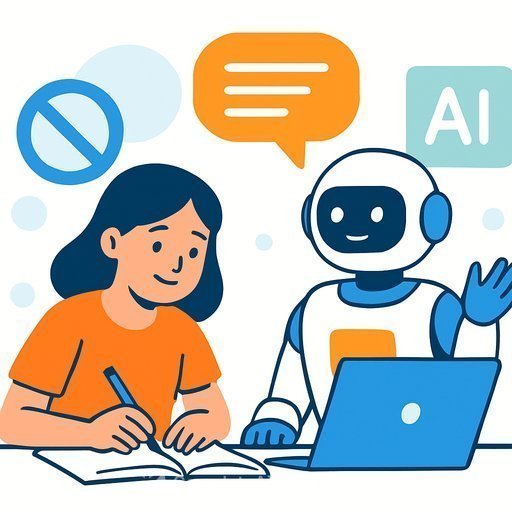
AI use is now mainstream: 86% of students say they use AI for their studies. Over half use it daily or weekly, and the education AI market is projected to hit $112.3 billion by 2034.
"AI has the potential to support a single teacher who is trying to generate 35 unique conversations with each student." - Bryan Brown, Stanford University
Top statistics to know
- 86% of students in schools and higher education utilize AI.
- 50% of students have used AI writing tools at least once in school.
- 66% of students use ChatGPT for education; 25% use Grammarly; 25% use Microsoft Copilot.
- Microsoft 365 Copilot Chat has been linked to a 265% boost in self-learning and a 15% bump in pass rates.
- Women report more overwhelm using AI (30%) than men (21%).
- 68% of urban teachers report receiving no AI training; only 10% of institutions have AI use guidelines.
Student adoption and behavior
Globally, 86% of students use AI. In the U.S., 51% of students use generative AI, with ages 14-22 leading usage. ChatGPT (66%) and Grammarly (25%) are the top tools, and most students use multiple tools (average 2.1).
Only 10% of schools and universities have formal AI use guidelines, according to a UNESCO survey of 450+ institutions. That gap is widening the expectations-reality divide for classrooms.
- Getting information: 53%
- Brainstorming: 51%
- Creating images: 31%
- Creating sound/music: 16%
- Writing code: 15%
93% have tried AI at least once for school. Education leaders report higher usage than students (near-universal among leaders, with 47% using AI daily).
Market growth: year by year
The AI-in-education market rose from $5.47B (2024) to $7.57B (2025), a 38.4% CAGR. Forecasts project $30.28B by 2029 and $112.3B by 2034.
Student sentiment varies by country: 80% of students in China are excited about AI, compared to 35% in the U.S. and 38% in the UK.
AI use in schools and higher education
In schools, 45% of students report using AI; 40% say AI-generated content earns good grades. At universities, usage jumped from 66% (2024) to 92% (2025). Use of generative AI for assessments surged from 53% to 88% in the same period.
65% of students say AI tools are essential to success. 51% use AI to brainstorm; 53% to get information. LGBTQ+ teens report higher generative AI use (28%) and more negative impact than cis/straight peers (17%).
Most popular AI tools among students
- ChatGPT: 66% (most common)
- Grammarly: 25% (writing and grammar)
- Microsoft Copilot: 25% (general assistance and productivity)
With Microsoft 365 Copilot Chat, schools reported a 15% increase in passing rates and a 265% boost in self-learning. In Brisbane Catholic Education's pilot, older students reported a 275% increase in their ability to direct their learning.
Teacher adoption and classroom use
Nearly half of school administrators use AI daily. 50% of teachers and 52% of principals say digital tools help track student progress. 71% of teachers believe AI tools are essential for college and career success, and 60% say they integrate AI in instruction.
- K-12 teachers using generative AI: 83%
- Higher ed faculty using AI regularly: 22%
- Education leaders using AI daily: 47%
Impact on learning and academic integrity
At Macquarie University, AI-supported students improved exam results by up to 10%. That's promising-but there are trade-offs to manage.
- About 16% of students are mostly positive about AI's role; 2.4% say AI isn't beneficial for their education.
- Over 30% risk becoming overly dependent on AI tools.
- 33% of students face accusations tied to AI use and plagiarism.
- Teacher views: 25% say AI does more harm than good; 6% say more good than harm; 35% unsure.
- Teens using ChatGPT for schoolwork: 19%
- 11th-12th graders using ChatGPT: 24%; 7th-8th graders: 12%
- Teens okay with ChatGPT for research: 69%; for essays: 20%
"Some uses of generative AI can undermine their learning, particularly when the tools are used to do the cognitive work of thinking for students rather than to support their learning." - Martin West, Harvard University
Training and professional development
26% of districts planned AI training in 2024-2025; 74% expect to train teachers by Fall 2025. 59% of educators expect students to have basic AI skills by middle school through university.
- K-12 teachers with no AI training (US): 71%
- Urban teachers with no AI training: 68%
- UK students who've received AI support from an institution: 36%
- UK staff who feel well-equipped to help with AI: 42%
- Educators globally who received no training: 45%
60% of Tennessee educators say AI skills benefit students; 69% believe AI skills lead to better-paying jobs.
AI skills demand in the job market
Students are signaling what employers want: ChatGPT (60%) and prompt engineering (38%) are the most added skills on LinkedIn. Across roles like recruiting, marketing, sales, and healthcare, professionals are adding AI skills at roughly 40% rates.
- Job posts listing AI literacy: 6x increase
- Members adding AI literacy skills: +177%
- Hiring growth for AI technical talent: +52%
- Leaders who won't hire without AI literacy: 66%
Country sentiment and investment
Private AI investment in the U.S. hit $109.1B-12x China ($9.3B) and 24x the UK ($4.5B). Public sentiment on AI's benefits varies widely:
- China: 83%
- Indonesia: 80%
- Thailand: 77%
- Canada: 40%
- United States: 39%
- Netherlands: 36%
Risks and student concerns to address
- 58% lack sufficient AI knowledge
- 48% feel unprepared for an AI-enabled workforce
- Only 36% (UK) see strong institutional support for AI skill development
- 71% want a voice in AI integration decisions; only 34% feel institutions seek their feedback
- AI-graded exams (UK): 34% say they'd work harder, 29% less, 27% no change
A student told Stanford's Christopher Piech they worry fast-moving AI could undercut years spent learning to code. "Technology creates a shock... sometimes of a magnitude that we cannot even understand," adds Harvard's Houman Harouni.
Gender and attitude differences
44% of children actively use generative AI, and 54% use AI for schoolwork. Men use AI more frequently than women for learning and research (mean 3.14 vs 2.73).
- Overwhelm: Men 21% vs Women 30%
- Use for social learning: Men 63% vs Women 70%
- Family connection: Men 56% vs Women 65%
Women report more concern about academic misconduct and false results. Wealthier students and those in STEM show more excitement. From 2024 to 2025, overall student usage rose from 66% to 92%; genAI for assessments climbed to 88%. People 50+ are more overwhelmed (about 30%) than those 18-49 (about 22%).
Policy and governance
All 50 U.S. states, DC, and territories have considered AI-related legislation. Tennessee is setting AI education policies; New York banned facial recognition in schools. Over 25 countries are coordinating on AI rules.
School AI policies must align with FERPA (student records), CIPA (online safety), and IDEA (special education). For practical guidance, see the U.S. Department of Education's AI page: ed.gov/ai. UNESCO has also issued global guidance on generative AI in education: UNESCO guidance.
Cost and efficiency trends
- Global investment in generative AI may reach ~$200B by 2028
- Inference cost (GPT-3.5 level): ~280x decrease
- Hardware costs: ~30% annual decline
- Energy efficiency: ~40% annual improvement
- Open vs closed model performance gap: narrowing from 8% to 1.7%
2026 outlook: what changes next
The market is on track for $112.3B by 2034. By 2030, 70% of job skills are expected to change due to AI. Leaders are moving: 47% plan to upskill staff in AI, and 78% are hiring for AI roles.
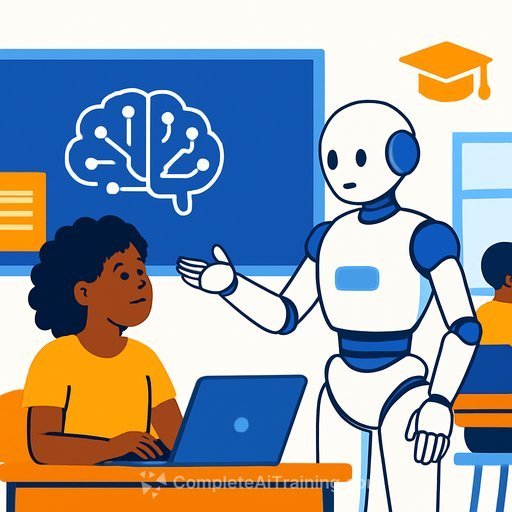
A Harvard study found AI tutors helped students learn more than twice as much in less time than traditional active-learning classes. Still, human tutors detect student emotions at 92% accuracy vs AI at 68%, so the "human in the loop" matters.
"If you educate people for what AI does well, you're preparing them to lose to AI. Educate for what AI can't do, and you get IA (intelligence augmentation)." - Chris Dede, Harvard
Action checklist for district and school leaders
- Write a clear AI use policy. Cover data privacy, plagiarism, accessibility, and parent communication.
- Train your staff. Start with core use cases: feedback generation, rubric-aligned grading support, lesson planning, IEP drafting, family communication.
- Pick 2-3 approved tools. Provide exemplars and guardrails. Track impact on time saved and student outcomes.
- Build student AI literacy. Teach prompt quality, source checking, bias detection, and citation.
- Protect academic integrity. Use process-focused assessments, oral defenses, drafts, and reflection logs.
- Close equity gaps. Provide access, device time, and guided practice-don't let AI become a wealth divider.
- Measure and iterate. Monitor pass rates, time saved, and student satisfaction each term.
Upskill your team
If you're setting up training pathways for teachers or students, these catalogs can help you map skills to roles and outcomes:
Final note: most classrooms are already using AI, but most institutions don't have guardrails. Close that gap. Set the norms, train your people, and keep the human strengths-curiosity, judgment, empathy-at the center.
Your membership also unlocks: