77% of UK marketers expect growth in 2026 - and they're keeping creatives in the room
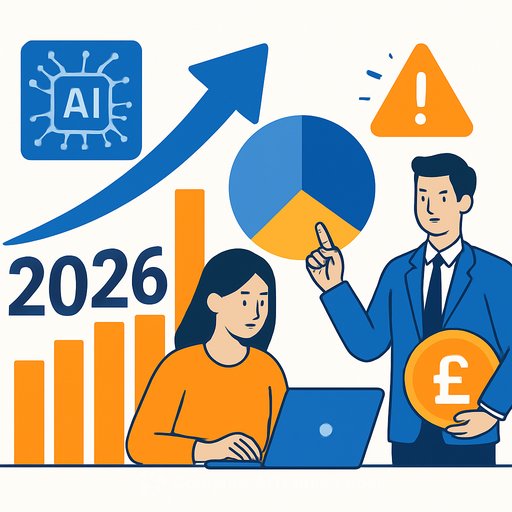
Fresh survey data from 1,000 UK marketers shows confident budgets and cautious revenue expectations heading into 2026. The headline: 77% expect revenue growth (down from 85% last year), 69% expect bigger budgets, and 54% plan to grow their teams.
AI matters, but not for replacing you. It ranks second for success drivers next year, yet only 12% plan to use it for content creation. The work for creatives shifts toward smarter systems, better integration, and channel depth - not stepping aside for machines.
What this means for creatives
- Organic is back on top: SEO and content drove the most revenue in 2025. Social ads slipped in effectiveness. Build assets that compound (articles, videos, email flows, lead magnets).
- Email/SMS/app push will get more budget: 26% are increasing investment. Your retention game needs design quality, strong hooks, and tight lifecycle sequencing.
- Generative engine optimization rises: 23% plan to optimize for AI-powered search. Think entities, clear answers, sources, and brand signals that LLMs can cite.
- Integration is the execution gap: multi-channel planning is easy; aligning teams and partners is not. Create reusable creative systems that ship across channels without starting from scratch.
- AI augments your work: strongest use cases are data analysis, personalization, and optimization. Keep creative direction human, automate the grunt work.
The signal in the numbers
- Revenue outlook: 77% expect growth; most predict 1-25% gains. Only 13% expect 26%+ growth.
- Budgets: 69% up; creative investment up for 56% of teams; 54% plan to hire.
- Brand vs performance: most split sits around 60:40 to 70:30 favoring brand. Smaller firms lean harder into performance.
- Top 2026 bets: email/SMS/app push (26%), content marketing (23%), AI search optimization (23%), SEO (26%), influencer marketing (28%).
- Social ads: still useful for engagement, but slipping as a primary revenue driver.
Competition and costs are squeezing everyone
Larger companies (over £500m revenue) feel competition the most. Smaller businesses feel rising costs the hardest - media inflation, ops, and cost of living pressures all bite.
Data security becomes a bigger worry at scale (especially £100-500m revenue), where breaches hit brand trust fast. Paid media costs climbed through the holidays, pushing brands to build more durable organic engines.
Integration: the real blocker
Top execution challenge: connecting channels, teams, and partners under one plan. As one strategy lead put it, integration problems usually come down to ownership - who sets the plan, who enforces priorities, and who says "no."
Despite better tools, 86% of in-house marketers still struggle to see channel impact clearly. That confusion slows decisions and spreads budgets too thin.
Organic is winning (and why you should care)
SEO and content outperformed paid social for revenue over the last 12 months. Email/SMS/app push sits close behind. This isn't anti-paid; it's pro-compounding assets and clearer attribution.
For creatives, that means more runway for deep content systems: pillar pages, video series, research-backed content, and lifecycle messaging tied to behavior.
AI: high impact, low replacement
- Top success factor: clear strategy (44%). AI/automation ranks second (36%).
- Only 12% plan to use AI for content creation. Teams grow anyway: 54% hiring vs 6.7% shrinking.
- Primary AI use cases: data analysis and insights (18.9%), personalization/segmentation (13.2%), campaign optimization (11.5%), chatbots (11.5%).
The takeaway: AI takes on execution and analysis; humans keep taste, story, and direction. Hybrid talent wins - people who can brief, edit, systemize, and use AI to reduce delivery time without flattening the work.
A simple creative playbook for 2026
- Set the split: agree a 60:40 brand/performance balance (adjust for company size). Protect brand work from short-term raids.
- Ship a content engine: weekly long-form piece repurposed to video, snippets, carousels, email, and knowledge base. Build an internal library of templates, hooks, and formats.
- Own retention: design a 90-day email/SMS sequence with onboarding, value drops, social proof, and offers. Test subject lines, previews, and first-screen design.
- Prepare for AI search: structure content with clear entities, FAQs, and citations. Write concise, scannable answers that LLMs can quote.
- Measure what matters: set CLV as the north star. Use MMM or incrementality tests for major channels; run A/Bs for creative decisions. Don't chase every metric.
- Fix integration: one shared brief, one weekly priorities doc, one owner. Creative ops beats more tools.
Measurement that earns trust
CLV analysis and marketing mix modeling are now the top methods, both above 40% adoption. Multi-touch attribution and incrementality testing follow. Still, 10% say they have no formal measurement at all.
If you're resource-limited, use a ladder: start with clean source-of-truth reporting, move to controlled A/B tests, then layer simple MMM. Align creative KPIs to business metrics early so your best work doesn't get clipped by "last click."
Where the money is moving
- Rising: email/SMS/app push, content, influencer marketing, and AI search optimization.
- Mixed: SEO remains a top revenue driver and a 2026 priority.
- Falling: traditional media and pure paid-social dependence.
Execution preference tilts in-house (59.3%), with hybrid agency models close behind. Larger companies retain more agency partnerships; smaller teams build internally and outsource specialist gaps.
Strategy still beats shiny tools
Clear strategy ranks above AI, tech, measurement, and budget as the top success factor for 2026. Translation for creatives: get clear on positioning, message, and constraints. Then automate.
You don't need more assets. You need a content system, a retention loop, and an owner who keeps everything pointed at the same outcome.
Fast timeline notes
- Oct 2025: Trends call out AI agents and retail media growth.
- Late Oct-Dec 2025: Studies show confidence in measurement isn't improving; most marketers still can't see channel impact clearly.
- Dec 10, 2025: New UK survey drops - optimism holds, integration lags, AI boosts efficiency without replacing creators.
For creatives who want the hybrid edge
Build range: strategy, concepting, SEO-aware content, lifecycle design, light analytics, and AI-assisted workflows. Make your work easier to measure and easier to ship across channels.
If you're upskilling for 2026, explore focused training on AI for marketing roles and creative operations.
Further reading
Bottom line: budgets are rising, revenue optimism cooled a bit, and the teams doing the best work will connect channels under one plan. Keep the creativity - add systems, measurement, and AI fluency.
Your membership also unlocks: