
AI news ·
78% of CEOs say AI failures could cost them their jobs, Dataiku survey finds
78% of CEOs fear losing their jobs if AI initiatives fail, up from 74% last year, per a Dataiku survey of 900 executives. Boards are demanding measurable returns, yet CEO confidence in deploying AI agents fell from 41% to 31%.
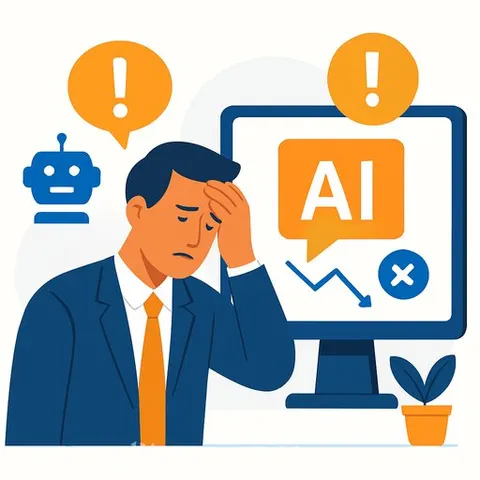
78% of Global CEOs Fear AI Failures Could Cost Them Their Jobs
More than three-quarters of chief executives globally believe they could lose their positions if their artificial intelligence initiatives fail to deliver results, according to a survey of 900 CEOs released Monday by Dataiku, a New York-based enterprise AI platform company.
The figure - 78 percent - marks a sharp increase from 74 percent a year ago. It signals intensifying boardroom pressure on enterprise leaders to demonstrate measurable returns from AI investments.
The study, conducted by Harris Poll for Dataiku, found that 62 percent of CEOs report their boards actively push for quantifiable AI-driven business outcomes. A further 75 percent believe at least one fellow CEO will be removed from their role by the end of 2026 due to failed AI strategy or crisis.
Trust in AI Systems Remains Fractured
Despite the high stakes, executives remain skeptical of AI outputs. Eighty percent of CEOs actively question or challenge AI results before acting on them. Thirty-four percent refuse to let AI make business decisions without human approval.
CEO confidence in deploying AI agents - automated software systems that can independently perform tasks and make decisions - dropped from 41 percent to 31 percent over the past year. This decline occurred even as 83 percent of respondents said they plan to deploy such agents in full production during 2026.
Competitive Pressure and Vendor Dependency
More than half of CEOs surveyed, 56 percent, admitted they believe competitors have stronger AI strategies. This competitive anxiety extends to vendor relationships.
Seventy-six percent of CEOs say their organizations are already overly dependent on too few AI vendors. Two-thirds reported challenging AI vendor or platform decisions made by their chief information officer or other team members in the past year.
Over-Investment Now Outweighs Under-Investment Fears
CEO concerns have shifted since 2025. Where executives previously worried about moving too slowly on AI adoption, the dominant concern in 2026 has become over-investment.
Sixty-five percent of CEOs now worry more about committing too early to AI vendors amid intense market competition with no clear leader. Only 35 percent fear under-investing while waiting for winners to emerge.
AI now influences more than 40 business-critical decisions that CEOs personally make each year. Ninety-four percent of respondents said they would be comfortable disclosing this level of AI influence to their boards.
What This Means for Strategy
The survey reveals a widening gap between AI ambition and confidence. Executives recognize AI as essential to competitive positioning, yet they question whether their organizations can execute reliably at scale.
For strategy teams, the pressure is clear: boards expect measurable AI outcomes, competitors are moving faster, and the cost of failure - to both the business and individual careers - has risen sharply.
Executives seeking to close the gap between ambition and execution may benefit from AI training designed specifically for CEOs, which addresses strategy, implementation, and decision-making frameworks. Resources on AI for Executives & Strategy can help leaders navigate vendor selection, governance, and the practical deployment of AI at scale.