
AI news ·
86% of kids use generative AI, with many showing signs of emotional and academic dependency, report finds
86% of kids ages 9-17 have used generative AI tools like ChatGPT, per Common Sense Media. Nearly half haven't discussed AI safety with their parents, and schools remain largely unprepared.
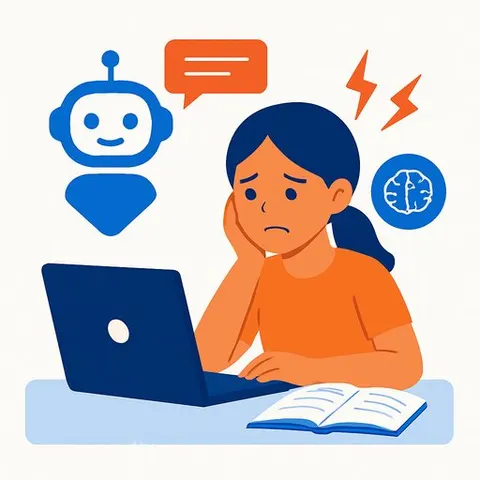
Nearly 9 in 10 Kids Use AI; Schools Lag Behind on Safety Guidance
Eighty-six percent of children ages 9 to 17 have used generative AI tools like ChatGPT and Google's Gemini, according to a new report from Common Sense Media. The organization surveyed over 1,200 kids and found that nearly a quarter use AI daily.
The adoption rate varies by age. Eighty-one percent of 9- to 12-year-olds use some form of generative AI, compared with 89% of 13- to 15-year-olds and 92% of 16- to 17-year-olds.
Jim Steyer, founder and CEO of Common Sense Media, called the findings "a pretty big wake-up call" for parents, educators, and policymakers. "AI's takeover of childhood has happened in just three years, about twice as fast as social media took to take hold," he said.
How Kids Are Using AI
Among kids who use AI, 89% said they use it for fun or entertainment. More than 80% use it to help with schoolwork, including 94% of older teens. Three-quarters create images, videos, or stories with AI, and 57% turn to it for health or body advice.
Over two-thirds of kids have used AI chatbots, and AI-generated summaries in search results are also widespread.
Emerging Dependencies Concern Educators
One-fifth of kids who use AI said it would be hard to go without it for a month. Among daily users, that number jumps to 42%.
The pattern extends to schoolwork. Sixteen percent of kids who use AI for homework said they struggle to start or complete assignments without it. More than half of kids who have difficulty staying focused on school work use AI for homework at least once a week, compared with 45% of kids without focus issues.
Steyer warned of educational dependency where students let AI complete their work rather than engaging with the material themselves. "Learning sticks with kids when they put in the work and don't just let a chatbot spit out an answer for them," he said.
Emotional Reliance and Loneliness
Kids who feel lonelier use AI more frequently, the report found. Steyer flagged this as a concern because AI chatbots are designed to be accommodating and can reinforce what users want to hear, sometimes spreading misinformation in the process.
Over a third of tweens and teens have discussed their feelings or personal problems with chatbots. Four in 10 have used AI to practice conversations or social skills.
Knowledge Gaps on AI Accuracy
Only a third of tweens and teens knew that AI cannot reliably distinguish fact from fiction. About half have heard from their school or teacher about verifying AI-generated information.
Close to a fifth of young AI users reported seeing inappropriate content. Nearly half have used AI for advice about their future or goals.
Schools and Parents Unprepared
Nearly half of kids, 44%, haven't had a conversation with their parents about AI safety. Schools are largely unprepared to address the issue, Steyer said.
"This is one of the most important conversations that you can have with your kids this summer," he said. Educators and parents need resources on safe, responsible, and ethical AI use - resources that can help teachers understand how to guide students.
Common Sense Media has worked with lawmakers on AI safety legislation. New York passed a bill last week intended to protect kids from risky features in chatbots.
Mixed Outlook
Kids have varying expectations about AI's impact on their lives. Fifty-two percent said AI should have equally positive and negative effects, while 26% expected mostly positive effects and 14% expected mostly negative effects.
The report marks the first major effort from Common Sense Media's newly launched Youth AI Safety Institute and will serve as a baseline for tracking how AI usage and attitudes change among young people over time.