UK creatives: brace for March - the signs on AI and copyright look grim
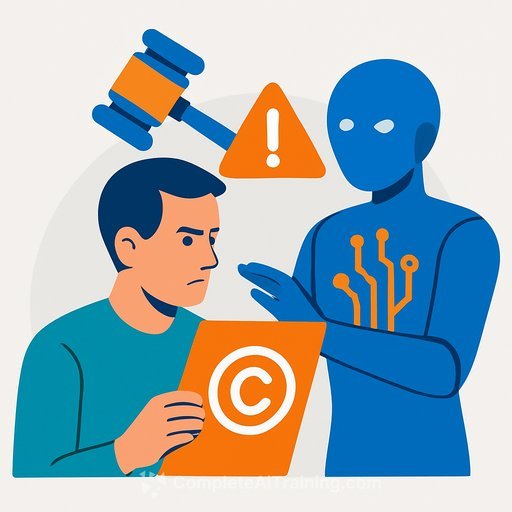
If you were hoping the UK government had finally listened to its own consultation on AI and copyright, don't hold your breath. After three years of drift, a decision is due in March - and the hints suggest policy will lean toward big tech access over creator control.
The short version
- The House of Lords' AI and copyright inquiry wrapped its hearings on 13 January. Ministers offered little detail but promised a decision in March.
- The UK IPO says it wants an "agile" IP system for growth. Creators fear that "growth" is code for broad data access for AI developers.
- 88% of consultation responses reportedly backed licensing in all cases; only 3% supported the government's preferred route. IPO leadership implied those results need to be "put in context" because many respondents were creatives.
- Expert working groups meeting in Nov-Dec will heavily shape March's outcome. Critics say those groups underrepresent creator voices.
What happened (and why it matters)
At a Westminster policy forum on IP, the IPO's leadership framed IP as a growth lever for the wider economy and C-suites. Good for business headlines. Not great if you make a living from your originals.
Adam Williams (IPO CEO) talked up innovation and commercialization. Creators - the people whose work is actually being used to train models - barely got a look-in.
Matt Cope (IPO Deputy Director for AI) acknowledged three principles: rightsholders' "meaningful control," large-scale data access for AI developers, and transparency. Then came the kicker: the huge consultation response was dominated by creatives, so the results need context. In plain English: strong opposition from the people most affected may be discounted.
This is at odds with what UK creative bodies, the media, and even parts of the UK AI sector have said for over a year: enforce copyright and require licensing. The House of Lords' earlier report on large language models pointed in the same direction.
If you want the source for that Lords work, it's here: House of Lords: AI and Large Language Models.
Where the government seems headed
The rhetoric points to a balancing act that, in practice, could tilt toward broad data access for AI training with limited friction. "Transparency" may become the compromise: disclose training sources, but still allow scraping unless a very specific opt-out or license is in place.
That would leave creators policing their rights, again. And it would reward firms with the most compute and the biggest datasets - many of them not UK-based.
What to watch between now and March
- Licensing vs. exceptions: Will the UK endorse licensing in all cases of AI training on copyrighted content, or carve out a permissive route?
- Enforcement: Any plan is only real if creators can enforce it without burning their entire year on legal fees.
- Transparency that actually helps: Will disclosures be granular enough to prove misuse and secure payment?
- Who's at the table: If expert groups exclude strong creator voices, expect policy that mirrors big platform interests.
Action plan for creatives (start now)
- Lock your rights down:
- Register your works where applicable and join collecting societies (e.g., DACS, ALCS, PRS, PPL) to strengthen bargaining and enforcement.
- Update your website terms to prohibit AI training and bulk scraping. It won't stop bad actors, but it strengthens your position.
- Control access to your catalog:
- Throttle downloads and disable hotlinking. Use rate limiting and CDN rules to block obvious scrapers.
- Apply persistent metadata and visible/invisible marking. Consider Content Credentials (C2PA) where your tools support it.
- Get your contracts in order:
- Add explicit clauses on AI training, dataset use, and derivative model outputs. Price separate licenses for data training vs. normal usage.
- Keep paper trails: dates, proofs of creation, distribution channels. You'll need them if enforcement becomes possible.
- Choose AI tools that respect IP:
- Favor providers that offer clear indemnities, opt-outs, and licensed datasets. Avoid tools that can't answer basic provenance questions.
- If you're adopting AI in your workflow, train your team on safe prompts, private modes, and data hygiene.
- Organize and apply pressure:
- Coordinate with unions, trade groups, and collecting societies to push for licensing and real penalties for misuse.
- Write to your MP with a simple ask: "Licensing for all AI training on copyrighted works and practical enforcement."
If you're adopting AI, do it on your terms
Use models and plugins that offer commercial-safe outputs and documented provenance. Build a simple internal policy: what content can be ingested, what stays private, and which vendors meet your standards.
If you need structured guidance, we curate practical courses and tool lists for creative teams here: AI courses by job and here: AI tools for generative art. For broader resources and background on creative AI, see our Generative Art tag.
Bottom line
The consultation showed overwhelming support for licensing. If the March decision sidelines that, it tells you everything about where influence sits.
Don't wait for policy to save your income. Tighten your rights, choose better tools, set clear contract terms, and stand with organizations that can push this over the line.
Your membership also unlocks: