
AI news ·
A professional writer finds AI useful for transcription and note-taking, not replacing his work
A professional writer who once dismissed AI tools now uses them daily for transcription and idea capture - not to generate articles. The honest case is narrow: less time on grunt work, more on actual thinking and writing.
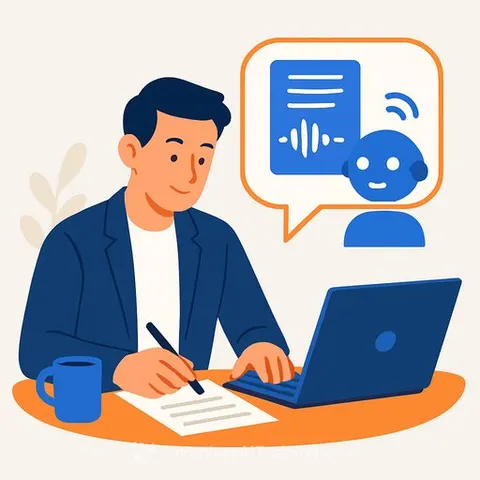
A Professional Writer's Honest Take on Using AI
A writer who once dismissed ChatGPT and Claude now uses them most days. The shift came not from hype, but from discovering where these tools actually reduce friction in the work itself.
The writer doesn't use AI to generate articles or outlines. AI didn't write this story. Instead, the tools handle specific tasks that were once time-consuming enough to discourage doing them well.
Transcription and Information Retrieval
The most frequent use is transcribing interviews. AI transcription services like Rev have improved significantly, and uploading a transcript to Claude to find all mentions of a specific topic saves substantial time on longer interviews.
The catch: verification remains essential. AI still fabricates details, though less frequently than a year ago. A writer who doesn't check the sections AI identifies is courting trouble.
Capturing Ideas Before They Disappear
Dictation software has made a genuine leap forward this year. Apps like Monologue let a writer record thoughts while walking, then automatically transcribe and file them into a note system.
This addresses a real weakness: thinking of something promising, then forgetting it or scribbling something illegible. A writer using AI-powered dictation now has hundreds of stored ideas instead of a Notes app full of nonsense.
The writer uses a Notion database called "Idea Dump" populated entirely through voice memos sent to a custom AI skill that labels and organizes them automatically. Many recent stories originated from this system.
Where AI Creates Problems
Using an AI notetaker during meetings backfired. The writer expected to pay better attention without typing notes. Instead, knowing the AI would capture everything made them less attentive.
This mirrors a real risk: outsourcing cognitive work to a tool can make you worse at that work, not better. The writer compares it to high school students using ChatGPT to write papers and losing the skill in the process.
What AI Cannot Do
The writer couldn't dictate this article beyond the initial outline. Speaking into a phone doesn't produce their best writing voice-the one that sounds like talking to a close friend.
The actual writing still required hours of thinking and drafting. No AI tool has eliminated that part, nor should it.
The Skepticism Remains Warranted
Claims that Claude "runs someone's life" or helped them gain 50,000 followers sound like exaggeration or fabrication. Declarations that AI has "killed" entire professions land as marketing noise.
But the useful applications-transcription, idea capture, information retrieval from documents-are real and valuable. They don't rewrite a writer's entire workflow. They remove the grinding parts that once discouraged doing things properly.
The writer remains skeptical of AI companies and their leadership. The anxiety isn't that AI will replace writers, but that it might make them less sharp.
Readers seem to dislike discovering they've been reading machine-generated work, even if it passes a blind test. Most writers didn't start the profession to have a machine do it for them.
The honest case for writers and AI is narrower than the hype suggests: spend less time scrubbing through transcripts at 0.75x speed, and redirect that energy to the actual work of thinking and writing.
Learn more about AI for Writers and how these tools fit into professional workflows.