Accenture Tapped to Help Build Sovereign AI Data Centers Across EMEA: What Government Teams Need to Know
Accenture (NYSE:ACN) has been selected by Sovereign AI, alongside Palantir, to develop and scale next-generation AI data centers across Europe, the Middle East, and Africa. The effort centers on economic security, digital resilience, and keeping sensitive workloads under national or regional control.
For public sector leaders, this points to a clear direction: AI capability anchored in sovereign infrastructure, with strict data residency, supply-chain assurance, and high-assurance operations. The work targets regulated and security-sensitive use cases that require predictable controls from day one.
Why this matters for government
- Data residency and control: Architectures that keep datasets, model outputs, and keys inside national or EU borders-and under public authority where required.
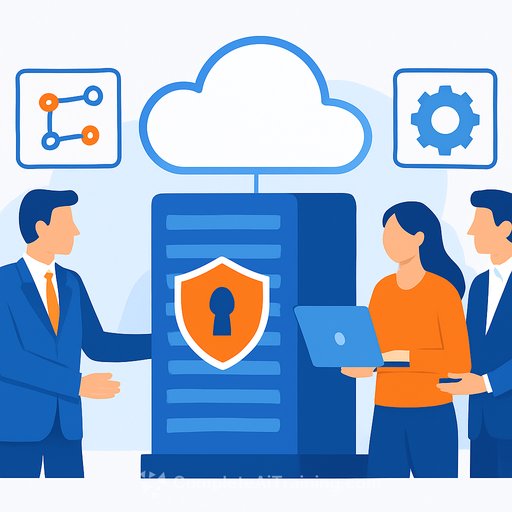
- Security by design: Segmented environments, hardware-backed key management, and deployment patterns for classified or mission-critical workloads.
- Compliance at scale: Mappings to frameworks such as NIS2 and GDPR, plus auditable processes for monitoring, incident response, and vendor oversight.
- Operational resilience: High-availability zones, tested failover, and clear energy and cooling plans for sustained AI compute.
- Portability and exit: Contract terms that prevent lock-in and enable workload migration if policy or mission needs change.
What "sovereign-grade AI" looks like in practice
- Isolation options: Dedicated or air-gapped segments; restricted connectivity for sensitive training and inference.
- Key custody: Hardware security modules with sovereign key control; separation of duties across operators.
- Compliance pack: Evidence for audits, continuous monitoring, and incident reporting aligned to NIS2 and local regulations.
- Model governance: Dataset lineage, model versioning, bias and safety testing, red-teaming, and change management with sign-offs.
- Supply-chain assurance: Traceable hardware and firmware, vetted open-source components, and vendor background checks.
Procurement and policy implications
- Contract structure: Consider build-operate-transfer models, with clear milestones, service credits, and handover criteria.
- Sovereignty clauses: Data location, key ownership, support personnel residency, and legal venue defined up front.
- Interoperability: Open standards for data formats and APIs; portability tested before production commitments.
- Accreditation: Pre-agreed certification paths and third-party assessments tied to go-live gates.
- Exit plan: Migration runbooks, escrow for critical artifacts, and time-boxed decommissioning steps.
Questions to ask any provider (including Accenture and Palantir)
- Where exactly will data, models, and keys reside, and who has operational access at each layer?
- How do you enforce segmentation between government and commercial tenants-logically and physically?
- What's your incident response timeline and evidence pack for regulators and auditors?
- Which controls prevent model drift or unapproved changes, and how are they reviewed?
- What is the tested failover plan, including electrical capacity, cooling, and network redundancy?
- How do you avoid lock-in and verify workload portability before scale-up?
Budget and timeline signals
Expect multi-year programs with phased delivery: architecture and policy mapping; facility and network upgrades; deployment; accreditation; and ongoing operations. Build in costs for safety tooling, key management, monitoring, and independent testing, not just compute and storage.
A practical path: a tightly scoped pilot (3-6 months) with measurable outcomes, followed by staged expansion tied to compliance milestones and mission readouts. Include training for operations, security, and policy teams to keep daily decisions aligned with the control framework.
Practical next steps for agencies
- Define target classifications and data residency rules for AI use cases.
- Publish a control baseline (identity, keys, logging, model governance) vendors must meet.
- Run a portability test early: move a non-sensitive workload between environments.
- Set clear RTO/RPO, energy capacity, and resilience requirements in the RFP.
- Establish an internal review board to approve model changes and dataset updates.
Bottom line
Government demand is moving to AI that runs on sovereign infrastructure with auditable controls. This partnership places large-scale integrators inside that buildout, which can speed delivery-provided procurement, policy, and security teams set the guardrails early.
Need to upskill your team for sovereign AI projects? Explore targeted resources such as the AI Learning Path for Training & Development Managers and curated AI Design Courses.
Your membership also unlocks: