AI in Financial Services: Ongoing Accountability Requires a Clear Strategy
Artificial intelligence (AI) is already embedded in how we live, work, and make decisions. In financial services, it’s more than a trend—it's a key factor shaping the future. Firms that don’t adapt risk losing their competitive edge in a market where both human and artificial intelligence matter.
AI tools are widely used in risk management, compliance automation, and regulatory reporting. Regulators like the Financial Conduct Authority (FCA) and Prudential Regulation Authority (PRA) are actively setting guidelines to manage AI’s benefits and risks. Business leaders must ensure their internal strategies reflect this shift.
Utilise but Verify
Concerns about AI often focus on job displacement. But like robotics brought precision to manufacturing, AI can improve efficiency and quality in finance. By automating routine tasks, AI frees up humans to focus on innovation and strategic thinking.
That said, getting results from AI isn’t enough. The way AI models reach decisions can be opaque, which creates false confidence if not properly understood. Unlike human intuition, AI identifies patterns through vast datasets and statistical analysis. It can detect anomalies and flag data issues that humans might miss. But AI isn’t flawless. Trusting AI outcomes requires knowing its limits.
Black Box Blues
AI introduces risks that traditional governance can’t handle. “Black box” AI models produce outputs without explaining how they arrived there. This lack of transparency is dangerous in financial services, where decisions have serious consequences.
AI systems that affect business or regulatory choices must be explainable to internal teams, auditors, and regulators. Models that can’t clearly show their decision logic raise justifiable suspicion. That’s why a “human in the loop” approach is recommended for high-risk uses, allowing for oversight and intervention.
Bias is another critical issue. AI learns from data, and if that data contains human biases or systemic inequalities, the AI will replicate and amplify them. This can lead to distorted outcomes before anyone spots a problem.
Automation and Accountability
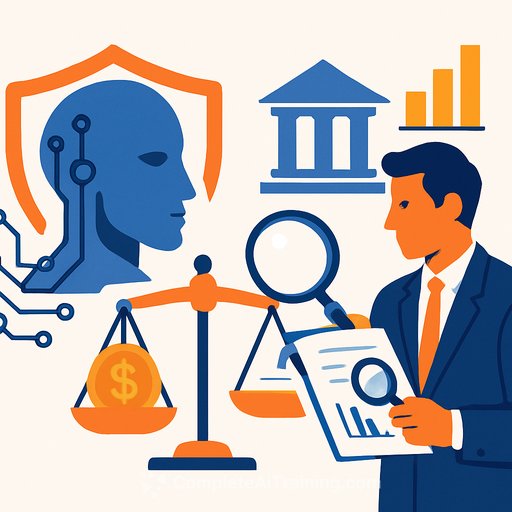
Accountability is essential in financial services. Firms need governance frameworks covering the entire AI lifecycle: development, validation, deployment, monitoring, and retirement. Clear ownership and responsibility must be established at all levels—from the board to risk committees.
Regulators encourage firms to keep detailed inventories of AI models, tracking their use, owners, performance, and risk classification. Transparency and traceability are mandatory. When AI influences decisions, firms must explain how those decisions were made and trace the data behind them. Failure to do so won’t hold up under regulatory scrutiny, especially when consumer protection is involved.
Responsible AI is an Ongoing Process
AI can bring efficiency and value, but only when deployed responsibly. Financial firms must set clear policies on how AI is trained, tested, and applied. Transparency and accountability should be built into every stage—from sourcing data to model design and decision implementation.
Black boxes have no place in responsible AI use. Algorithms must be auditable and explainable, regardless of whether a firm builds models internally or uses third-party solutions. Continuous monitoring is necessary because AI models evolve over time as their inputs change, and risks can increase unnoticed.
New roles focused on AI ethics, risk strategy, and prompt engineering are emerging. These professionals will become critical to managing AI systems effectively within financial firms.
The Future is Now
AI is already part of daily work in finance. Employees use AI tools in various ways, whether firms formally acknowledge it or not. Developing clear, practical policies on employee AI use is crucial to ensure responsible application and protect the firm from reputational, operational, and regulatory risks.
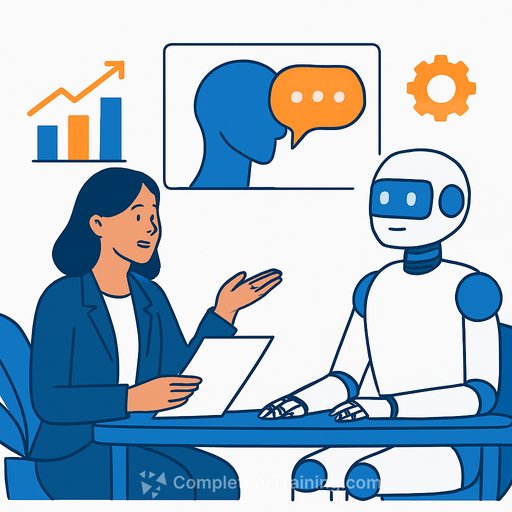
Now is the time to build a clear AI strategy aligned with policy and governance. The key question isn’t whether AI will replace humans but whether humans will learn to work alongside AI. Those who succeed in this collaboration will shape finance’s future.
Your membership also unlocks: