
AI news ·
Acrisure cuts 2,250 jobs as insurers automate back-office functions with AI
Acrisure cut 2,250 jobs, 11% of its staff, citing AI and automation. The broker is automating back-office tasks like claims processing and regulatory reporting.
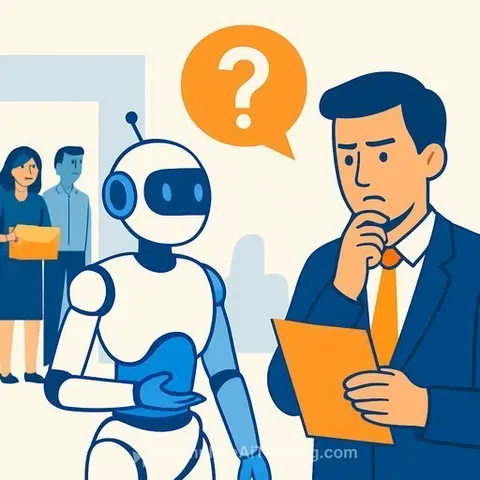
On May 20, 2026, Acrisure, the world's eighth-largest insurance brokerage, cut 2,250 jobs - 11% of its global workforce - and directly blamed advances in artificial intelligence and automation. The move, Acrisure's second AI-driven reduction in seven months, turns an industry-wide efficiency push into a public benchmark that other carriers have been preparing for internally.
In a letter to employees, CEO Greg Williams wrote: "Advances in technology, AI, and digital platforms are fundamentally changing how businesses operate, how clients expect to be served, and how value is created." The cuts will roll out in phases through 2027, concentrated on US operations. In October 2025, the company had already eliminated 400 accounting and back-office roles after automating those functions.
Where the cuts land
The first functions automated are not underwriting. They are claims processing, statutory data production for state regulators, accounting, and reporting. Jerry Theodorou, policy director for insurance, finance and trade at the R Street Institute, points to the NAIC statutory filings - the yellow books - as a clear target. "A lot of the processes there are very time consuming," he said. "Producing the blanks, you know, the yellow books, statutory data for the NAIC - so there could be an impact on automating a lot of the administrative work that's done." These high-volume, rule-based submissions are among the easiest to hand to AI.
Claims processing follows the same logic. AI tools triage incoming claims, route simple cases through automated settlement, and flag hard ones for human adjudication. "We have seen client-oriented work that took days or weeks reduced to minutes," Williams wrote. Straight-through processing rates - the share of claims settled without any human touch - have risen as these tools matured.
Large carriers disclose; smaller ones watch
Chubb, Travelers, Hartford, AIG, and CNA have all outlined AI adoption strategies in quarterly earnings transcripts and annual 10-K filings. Theodorou sees this as a governance requirement. "They need to disclose what they're doing to the investors. Because there is - it goes back to governance issues - you've got a board of directors," he said. AI investment is now material information for shareholders, and efficiency gains get reported directly to analysts.
Roughly 4,000 property and casualty carriers operate in the US, most far smaller than Acrisure. Their posture is different. "The smaller companies are sitting on the fence," Theodorou said. "They're slower to move because this is a new technology and they don't have the comfort level. They haven't tested it a lot." A claims automation failure at a small mutual company carries proportionally larger consequences. Many are fast-followers, waiting for the large players to validate what works.
The hallucination problem reshapes the workforce, it doesn't pause it
AI's factual unreliability creates a hard limit on workforce reduction. Theodorou gave a concrete example: he asked an AI system to name US states with the lowest natural catastrophe exposure. Wisconsin and Michigan appeared near the top. Both states have experienced severe hail, tornadoes, and winter storms that impaired regional reinsurers - including Wisconsin Re. "Here AI was wrong," he said. "You can't trust it completely. You have a phenomenon of AI hallucinations which comes up with something which is completely out of order. So you've got to monitor it. You can't abdicate your responsibility as an underwriter to do risk selection and risk pricing."
That monitoring requirement does not stop headcount reductions. It changes their shape. Companies replace process workers with fewer supervisors who review AI decisions on hard cases. The net is still a reduction, but the reduction moves toward judgment, not away from it.
Why this matters for insurance professionals
Acrisure's announcement is a data point, not an outlier. The insurtech conference circuit shows hundreds of AI-driven startups pitching carriers, but only a fraction will prove themselves. The applications that last - fraud detection, claims triage, document processing, regulatory reporting - are already delivering measurable returns for the carriers that deployed them carefully.
For HR and operations leaders, the task is clear: map which back-office functions carry the highest routine volume and the clearest automation path. Companies that sequence adoption of AI for Insurance and build governance around AI Agents & Automation are building structural advantages over those still waiting. The efficiency gains are real, and the window for fast-following narrows as early movers accumulate institutional knowledge about what works - and what hallucinates.