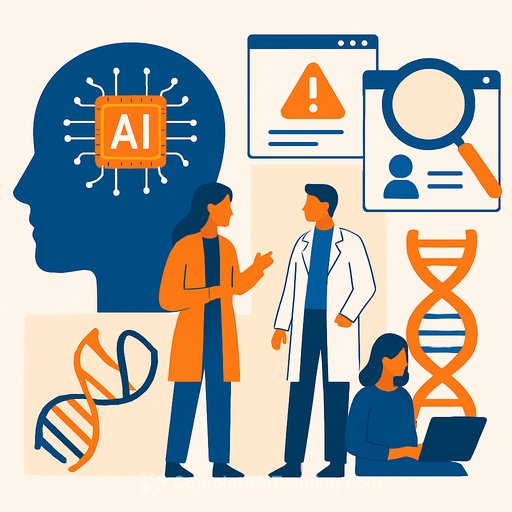
Quantum Events ADLM 2025: Focus on AI, Misinformation, and Genomics for Rare Diseases
The American Association for Clinical Chemistry (AACC) will host its 2025 meeting, previously known as the AACC Annual Scientific Meeting & Clinical Lab Expo, in Chicago from July 27 to 31. This event, in partnership with the Canadian Society of Clinical Chemists (CSCC), will address key topics such as the integration of artificial intelligence (AI) in clinical settings, medical misinformation, health risks from plastics, and advances in genomics and microbiome medicine aimed at personalised healthcare.
A major highlight is the focus on genomics strategies targeting the roughly 30 million Americans affected by rare diseases. The conference will also explore the challenges of applying the 950 FDA-approved machine-learning-enabled devices in everyday clinical practice. Attendees can expect presentations on combating misinformation and understanding the human microbiome’s influence on various diseases.
Advancing Laboratory Medicine
ADLM 2025 will tackle pressing issues including clinical AI integration, medical misinformation, and the health risks linked to plastics. Genomics and microbiome medicine will be examined in the context of personalised healthcare, with particular attention given to rare diseases affecting millions nationwide.
One session will cover strategies and technologies for identifying genetic causes of rare diseases, alongside methods for global data sharing and the development of new diagnostic and treatment tools. Despite FDA approval of nearly a thousand AI-enabled devices, their clinical adoption remains limited. The conference will explore reasons behind this and potential solutions to ease the workload of healthcare professionals.
There will also be discussions around misinformation, focusing on how cultural factors such as celebrity influence, fearmongering, and cognitive bias contribute to its spread. Practical steps to prevent misinformation, especially distortions of scientific findings, will be shared.
The role of the human microbiome in health, allergies, neurological, and metabolic disorders will be another key topic. Insights into how microbial populations impact disease will provide valuable information for healthcare providers.
Genomics and Rare Disease
Genomics will take center stage as a promising avenue for helping the 30 million Americans with rare diseases. Presentations will detail current strategies and technologies used to uncover genetic causes and facilitate global data exchange. These efforts support the creation of targeted treatments and improved diagnostic tests based on genomic data.
Despite the availability of 950 FDA-approved AI devices, their practical use in clinics is limited. Challenges in implementing these tools will be discussed, including examples of AI algorithms that were introduced but later withdrawn. These case studies will help inform future AI integration in healthcare settings.
Misinformation remains a significant concern. A plenary session will unpack widespread falsehoods, examining cultural drivers like celebrity culture and fearmongering. The session will also offer actionable recommendations for healthcare professionals and organisations to limit the spread of misleading information.
The conference will highlight the human microbiome’s crucial role in various health conditions. New findings on microbial communities and their influence on diseases will be shared, providing a foundation for improved patient care strategies.
Artificial Intelligence in Healthcare
With nearly a thousand machine-learning-enabled devices approved by the FDA, AI holds promise for healthcare efficiency. However, clinical adoption is still limited. Discussions will focus on barriers to implementation and lessons learned from AI algorithms that were deployed and later retracted.
Experts will also address the persistent problem of medical misinformation, exploring the cultural forces that fuel misinformation and outlining steps to combat it effectively. The human microbiome’s impact on health will round out the conversation, offering insights into its role in allergies, neurological issues, and metabolic disorders.
Healthcare professionals interested in expanding their AI skills may find relevant AI training courses helpful for staying current with these evolving technologies.
Your membership also unlocks: