
AI news ·
Adobe backs CREATOR Act to give visual artists legal protection against AI style impersonation
The CREATOR Act, introduced in Congress this week, would ban commercial AI impersonation of an artist's style without permission. Current copyright law protects finished work but not an artist's technique.
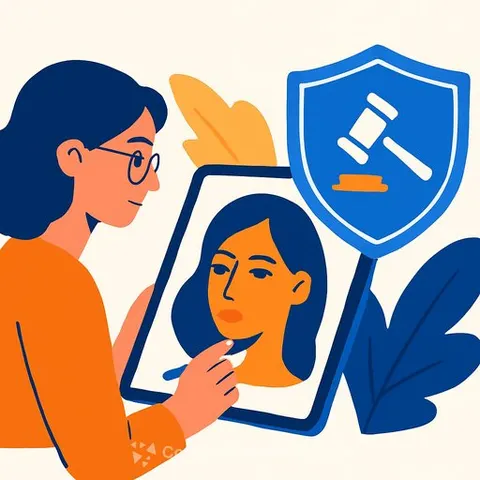
New Law Targets AI-Generated Style Theft, Gives Artists Legal Recourse
The CREATOR Act, introduced in Congress this week, would make it illegal to use AI to commercially impersonate an artist's visual style without permission. The bill closes a gap in intellectual property law that currently leaves creators vulnerable to mass-produced knockoffs of their signature work.
An AI system can now generate hundreds of images mimicking a specific artist's technique in seconds, at zero cost, without consent or compensation. Existing copyright law doesn't address this. It protects what you make, not how you make it.
Illustrator Fabiola Lara experienced this directly when an AI platform generated images impersonating her work to showcase their technology-without asking. The ease of replication posed a direct threat to her livelihood and artistic identity.
What the bill covers-and what it doesn't
The CREATOR Act is narrowly scoped. It targets deliberate commercial impersonation of identifiable artists using AI. It does not restrict artistic influence, parody, fan work, or general AI research and development.
The law would give creators meaningful recourse: the ability to seek damages and demand that the impersonation stop.
Why this matters beyond individual artists
The creative economy contributes $1.2 trillion annually to U.S. GDP-about 4.2 percent. Artists, designers, photographers, and illustrators power industries that depend on human creativity.
If AI impersonation erodes their ability to sustain careers, the entire economy loses. An artist's style is the product of years of work. The bill says that work deserves legal protection.
Creatives looking to use AI responsibly in their own work may find resources helpful. AI for Creatives covers how to leverage AI as a tool while understanding ethical boundaries in creative practice.