AECOM and SMU Launch AI Engineering Fellowship to Build Internal Talent
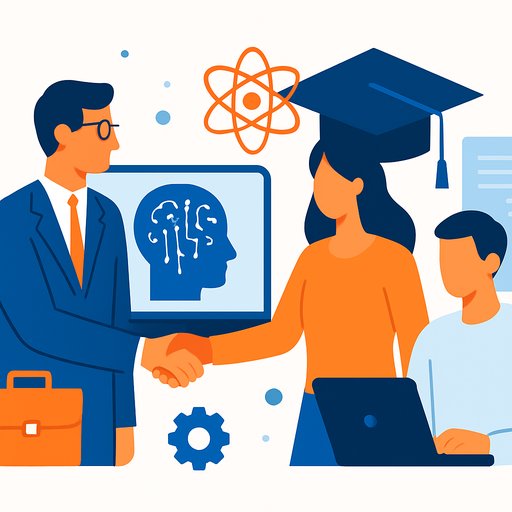
Engineering firm AECOM is funding a doctoral fellowship at Southern Methodist University's Lyle School of Engineering to recruit and train AI engineers for its Dallas headquarters. The partnership addresses a persistent hiring challenge: finding people with both deep machine learning expertise and engineering backgrounds.
The first cohort, expected to enroll five to 10 students this fall, will conduct research on applying AI to AECOM's infrastructure problems. Graduates will have guaranteed jobs with the company upon completion.
Why Companies Are Building Rather Than Buying Talent
AECOM CEO Troy Rudd said finding AI specialists with engineering experience is difficult, and recruiting them from the open market is expensive. The fellowship inverts that approach: the company funds education aligned with its business needs.
"I have every intention that everyone that comes out of this program is going to come work at AECOM," Rudd said.
Students will work directly with AECOM leaders and SMU faculty on real-world problems. This hands-on experience means graduates enter the workforce already equipped to solve the company's specific challenges, said Nader Jalili, dean of the Lyle School.
A Compressed Timeline
The fellowship targets completion in 18 months-far shorter than typical doctoral programs, which take three to five years. Rudd emphasized this timeline is intentional.
"We don't want candidates interested in doing this in four years," he said. "I want to find candidates who want to grab this, get this done in a year and a half, and get onto the next thing."
What AECOM Needs AI to Solve
AECOM's primary focus is building AI models that perform complex calculations simultaneously rather than sequentially. Currently, a building project moves through an architect, then a civil engineer, then a structural engineer-each running their own calculations in sequence.
An AI model could handle all those calculations at once, identifying the most efficient placement of fire protection and water systems, or finding workarounds when materials aren't available in the supply chain. Human engineers would then review outputs and make final decisions with customers.
Rudd said such optimization could reduce material costs significantly. "You usually don't have time to because you run out of the time to iterate," he said.
A Model for Expansion
SMU and AECOM officials describe the program as the first of its kind. Rudd said his search found no existing doctoral program that combined machine learning research with deep engineering experience.
He hopes the partnership establishes Dallas and SMU as a hub for AI engineering talent, similar to how Stanford's engineering department helped build Silicon Valley. AECOM plans to launch similar partnerships at other universities if the SMU program succeeds.
Rudd declined to disclose the fellowship's funding amount. He predicted competitors will pursue similar programs once AECOM demonstrates results.
For educators, the partnership reflects a broader trend: companies investing directly in academic programs to shape curricula around their hiring needs. It raises questions about how much corporate influence should shape doctoral research and whether accelerated timelines compromise academic rigor.
Your membership also unlocks: