ACTS Launches Africa-Centered AI Institute to Boost Inclusive Innovation and Development
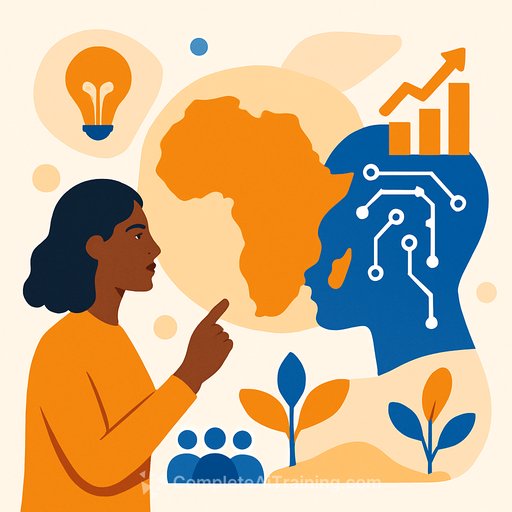
On July 17, 2025, the African Centre for Technology Studies (ACTS) announced the launch of the ACTS AI Institute (ACAII), a new initiative focused on advancing responsible and African-centered AI research, innovation, and governance. The Institute aims to create AI solutions that are ethical, inclusive, and relevant to Africa’s unique context, with the goal of empowering communities, driving economic growth, and supporting sustainable development.
Building on Established Partnerships and Support
The Institute grows from the AI for Development (AI4D) program, funded by the International Development Research Centre (IDRC), the Foreign, Commonwealth Development Office (FCDO), and the Swedish International Development Cooperation Agency (SIDA). The AI4D Scholarship Program has already supported researchers and innovators from historically disadvantaged communities to develop and scale AI solutions tailored to African needs.
Dr. Laurent Bochereau, Minister-Counsellor at the European Union Delegation to the African Union, highlighted the 25-year partnership between the AU and EU. He emphasized the Horizon Europe initiative, the EU’s €100 billion research and innovation program, which includes a dedicated Africa Initiative. For 2025, this initiative has allocated €500 million to 26 topics, including a call focused on generative AI solutions centered on rural communities and women in agriculture, healthcare, infrastructure, and digital skills.
Five Strategic Pillars for Impact
The ACTS AI Institute operates through five strategic pillars:
- Responsible AI solutions
- AI policy and governance
- AI and jobs
- AI and capacity building
- Data science
These areas target sectors essential to Africa’s development such as agriculture, healthcare, education, and climate resilience. The Institute focuses on creating practical AI applications that address real challenges and deliver tangible benefits to communities.
Prioritizing Local Context and Capacity
Professor Tom Peter Migun Ogada, ACTS Executive Director, stressed that the Institute builds on five years of experience in developing responsible AI projects and policies, now expanding its mandate for continent-wide impact.
Dr. Winston Ojenge, Head of the ACTS AI Institute, emphasized the development of an “Africanized” responsible AI toolbox aimed at tailoring AI ethics, standards, and policies to Africa’s distinct social and cultural contexts.
Key AI applications include predictive models for weather and crop yields to assist the majority of Africa’s smallholder farmers, enhancing food security despite climate challenges. AI-driven diagnostics and telemedicine platforms are also being developed to improve healthcare access in rural and underserved areas.
Addressing Infrastructure and Data Challenges
Ambassador Prof. Bitange Ndemo, Kenya’s Ambassador to Belgium, highlighted the need to bridge infrastructure gaps and build local capacity focused on lifting communities from poverty to prosperity through AI.
Dr. Devotha Nyambo of the Nelson Mandela African Institution of Science and Technology pointed out challenges around data acquisition, processing, and the lack of disaggregated, localized data. The Institute aims to close these gaps by ensuring data reflects African realities and contexts.
Driving Economic Transformation and Inclusive Job Creation
The Institute explores how AI can foster economic growth while creating inclusive job opportunities, especially for Africa’s youth, who make up over 60% of the population. It supports AI-driven entrepreneurship and provides training to policymakers, researchers, and entrepreneurs to build leadership in AI development and governance.
Gillian Dowie of the IDRC highlighted the importance of building an ecosystem where responsible AI policies are adopted, and AI innovations reach those typically excluded from technological progress.
Alignment with African Union Strategies
The initiative supports the African Union’s Agenda 2063, the Digital Transformation Strategy 2020-2030, and the Science, Technology and Innovation Strategy for Africa 2024. These strategies envision a prosperous Africa driven by science, technology, and innovation.
Prof. Brando Okolo from AUDA-NEPAD noted the increase in digital activity across the continent and the importance of integrating African languages within AI development, a focus that the Institute will help advance.
Fostering Collaboration Across Sectors
The Institute is committed to building partnerships with governments, academia, civil society, the private sector, and media to create a collaborative environment for responsible AI development.
Prof. Divine Fuh of the HUMA Institute emphasized the need to ask critical questions about what Africa wants from AI. This Institute serves as a laboratory for those questions, ensuring AI research and solutions reflect the realities and needs of African communities.
For IT professionals and development experts interested in AI’s role in Africa’s growth, the ACTS AI Institute represents a significant step toward inclusive innovation grounded in local values and priorities.
To explore AI courses that align with development and governance, visit Complete AI Training’s courses designed for professionals in development fields.
Your membership also unlocks: